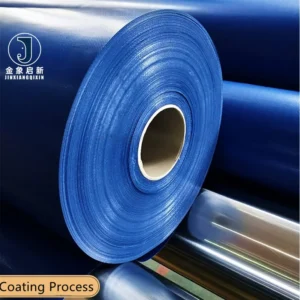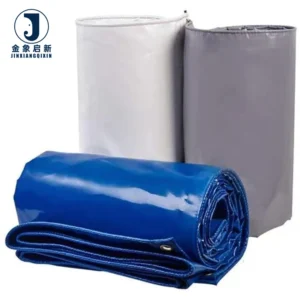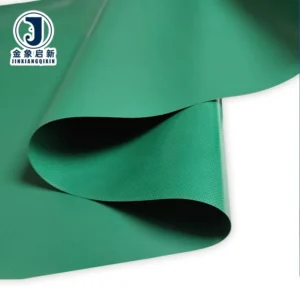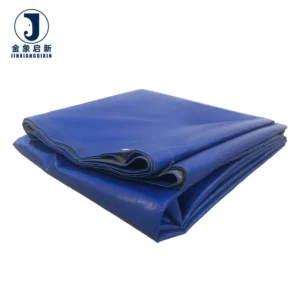
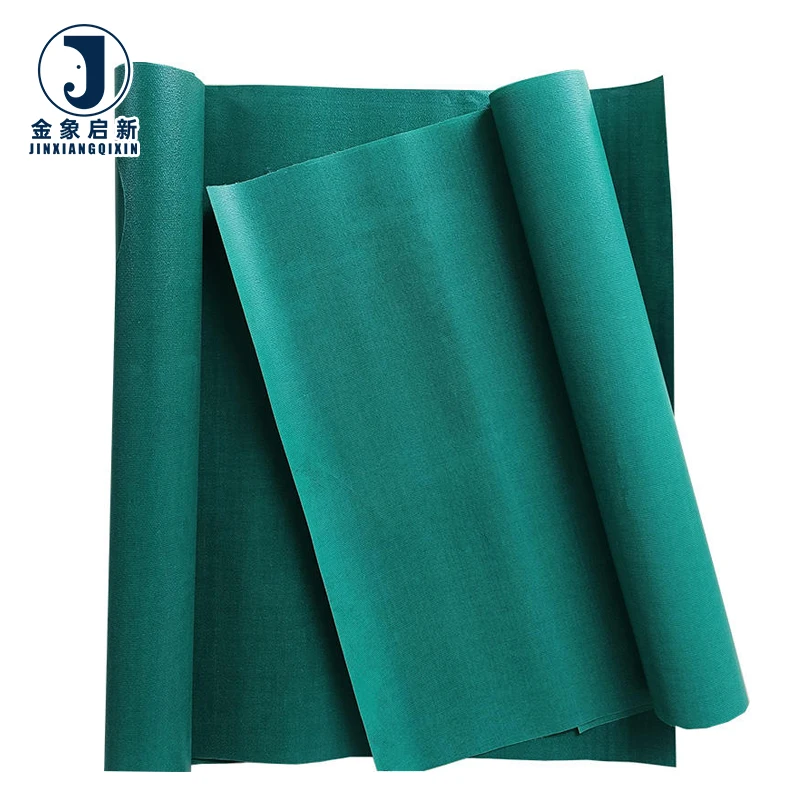
Proven Coating Consistency — Hot-melt and laminated coating lines maintain uniform GSM across every roll, so the truck cover fabric you receive matches the weight stated on your quotation.
Technical Specifications
| Parameter | Value |
|---|---|
| Product Type | PVC Coated Tarpaulin Roll |
| Material | PVC + High-strength polyester mesh fabric |
| Coating Method | Laminated technology & Hot-melt Coating technology |
| Weight (GSM) | 350 gsm / 420 gsm / 500 gsm / 550 gsm / 600 gsm / 750 gsm |
| Total Thickness | 0.32 mm / 0.35 mm / 0.4 mm / 0.45 mm / 0.5 mm / 0.65 mm |
| Roll Size | 2 m width × 75 m length / 2.1 m width × 50 m length |
| Color | Blue / Red / Yellow / Light blue / Grey (customized) |
| Key Features | Waterproof, Cold Crack Resistance, Anti-Mildew, Anti-Static (grade not stated), Flame Retardant (grade not stated) |
| Service Life | 3–7 years under normal conditions (source value — verify against application) |
| Standards | ISO, CE |
Application Suitability
| Application | Exposure & Requirement |
|---|---|
| Truck side curtain | Constant flexing at load points, road debris abrasion, UV and weather exposure |
| Trailer top and rear cover | Wind-load tension, rain and road spray, tie-down strap abrasion |
| Flatbed cargo cover | Direct sun exposure, pooling water on flat sections, friction against cargo edges |
| Container and intermodal wrap | Salt-laden air during port storage, handling crane contact, stacking compression |
| OEM truck awning production | Roll-to-roll colour consistency, weld seam integrity for fabricated seams |
Why Generic Sizing Destroys Truck Cover Lifespan
Cutting a PVC Coated Truck Tarpaulin for fleet and transport to your exact trailer dimensions eliminates the tension gaps that tear generic covers apart.
Fleet operators often order covers in standard sizes that leave loose material flapping at high speed or, worse, stretch the fabric too tight across corners. The resulting stress concentrates at welded seams and eyelet zones — the exact points where load movement already flexes the hardest. Within a season the cover begins pulling apart at the hem while the main body of the PVC Coated Truck Tarpaulin for fleet and transport still looks serviceable. The cover is then replaced not because the material failed but because the sizing and reinforcement layout never matched the trailer geometry. [NEED_CITE: common failure modes in flexible transport covers under dynamic load]
Matching Fabric Weight to the Haul Cycle
Side curtains on curtain-sider trailers flex thousands of times per trip, so the PVC coated tarpaulin roll chosen for this duty must balance flexibility with tear resistance at the weld line. Lighter grades in the 350–420 gsm range keep the curtain pliable for fast opening and closing, while heavier grades above 550 gsm suit fixed rear covers and flatbed wraps where puncture and abrasion resistance matter more than drape. Selecting the correct weight from this product family prevents both premature fatigue cracking and unnecessary dead weight on the vehicle.
Welded Seam Integrity Under Road Vibration
When a loaded trailer flexes through a curve, the cover panel shifts against the cargo and the strap tension spikes at every tie-down point. Hot-melt coated polyester mesh holds the weld together because the coating penetrates the weave and creates a bond that extends beyond the seam line itself. If the PVC Coated Truck Tarpaulin for fleet and transport arrives with inconsistent coating weight, the weld may peel before the fabric body shows any wear. In-process quality checks during production verify adhesion strength at the weld zone roll by roll. [NEED_CITE: adhesion and peel strength test methods for coated fabrics per ISO 1421]
How GSM, Coating Method and Base Fabric Work Together
GSM alone does not define the mechanical performance of a PVC coated tarpaulin roll — the high-strength polyester mesh base provides the tensile and tear skeleton while the coating adds waterproofing, UV shielding and weld surface. Hot-melt coating forces PVC into the mesh under heat and pressure, producing higher adhesion and better weld behaviour compared with simple lamination. Thickness values from 0.32 mm to 0.65 mm correlate with different GSM grades, giving fabricators a reference for cutting tool pressure and weld temperature settings. Heavier grades with thicker coatings tolerate higher heat input during RF or hot-air welding without burning through to the base fabric, whereas lighter grades require tighter temperature control. Roll widths of 2 m and 2.1 m allow most side curtain panels to be cut in a single piece, reducing the number of horizontal welds that become potential leak paths on the finished cover.
The Hidden Cost of Roll-to-Roll Colour Variation
When multiple rolls arrive with visible shade differences and are fabricated into side curtains that hang next to each other, the fleet branding looks inconsistent from day one. Colour mismatch is especially obvious on bright safety colours like red and yellow, and the operator is forced to either live with a patchwork appearance or return the affected panels for rework. This issue typically traces back to pigment dosing variation between coating batches. Verifying shade consistency against an approved reference sample before the rolls leave the factory avoids the cost and delay of replacing already-installed curtains. [NEED_CITE: colour tolerance standards for coated technical textiles]
Why Sourcing This Fabric From a Dedicated Coating Line Matters
Three full production lines with 36 sets of professional equipment support bulk roll output while keeping delivery schedules on track for fleet replacement programmes. A 10-person R&D team handles custom width, colour matching and sample development, allowing transport equipment builders to approve fabric before committing to container volumes. Dedicated QA and QC stations at every stage — from base fabric inspection through coating weight checks to final roll packing — ensure that the PVC Coated Truck Tarpaulin for fleet and transport leaving the factory matches the agreed specification. Full customization from design to dispatch means OEM buyers can specify eyelet spacing, hem reinforcement and panel dimensions in a single order rather than coordinating multiple suppliers. Pre-shipment inspection records document coating weight, colour and roll dimensions for every item before the container is sealed.
Documentation & Verification
- Material specification sheet listing exact GSM, base fabric and coating type per roll
- Pre-shipment inspection record confirming coating weight and colour against approved sample
- UV and flame retardant test reports supplied where the grade is specified in the order
- ISO and CE certificates covering the production facility and coating process
- Roll packing list with individual roll weights, dimensions and batch traceability
Fabrication, Handling & Storage
- Hot-air weld temperature should be adjusted per GSM grade — heavier 750 gsm rolls tolerate higher heat than 350 gsm
- Store rolls upright on pallets to prevent flat-spot creases that show through on finished side curtains
- Cut panels with sharp rotary blades to avoid fraying the polyester mesh at the edge of each piece
- Anti-mildew treatment reduces fungal growth in humid storage but rolls should still be kept off damp concrete floors
- Cold crack resistance allows winter transport, yet rolls should be unrolled above freezing to prevent coating damage
What to Include in Your Inquiry
Share the specific trailer model or cover dimensions, the haul environment (highway, port, mining road), and the GSM or thickness range you are currently using or considering. If your terminal or transport route mandates a particular flame retardant or anti-static grade, state the standard so the correct certification is prepared before production. Confirm whether you need full roll stock or finished panels with custom eyelet layouts and reinforced hems.
Frequently Asked Questions
Q: Can the tarpaulin be cut to fit a specific truck or trailer model with reinforced eyelets at tie-down points?
A: Yes. Rolls can be supplied as stock or pre-cut to your trailer model dimensions. Reinforcement patches and eyelet spacing are laid out according to your tie-down plan, reducing stress at strap anchor points. Send the trailer drawing or model number so the panel can be sized accurately before production begins.
Q: What roll widths and lengths are available, and how is colour consistency maintained across rolls?
A: Standard rolls are 2 m × 75 m or 2.1 m × 50 m. Custom widths are available on request. Colour is matched to an approved reference sample, and each production batch is checked for shade uniformity before dispatch so that panels fabricated from different rolls hang with no visible variation side by side.
Q: How are welded seams reinforced at flex points where load movement concentrates stress?
A: Hot-melt coating penetrates the polyester mesh, producing adhesion that extends past the weld line itself. At high-stress zones such as tie-down anchors and curtain runners, additional reinforcement patches can be applied before welding to distribute the load across a wider area of base fabric.
Q: What flame-retardant or anti-static certification is supplied when the transport route requires it?
A: Flame retardant and anti-static treatments are available — confirm the grade required for your market so the correct test report is included with the shipment. The documentation package will list the specific standard met and the batch tested.
Q: How is GSM verified on arrival and what happens if the roll is lighter than agreed?
A: Each roll is weighed and the coating weight is recorded during pre-shipment inspection against the GSM stated in the quotation. If a discrepancy is found on your side, the inspection record and batch traceability data allow a fast resolution, including replacement of the affected rolls.