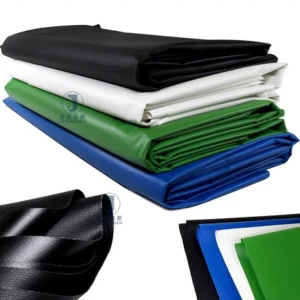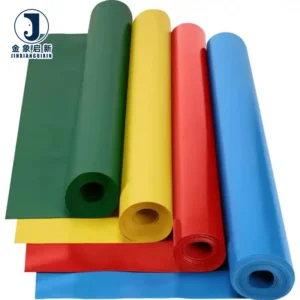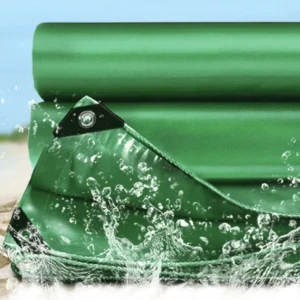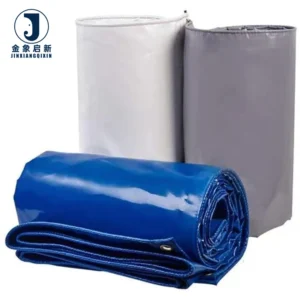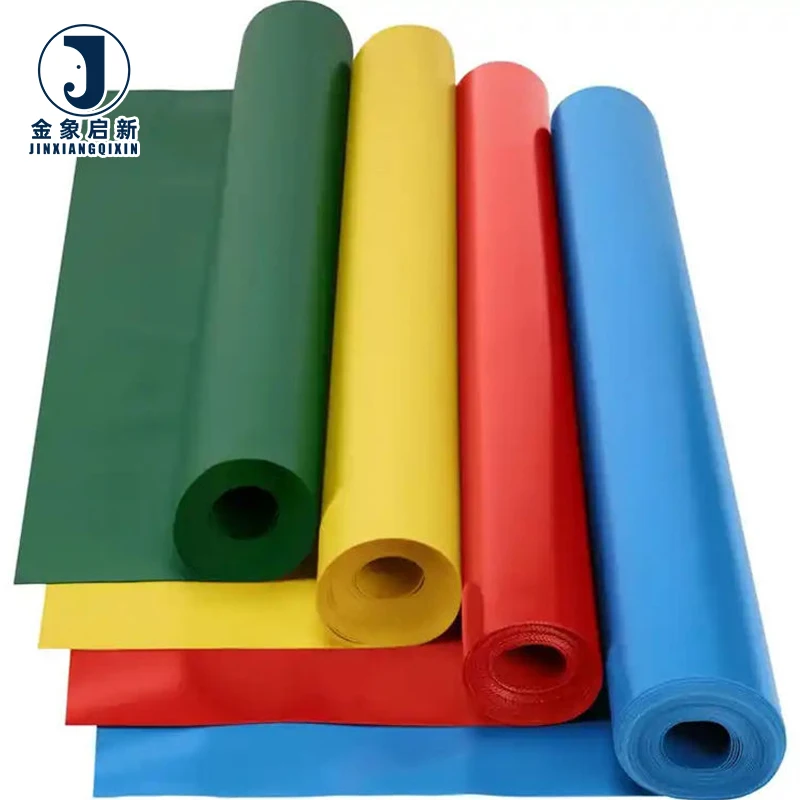
Roll-to-Roll Consistency — coating weight and colour held within tolerance across every roll in a single shipment, verified by pre-dispatch inspection rather than assumed from a sample.
Technical Specifications
| Parameter | Value |
|---|---|
| Product Type | PVC Coated Tarpaulin Roll |
| Base Fabric Denier | 500D×500D |
| Mesh Count | 18×17 |
| Coating Material | PVC |
| Welding Options | HF, Hot Air, Sewing |
| Flame Retardant | Available in flame retardant grades — confirm the grade required for your market |
| UV Resistance | Available with UV treatment — test basis to be confirmed per batch |
| Antibacterial & Mildew Proof | Yes |
| Oil & Stain Resistance | Yes |
| Acid & Alkali Resistance | Yes |
| Temperature Resistance | High temperature and cold resistance (specific range to be confirmed) |
| Flexibility | Highly flexible, resistant to cracking |
| Self-Cleaning Surface | Yes |
| Key Features | Anti-oxidation, weather resistance, chemical exposure tolerance |
Application Suitability
| Application | Exposure & Requirement |
|---|---|
| Truck and trailer side curtains | Constant flexing at load points, road spray, UV exposure, abrasion from cargo contact |
| Custom truck covers for specific trailer models | Tie-down tension, wind flap fatigue, weather sealing over long-haul routes |
| Open-deck transport tarpaulins | Direct load contact, puncture risk from sharp cargo edges, chemical spill exposure |
| Fleet replacement fabric panels | Colour matching to existing fleet livery, weld seam integrity at high-stress zones |
Why Batch Colour Drift Wrecks a Fleet Re-Cover Project
Colour that shifts between rolls forces a full panel redo — not a patch fix.
When a transport fleet replaces side curtains or truck covers, panels sit side by side across the trailer. Even a slight hue variation between two PVC coated tarpaulin rolls in the same order becomes immediately visible once installed. Fleet operators notice it, and so do their clients. The cost is not just the wasted material — it is the labour to strip and re-hang, the downtime on the trailer, and the reputational hit when a branded fleet looks inconsistent on the road. [NEED_CITE: colour consistency standards for coated fabrics in transport applications]
Weld Seam Selection for Side Curtain Stress Zones
Truck side curtains experience their highest stress at the junction where the fabric meets the buckle rail and at the bottom hem where cargo loading creates repeated abrasion. This PVC coated tarpaulin roll supports HF welding, hot air welding, and conventional sewing — giving fabricators the latitude to match the seam method to the stress profile of each panel zone. HF welding produces a homogeneous bond suitable for high-tension horizontal runs, while hot air welding allows more controlled heat input for curved or reinforced sections near eyelets.
Chemical Exposure on the Freight Deck
Freight environments expose covers to diesel residue, hydraulic fluid, and cleaning agents used on loading docks. The acid and alkali resistance built into this 500D×500D fabric means the PVC coated tarpaulin roll holds up against the chemical contact common in logistics yards and transport hubs. Oil and stain resistance keeps the surface presentable across repeated trips, reducing the frequency of deep cleaning that accelerates coating wear. [NEED_CITE: chemical resistance test methods for PVC coated polyester fabrics]
Reading the 500D×500D 18×17 Weave for Transport Loads
The 500D×500D denier paired with an 18×17 mesh count produces a balanced base fabric that distributes tie-down tension across both warp and weft directions. A tighter mesh count increases the number of yarn crossover points, which improves tear propagation resistance — critical when a sharp cargo edge initiates a puncture. The PVC coating locks these yarns in place, adding peeling resistance that prevents the coating from delaminating under the flexing loads a side curtain endures. The self-cleaning surface treatment reduces dirt adhesion, which matters for fleet operators who need their covers to stay presentable without aggressive scrubbing that can damage the coating over time.
The Real Cost of Welding the Wrong Way
Choosing a seam method that does not match the stress profile of the panel is a common cause of premature cover failure. Sewn seams on a high-flex zone can unravel under repeated vibration, while an HF weld applied too aggressively can thin the coating at the joint, creating a weak line that cracks before the surrounding fabric shows any wear. Fabricators working with PVC coated tarpaulin roll stock need to validate weld parameters on sample pieces cut from the same batch before committing to full production runs. [NEED_CITE: seam strength testing for coated fabric joints per ISO standards]
Why Fabricators Source This Roll Here
Deep process control over coating weight and adhesion means the PVC layer on each 500D×500D roll is applied under consistent tension and temperature, reducing the variability that causes weld failures in fabrication. A dedicated QA/QC protocol runs at every production stage, with full inspection before dispatch — not a spot check on one roll out of twenty. The R&D team handles custom width and sample development within days, allowing fabricators to confirm fitment and weld behaviour before the full order ships. Documentation arrives with every consignment: material specification sheet, test reports for any claimed treatments, and a roll packing list with batch traceability. Three full production lines and 36 sets of equipment support bulk orders without extended lead time compromises.
Documentation & Verification
- Material specification sheet confirming 500D×500D denier, 18×17 mesh count, and PVC coating type
- Batch-level test reports for UV and flame retardant treatments where applicable
- Pre-shipment inspection record with full roll-by-roll check before dispatch
- Roll packing list with batch codes for colour consistency traceability
- Certificate of origin and customs documentation for cross-border shipment
Fabrication, Handling & Storage
- HF weld temperature and dwell time should be validated on 500D×500D sample offcuts before full-panel production
- Hot air welding suits curved hem sections where precise heat control prevents coating thinning
- Store rolls upright on pallets to avoid flat-spot deformation on the PVC coating surface
- Allow cold-stored rolls to reach ambient temperature before unrolling to prevent cracking at the core
- Use mild detergent for cleaning — solvent-based agents may compromise the self-cleaning surface treatment
- Plan panel cutting layout around roll width to minimise offcuts and reduce cross-grain weld seams
What We Need to Quote Your Roll Order
Tell us the trailer models you are covering, the panel dimensions, and whether you need the PVC coated tarpaulin roll supplied as stock width or pre-cut to size. Confirm any fire-retardant or UV grade your market requires so we can match the treatment and supply the corresponding test report. Let us know your annual roll volume and target colour reference so we can confirm batch availability and lead time.
Frequently Asked Questions
Q: How do I verify the GSM on arrival matches what was quoted?
A: Request the material specification sheet before shipment, which states the target GSM for your order. On arrival, cut a measured sample from the roll and weigh it to confirm the coating weight aligns with the documented value. Any discrepancy should be flagged against the pre-shipment inspection record provided with your consignment.
Q: Which welding method works best for truck side curtain panels?
A: HF welding suits long straight seams under constant tension, producing a bond as strong as the fabric itself. Hot air welding gives better control on reinforced sections near buckles and eyelets. We recommend running test welds on sample pieces from your batch to confirm parameters before full production.
Q: How is colour consistency maintained across multiple rolls?
A: Each production batch is monitored for colour uniformity, and the pre-shipment inspection record documents roll-to-roll consistency before dispatch. For fleet projects where panels install side by side, we can supply all rolls from a single production run to eliminate inter-batch variation.
Q: Can I order custom widths for specific trailer model fitment?
A: Custom widths are available, with sample development completed within days so you can confirm fitment and welding behaviour before committing to the full order. Provide your exact trailer dimensions and panel layout so we can advise on the most material-efficient roll width.
Q: What test evidence comes with UV or flame-retardant treated rolls?
A: Where UV or flame-retardant treatment is specified, we supply a test report matched to the batch being shipped. Confirm the grade or standard your market requires at the inquiry stage so we can align the treatment formulation and provide the correct documentation with your order.