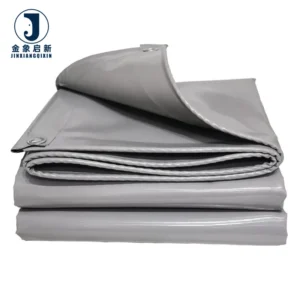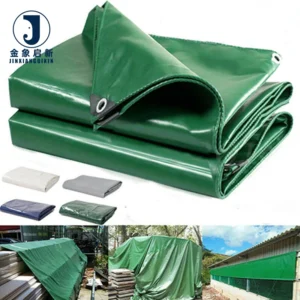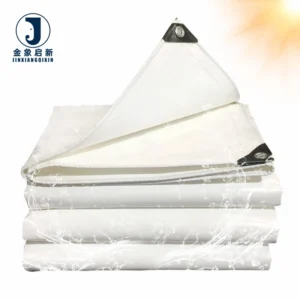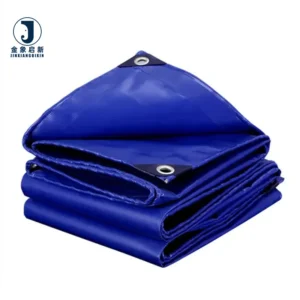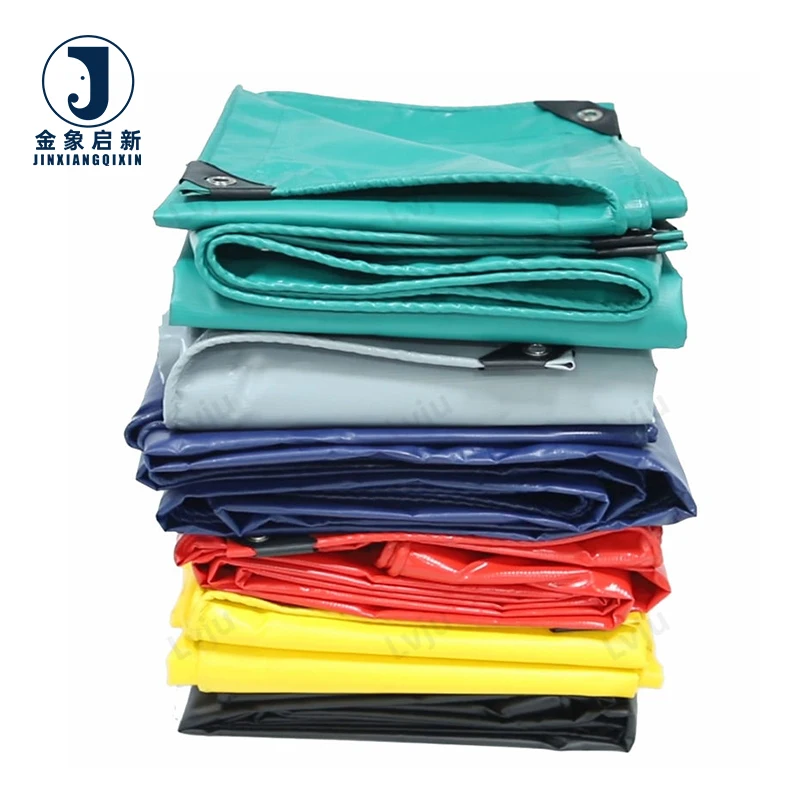
Near-Zero Delamination Risk — Knife coated PVC tarpaulin construction locks the 500 GSM coating to the base fabric, reducing peel failures at flex points where loads shift under road vibration.
Technical Specifications
| Parameter | Value |
|---|---|
| Product Type | PVC Knife-Coated Fabric |
| Material | High Density Virgin PVC |
| Weight | 500 GSM |
| Coating Method | Knife Coated |
| Waterproof | Yes |
| Color | Different Colors Available |
Application Suitability
| Application | Exposure & Requirement |
|---|---|
| Truck and trailer load covering | Road abrasion, wind flap, constant flexing at tie-down points, weather exposure |
| Side curtain fabric for curtain-side trailers | Repeated rolling and unrolling, lateral load shift, UV and rain exposure |
| Ship and marine rainproof tarp cover | Salt spray, prolonged moisture, wind tension on hems and eyelets |
| Tent and canopy covers | Prolonged sun exposure, wind load, handling during assembly and teardown |
| Balcony wind barrier and privacy screen | Constant wind pressure, urban UV, aesthetic consistency across panels |
Why Generic-Size Truck Covers Fail Before the Fabric Does
A truck cover that does not match your trailer model will fail at the seams long before the PVC itself wears out.
Generic sizing leaves excess material that flaps under highway speeds, concentrating stress on welded seams and eyelet zones. I have seen heavy-grade coated rolls fail at the weld line simply because the cover dimensions were never matched to the actual trailer profile, and the excess fabric created leverage points that no amount of reinforcement could hold. When transport operators specify a PVC Knife Coated Tarpaulin for Truck and Transport applications, the cut pattern matters as much as the coating weight [NEED_CITE: tensile and tear test methods for coated fabrics per ISO 1421].
How Knife Coating Changes the Game at Flex Points
The knife coated process forces high density virgin PVC into the base fabric weave rather than simply laminating a film on top. This mechanical interlock means the coating and the yarn move as one unit when the fabric bends around a load corner or flaps in crosswind. For truck and transport operators, this translates to fewer delamination failures at the exact zones where cargo shifts and tie-down straps press into the cover.
Sizing That Matches the Vehicle, Not a Catalogue
Fleet operators running mixed trailer models know that a nominal dimension rarely fits. Side curtains need to align with runner tracks, and top covers must reach tie-down rails without excessive tension or slack. This PVC Knife-Coated Fabric is available in custom cut-to-model sizing, which means the eyelet spacing, hem reinforcement zones, and welded panel joins all align with the actual vehicle geometry rather than a generic template.
Reading Between the Specs: Weight, Coating, and Base Fabric
At 500 GSM, this material sits in the heavy-duty range where the balance between durability and handling weight becomes practical for side curtain installation and manual top cover deployment. However, GSM alone tells only part of the story. The base fabric denier and weave density determine how tears propagate once a puncture occurs, while the knife coated method ensures the PVC compound penetrates the yarn bundle rather than sitting on the surface [NEED_CITE: relationship between base fabric weave and tear propagation in coated textiles]. A 500 GSM knife coated fabric with a loose base weave will tear more easily than a lighter fabric with a tighter weave, which is why requesting a material specification sheet that states both GSM and base fabric construction is essential for making an informed comparison.
The Cost of Overlooking Colour Consistency Across Rolls
When a transport company orders multiple rolls of PVC Knife Coated Tarpaulin for Truck and Transport fleet renewal, visible colour variation between panels installed side by side on the same trailer creates a credibility problem with clients. This is not a cosmetic complaint — it signals inconsistent pigment dosing during the coating run, which often correlates with uneven coating thickness. Batch-to-batch colour control requires disciplined process parameters at the coating head, and buyers should verify colour consistency as part of the pre-shipment inspection rather than discovering the mismatch on the workshop floor [NEED_CITE: colour tolerance standards for industrial coated fabrics].
Procurement Backed by Process Control
The 10-person R&D team handles material selection and sample development for custom truck cover dimensions, meaning the specification is confirmed before production starts rather than adjusted after delivery. Three full production lines and 36 sets of professional equipment support volume orders without splitting batches across subcontractors. Every roll undergoes 100% inspection before shipment, with GSM verified against the quotation value. The dedicated QA/QC process checks coating adhesion, colour match, and weld integrity at every stage. Samples for custom cut-to-model sizing are developed within days, allowing fleet operators to confirm fit before committing to a production run. Documentation travels with every dispatch, including the pre-shipment inspection record that confirms the material matches what was ordered.
Documentation & Verification
- Material specification sheet stating 500 GSM, base fabric construction, and high density virgin PVC coating type
- Pre-shipment inspection record confirming weight verification per roll against quoted GSM
- Colour reference documented for repeat orders to maintain fleet branding consistency
- Certificate of origin and customs documentation included for cross-border transport equipment shipments
- Test reports for applicable treatments provided where UV or flame retardant grades are specified
Fabrication, Handling & Storage
- Heat welding parameters must match the 500 GSM knife coated PVC thickness to avoid under-penetration at seam overlaps
- Reinforced hem tape should extend beyond eyelet zones where tie-down strap loads concentrate on the 500 GSM fabric
- Store rolls upright on pallets to prevent flat-spotting and permanent creasing of the knife coated surface
- Allow cold-stored rolls to reach ambient temperature before unrolling to avoid cracking the PVC coating
- Clean with mild detergent only; solvent-based cleaners can degrade the high density virgin PVC surface finish
- Layout cutting patterns to minimize cross-grain seams where tear propagation risk is highest on the base fabric
What to Include in Your Enquiry
Specify the truck and trailer models you need covers for, along with the operating environment including typical road conditions and climate exposure. State whether you require rolls for in-house fabrication or finished covers cut to vehicle dimensions with eyelet and hem reinforcement details. Confirm any colour requirements for fleet branding and the expected annual volume to support consistent batch allocation.
Frequently Asked Questions
Q: How do I confirm the 500 GSM weight on arrival matches what was quoted?
A: Every dispatch includes a pre-shipment inspection record documenting per-roll weight verification against the stated 500 GSM. Upon receipt, you can cross-check using a calibrated scale and a measured sample cut. Any discrepancy should be reported against the inspection record for immediate resolution.
Q: What is the difference between knife coated and other PVC coating methods?
A: Knife coated PVC is forced into the base fabric weave under blade pressure, creating a mechanical bond that resists delamination at flex points. Other methods such as lamination apply a pre-formed film that sits on the surface and can peel under repeated bending, which is critical for truck side curtain applications.
Q: Can I get flame retardant or anti-UV treatment with verified test reports?
A: This 500 GSM PVC Knife-Coated Fabric is available in flame retardant and anti-UV grades. Specify the grade required for your market, and the relevant test report will be included with your documentation package. Confirm your local compliance standard before ordering.
Q: How is colour consistency controlled when ordering multiple rolls?
A: Pigment dosing is locked at the coating head for the entire batch run, and colour is checked against the documented reference during the 100% pre-shipment inspection. For fleet branding across multiple orders, the colour reference is retained on file to match future production runs.
Q: What reinforcement options work best for high-stress eyelet and seam areas?
A: Reinforced hem tape and doubled-layer patches at eyelet zones distribute tie-down loads across a wider area of the 500 GSM fabric. Welded seams should be specified over stitched seams at high-flex zones, as the knife coated construction provides strong heat-weld adhesion that matches the fabric’s own strength.