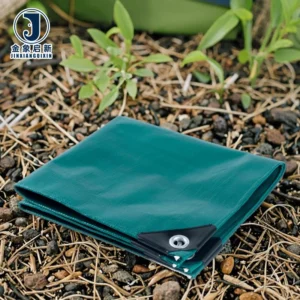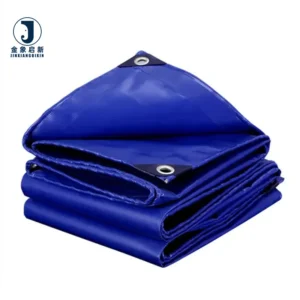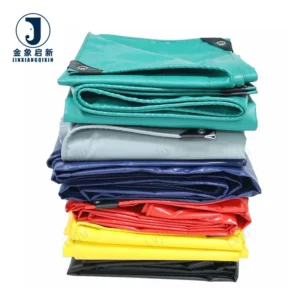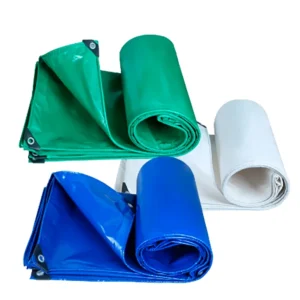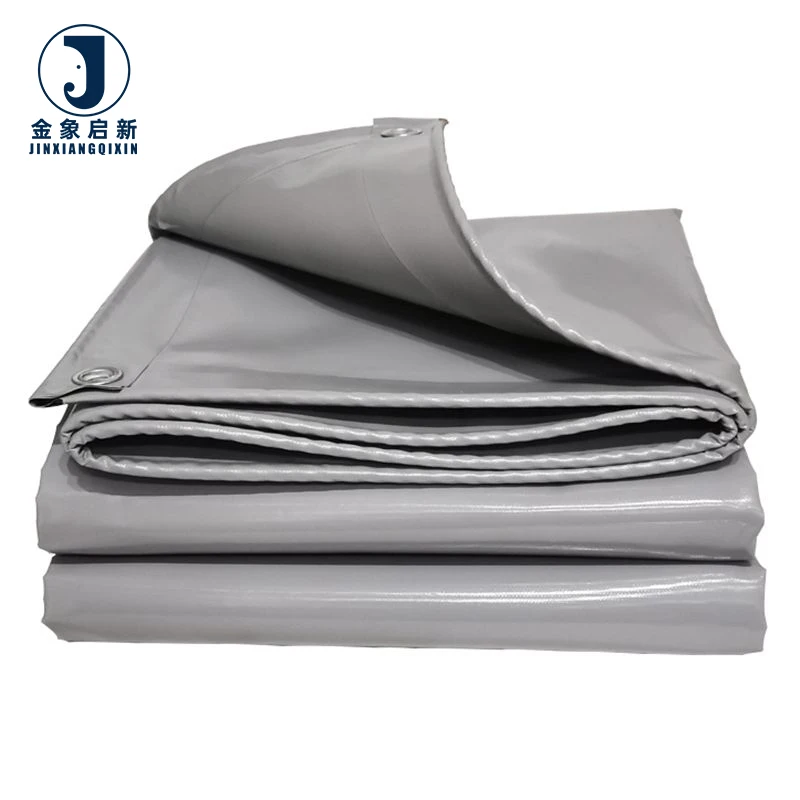
Precision Coating Control — Deep process oversight on knife-coating weight ensures the specified 500 to 600 GSM is delivered consistently across every roll, preventing the common shortfall where material arrives lighter than the quotation stated.
Technical Specifications
| Parameter | Value |
|---|---|
| Product Type | PVC Knife-Coated Tarpaulin |
| Weight | 500 to 600 GSM |
| Base Fabric | Warp knitted polyester |
| Coating Method | Knife coated |
| Coating Material | PVC |
| Waterproof Rating | Anti-permeable ≥ 20KPa |
| Low-Temperature Flexibility | Not fractured at -30°C |
| Flame Retardant | ≤ 10 seconds (test basis not stated in source — confirm the grade required for your market) |
| Water Absorption | Almost no absorbable water, quick drying |
| Seam Construction | High-frequency heat combined, water tight and crack-resistant |
| Corrosion Resistance | Acid, alkali, brine |
| Certifications | ISO, CE |
Application Suitability
| Application | Exposure & Requirement |
|---|---|
| Truck and trailer side curtains | Constant flexing at load points, road debris abrasion, high-speed wind pressure, weather exposure |
| Car tents and vehicle canopies | UV exposure, rain contact, repeated folding and unfolding, tension at mounting points |
| Transport terminal awnings | Permanent outdoor installation, wind uplift forces, thermal expansion and contraction |
| Fleet replacement covers | Model-specific fitment, tie-down stress at eyelets, daily handling and storage wear |
Why Generic-Sized Covers Fail on Specific Trailer Models
A PVC Knife-Coated Tarpaulin for truck covers and transport that is cut to a generic dimension will never fit a specific trailer profile correctly, leaving gaps at corners, excess fabric that flaps and abrades, and tie-down points that do not align with the vehicle’s anchor rails.
Fleet operators who order covers based on a standard size chart frequently discover that the fabric bunches at the rear doors or falls short at the front bulkhead. This misalignment places uneven tension across the welded seams during transit, accelerating fatigue at precisely the points where the load flexes most. The result is a cover that needs patching or full replacement within a single season, adding vehicle downtime and re-ordering costs that far exceed the price of specifying the correct cut from the start [NEED_CITE: common causes of premature tarpaulin failure in transport fleets].
Seam Performance Where the Load Flexes
The weakest point on any truck cover is not the fabric itself but the line where two panels join. High-frequency heat welding fuses the PVC coating layers into a single continuous bond, producing a seam that is water tight and crack-resistant. This construction is essential for truck and trailer side curtains that undergo thousands of flex cycles as the vehicle corners, brakes, and travels over uneven road surfaces. Stitched seams, by contrast, create needle holes that allow water ingress and concentrate stress at each puncture point.
Fitment Accuracy for Model-Specific Trailer Dimensions
A cover that matches the exact dimensions of a specific trailer model eliminates the excess material that catches wind and the shortfalls that leave cargo exposed. This PVC Knife-Coated Tarpaulin for truck covers and transport applications is supplied in custom sizing developed from the buyer’s trailer drawings, with eyelet spacing and hem reinforcement positioned to match the vehicle’s existing anchor points. Samples are developed within days so that fitment can be verified on the actual trailer before full production runs commence.
Reading the Specification Sheet Beyond the GSM Number
The stated GSM tells you the total weight of the fabric per square metre but reveals nothing about how that weight is distributed between the base fabric and the coating layers. A 500 GSM material with a heavier base fabric and thinner coating will exhibit higher tensile and tear strength than a 500 GSM material with a lighter base and thicker coating, even though both carry the same weight designation. Knife coating deposits the PVC compound onto the warp knitted substrate in controlled layers, allowing the manufacturer to adjust the ratio of coating weight to base fabric density for the intended application. For truck side curtains that must resist tearing at tie-down points, the base fabric denier and weave density matter as much as the total GSM. The low-temperature flexibility rating of -30°C without fracture indicates that the plasticiser system in the PVC compound remains active in cold-weather transport routes, preventing the brittle cracking that occurs when a less flexible coating is subjected to sub-zero flexing [NEED_CITE: relationship between plasticiser migration and low-temperature embrittlement in PVC coated fabrics].
The Hidden Cost of Colour Variance Between Rolls
When a fleet order spans multiple rolls and the colour shifts visibly from one roll to the next, the installed covers look mismatched across the vehicle fleet. This inconsistency damages the operator’s brand presentation and can trigger rejection at delivery inspection. Colour variation typically originates from inconsistent pigment dispersion during the compounding stage or from temperature fluctuations across the coating line during a long production run. Buyers who do not specify a colour reference standard or who skip the pre-shipment inspection step often discover the mismatch only after the fabric has been cut, welded, and installed on the trailer — at which point the entire batch may need to be reworked or replaced [NEED_CITE: batch colour consistency standards for coated technical textiles].
Why Buyers Source This Fabric Here
Three full production lines and 36 sets of professional equipment support bulk roll output with reliable on-time delivery, ensuring fleet orders ship complete rather than in partial consignments.
A 10-person R&D team handles custom sizing, pattern printing, and sample development, producing fitment samples within days so that buyers can confirm dimensions before committing to full production volume.
Dedicated QA and QC checkpoints at every production stage include 100% inspection before dispatch, with GSM and coating weight verified per roll against the stated specification.
Deep process control over knife-coating weight and adhesion, built across nearly 30 years of focused coated fabric production, prevents the shortfall where delivered material weighs less than the quotation stated.
ISO and CE certified production supports export documentation requirements across North America, European, and Asian markets, with customs support provided for cross-border shipments.
Documentation & Verification
- Material specification sheet stating GSM, base fabric denier and coating weight per roll
- Pre-shipment inspection record confirming weight and colour consistency before dispatch
- Test report for flame retardant grade where applicable to the buyer’s market requirement
- ISO and CE certificates supporting import compliance documentation
- Certificate of origin and customs documentation for cross-border shipment
- Roll packing list with individual roll weights and dimensions for warehouse receiving
Fabrication, Handling & Storage
- High-frequency heat welding recommended to exploit the PVC coating’s fusion properties and maintain water-tight seams on the 500 to 600 GSM material
- Eyelet reinforcement pads should match the coating thickness to prevent pull-through at tie-down anchor points
- Rolls stored upright on pallets to prevent permanent creasing of the knife-coated surface under self-weight
- Cold-weather unfolding performed gradually, relying on the -30°C flexibility rating to avoid stress fractures
- Mild detergent cleaning only, as aggressive solvents will degrade the PVC coating layer and compromise waterproof performance
- Off-cuts from fabrication stored flat to preserve the warp knitted base fabric structure for future repair patches
What to Include in Your Enquiry
Provide the exact trailer model or dimensions, including side curtain panel sizes and the position of existing anchor rails and tie-down points. Specify whether you require rolls for in-house fabrication or finished covers cut and welded to your drawings. Indicate any flame retardant grade required by your transport depot or the destination market’s fire safety regulations, along with colour references and annual volume estimates so that production scheduling and batch consistency can be planned accordingly.
Frequently Asked Questions
Q: How do I verify the GSM matches what was quoted when the rolls arrive?
A: Request the pre-shipment inspection record that documents the measured GSM per roll before dispatch. On receipt, take a sample cut of known dimensions from each roll, weigh it on a calibrated scale, and compare the result against the material specification sheet. Any discrepancy beyond normal tolerance should be flagged immediately with photographic evidence and the roll packing list reference number.
Q: Can the fabric be supplied with a certified flame retardant test report?
A: Flame retardant grades are available, but the specific test basis must match your market’s regulatory requirement. State the standard your transport depot or destination authority requires — such as a national fire code or transport safety regulation — so that the appropriate grade can be selected and the corresponding test report included with your shipment documentation.
Q: What seam method is recommended for truck covers that flex under load?
A: High-frequency heat welding is specified for this PVC Knife-Coated Tarpaulin for truck covers and transport use because it fuses the coating layers into a continuous bond. This produces water-tight seams that resist cracking at flex points, unlike stitched construction where needle holes create water ingress paths and stress concentration points that fail prematurely under repeated load cycling.
Q: How do you ensure colour consistency across multiple rolls in one order?
A: All rolls within a single production run are manufactured from the same compounded PVC batch under controlled coating line temperatures. The pre-shipment inspection includes a visual colour comparison across rolls, and the inspection record documents this check. Buyers should provide a Pantone or RAL colour reference at the enquiry stage to establish the acceptance benchmark.
Q: What custom sizing options are available for specific trailer models?
A: Covers can be cut and welded to the exact panel dimensions of your trailer model, with eyelet spacing and hem reinforcement positioned to match your vehicle’s anchor rail layout. Provide the trailer drawings or panel measurements at the enquiry stage, and a fitment sample will be developed within days for verification before full production is scheduled.