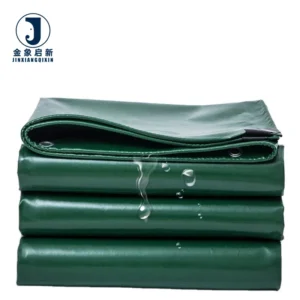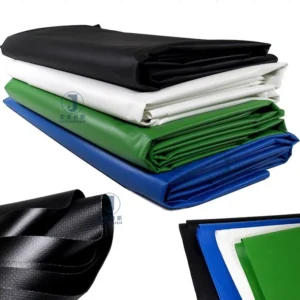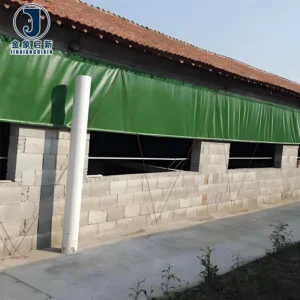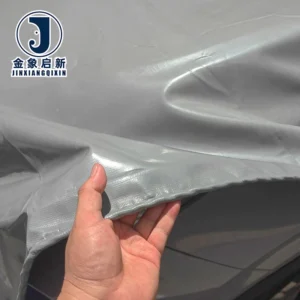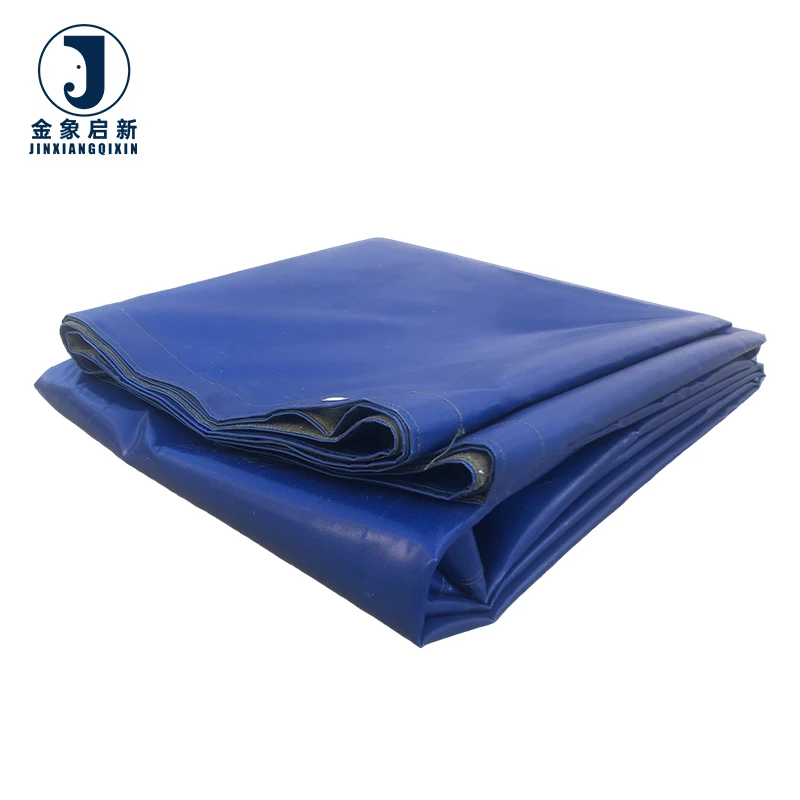
Deep Process Control — every 500gsm PVC laminated tarpaulin roll leaves the line with verified coating weight and high-frequency seam integrity, matching what your fleet specification demands.
Technical Specifications
| Parameter | Value |
|---|---|
| Product Type | PVC Coated Tarpaulin |
| Weight | 500 GSM |
| Base Fabric Denier | 1000D |
| Coating Method | PVC laminated |
| Seam Method | Heat combined with high-frequency |
| Waterproof Rating | Anti-permeable ≥20KPa |
| Flame Retardant | ≤10 seconds (grade not stated — confirm standard required for your market) |
| Low-Temperature Flexibility | Not fractured at -30°C |
| Mildew Proofing | Stated (grade not specified) |
| Corrosion Resistance | Acid, alkali and brine |
| Key Features | Quick-drying, negligible water absorption |
Application Suitability
| Application | Exposure & Requirement |
|---|---|
| Truck side curtain | Constant flexing at load points, road spray, UV exposure, abrasion against cargo edges |
| Flatbed trailer cover | Tension from tie-down straps, wind flap fatigue, temperature swings across long-haul routes |
| Shipping boat cover | Salt mist and brine corrosion, sustained water contact, mechanical wear from rigging |
| Curtain-side trailer build | Roll-to-roll colour consistency for side-by-side panel installation, weld seam strength at corners |
Why High-Frequency Welded Seams Outperform Stitched Seams at Load Flex Points
Water enters through needle holes long before the fabric itself fails — high-frequency heat bonding eliminates that pathway entirely.
When a truck cover flexes over shifting cargo on highway routes, the stress concentrates exactly where panels join. Stitched seams create perforations through the coated fabric, giving water a direct channel to the load underneath. [NEED_CITE: seam failure modes in coated technical textiles] Over repeated flex cycles, those needle holes elongate and the thread itself abrades. A PVC coated tarpaulin for truck and transport use must maintain water tightness at the seams, not just across the field of the material. High-frequency welding fuses the PVC layers into a continuous bond, so the joint behaves as one piece of fabric rather than two pieces held together by thread.
Coating Adhesion Under Repeated Flex Cycles
Laminated PVC construction bonds the coating to the 1000D base fabric through heat and pressure, creating a unified structure that resists delamination when the material bends and folds during transport operations. The PVC coated tarpaulin for truck and transport applications must endure thousands of flex cycles without the coating lifting from the yarn. Where adhesion fails, moisture penetrates between layers and accelerates degradation from the inside out.
Waterproof Performance Sustained Through Road Spray
The anti-permeable ≥20KPa rating means water cannot force its way through the coated surface even under sustained pressure from wind-driven rain or highway-speed road spray. [NEED_CITE: hydrostatic pressure testing methods for coated fabrics] This matters for logistics operators running through varying weather across long-haul routes, where cargo protection cannot depend on fair conditions.
What 500 GSM and 1000D Mean Together for Transport Covers
GSM alone tells you the mass per square metre but not how that mass is distributed between base fabric and coating. A 500 GSM construction built on a 1000D denier base allocates sufficient yarn density to carry tensile loads while the PVC coating fills and seals the weave. The base denier determines how well the fabric resists tear propagation once a puncture occurs — critical when sharp cargo edges press against the cover. [NEED_CITE: relationship between denier, GSM and tear strength in woven coated fabrics] The laminated method used here bonds coating to both faces, contributing to overall weight while maintaining the flexibility needed for rolling and folding during daily use.
The Hidden Cost of Specifying on Price per Kilogram Alone
When buyers chase the lowest cost per kilogram, suppliers compensate by reducing coating weight while maintaining the stated GSM through heavier base yarn or filler compounds. The PVC coated tarpaulin for truck and transport loads then arrives lighter in coating, which shows up as reduced waterproof performance and earlier cracking at cold temperatures. [NEED_CITE: coating weight versus base fabric ratio impact on coated textile durability] Batch colour variation between rolls in the same shipment becomes visible once panels are installed side by side on a fleet trailer, forcing costly rework or partial replacement that erases any initial saving.
Why Sourcing This PVC Coated Tarpaulin for Truck and Transport Works
Three full production lines and 36 sets of professional equipment support bulk roll output with consistent on-time delivery across container-load orders. A 10-person R&D team handles material selection and custom sizing, developing samples within days when your fleet requires non-standard dimensions or specific colour matching. Dedicated QA/QC runs at every production stage, with 100% inspection before shipment verifying GSM, coating adhesion and colour uniformity roll by roll. The specification sheet, test reports and pre-shipment inspection records ship with your order, giving you documentation rather than promises.
Documentation & Verification
- Weight verification per roll against the stated 500 GSM before dispatch
- Test report for flame retardant performance with grade reference included
- Material specification sheet stating 1000D base fabric, coating method and waterproof rating
- Pre-shipment inspection record covering colour consistency across all rolls in the order
- Roll packing list and certificate of origin for customs clearance
Fabrication, Handling & Storage
- High-frequency welding recommended at seams to maintain waterproof integrity across the 500 GSM laminated construction
- Eyelet reinforcement at hems required where tie-down straps concentrate load on the 1000D base fabric
- Store rolls upright on pallets to prevent flat-spotting and permanent crease marks in the PVC coating
- Allow cold-stored rolls to reach ambient temperature before unrolling to avoid low-temperature stiffness cracking
- Clean with mild detergent only — solvent-based cleaners attack the laminated PVC coating surface
Requesting a Specification Match for Your Fleet
Provide your truck and trailer model numbers, the number of vehicles requiring covers and the operating climate range across your routes. Specify whether you need rolls for in-house fabrication or finished cut-and-welded covers ready to install. State any flame retardant grade required by your destination market or fleet insurance requirements.
Frequently Asked Questions
Q: How is the 500gsm weight verified on arrival and what documentation supports it?
A: Each roll undergoes GSM verification during the pre-shipment inspection, with results recorded on the inspection document that ships with your order. The material specification sheet also states the 500 GSM grade, base fabric denier and coating method so you can cross-check the physical sample against the paperwork before approving bulk dispatch.
Q: What truck and trailer models can this tarp be custom-cut to fit?
A: The material is cut and welded to match specific trailer dimensions, including standard curtain-side, flatbed and tipper configurations. Provide your vehicle model and body measurements so the R&D team can develop a sample that accounts for hem allowances, eyelet placement and overlap at the tensioning points.
Q: How do high-frequency welded seams compare to stitched seams at load flex points?
A: High-frequency welding fuses the PVC layers into a continuous bond without needle perforations, eliminating the water channels that stitched seams create. At flex points where cargo shifts and fabric stress concentrates, welded joints maintain waterproof integrity and structural strength through repeated cycles without thread abrasion.
Q: What eyelet spacing and reinforced hem options are available for tie-down compatibility?
A: Hem reinforcement and eyelet spacing are configured based on your tie-down system and strap spacing. Provide your strap layout and load tension requirements so the finishing specification matches the 1000D base fabric strength and ensures secure anchoring across the full cover area.
Q: How is batch colour consistency maintained across rolls for side-by-side installation on fleet vehicles?
A: Every production stage includes QA/QC checkpoints for colour uniformity, with the pre-shipment inspection record documenting consistency across all rolls in the order. This prevents visible colour shifts between adjacent panels once the covers are installed on fleet trailers operating together.