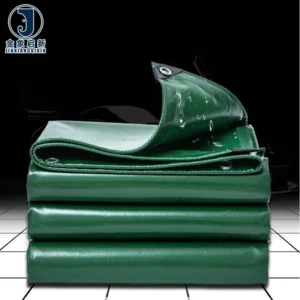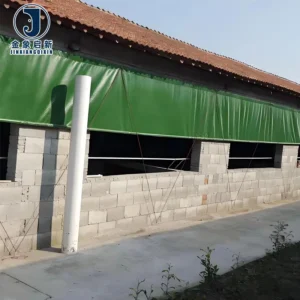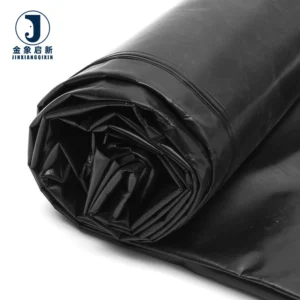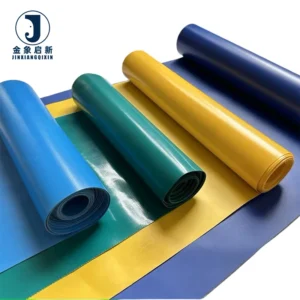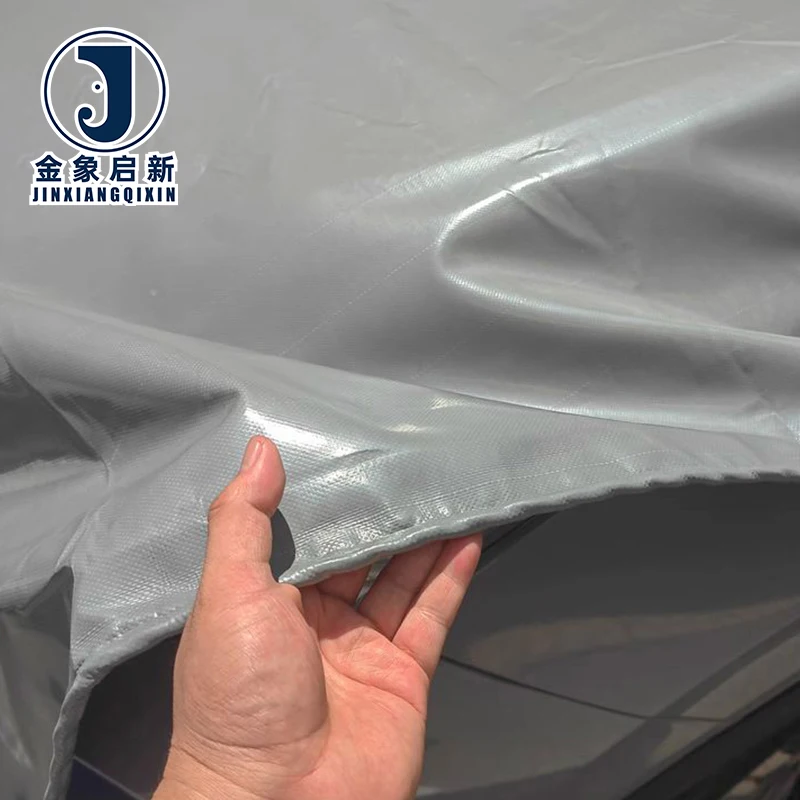
Proven Process Control — Three dedicated production lines with stage-by-stage QA ensure coating weight consistency across every roll of PVC tarpaulin destined for truck and trailer cover fabrication.
Technical Specifications
| Parameter | Value |
|---|---|
| Product Type | PVC Tarpaulin Roll |
| Coating Material | PVC (Polyvinyl Chloride) |
| Base Fabric | Warp Knitted Polyester |
| Weave Style | Plain |
| Waterproofing | Fully waterproof coated construction |
| Anti-Static Treatment | Anti-static treatment applied (test standard available on request) |
| Color Options | Customizable colors available per order |
| Finish | Plain style woven |
| Application Grade | Industrial / Agricultural heavy-duty |
| Certification Basis | ISO, CE |
Application Suitability
| Application | Exposure & Requirement |
|---|---|
| Poultry and broiler farm tent cover | Constant humidity, ammonia exposure, dust accumulation, daily temperature swings |
| Pig and sheep livestock shelter | Wind load stress at tie-down points, ground moisture, animal contact abrasion |
| Agricultural transport trailer cover | Road vibration, flex at load edges, weather exposure during transit |
| Farm equipment weather protection | Prolonged sun and rain exposure, handling abrasion from repeated deployment |
| Agricultural sidewall enclosure | Wind pressure, UV exposure, dust ingress control in poultry housing |
Why Generic-Sized Farm Covers Fail Prematurely on the Road
Covers cut to standard dimensions leave loose fabric that flaps, abrades and tears long before the material itself reaches end of life.
When a PVC tarpaulin roll for truck and trailer cover use is converted into a finished tarp without accounting for the specific trailer profile, the excess material catches wind and rubs against hardware, load edges and tie-down straps. In agricultural transport, this flex-and-rub cycle repeats thousands of times per journey. The failure almost always appears first at the hem or eyelet line, not in the field of the fabric [NEED_CITE: tensile and tear test methods for coated fabrics per ISO 1421]. Buyers who specify exact dimensions, eyelet spacing and hem reinforcement at the inquiry stage consistently report longer service intervals between replacements.
Sizing Covers to the Load Profile, Not the Catalogue
Every transport fleet and farm structure carries different dimensions. A broiler house sidewall runs a different height and wind load than a pig shelter, just as a flatbed trailer demands a different cut from a curtainsider. Our PVC tarpaulin roll for truck and trailer cover applications ships in customisable widths and lengths so fabricators can match the panel to the structure without waste or dangerous overhang.
Colour and Batch Consistency Across Farm Panels
When multiple rolls are installed side by side on a poultry farm or across a fleet of trailers, colour variation between rolls becomes immediately visible once erected. Batch colour consistency is controlled through coating weight monitoring and pigment dosing verification at the coating stage. We recommend requesting a pre-shipment sample panel from the actual production batch to confirm visual match before the full order dispatches [NEED_CITE: colour consistency standards for coated fabric batches].
Coating Weight and Base Fabric: What GSM Really Tells You
GSM figures alone do not define how a PVC tarpaulin performs under load. The total weight combines the base fabric denier, the weave density and the coating mass applied to each side. A heavier coating adds waterproofing depth and abrasion surface, but if the base fabric denier is low, tear propagation resistance stays limited. Conversely, a dense warp knitted base provides tear resistance at tie-down points, while the PVC coating protects the yarn from moisture and chemical attack common in farm environments. The plain weave structure in this roll balances these properties for agricultural and transport use where both flexing and puncture risks are present.
The Hidden Cost of Specifying on Price Per Kilogram Alone
When procurement decisions rest solely on cost per kilogram, the material that arrives is often lighter in coating weight than the sample approved. Thinner coating reduces waterproofing margin and accelerates wear at high-abrasion zones such as trailer edges and farm shelter tie-down corners. Welded seams in lightweight-coated fabric can also fail before the body of the material does, because the heat-activated bond has less coating mass to grip [NEED_CITE: weld seam strength relative to coating weight in PVC tarpaulins]. Confirming GSM on arrival against the quoted specification protects against this silent downgrade.
What Jinan Jinxiang Brings to Farm and Transport Cover Orders
Our 10-person R&D team develops samples within days when custom widths, colours or treatment levels are specified, so buyers can validate fit before committing to bulk. The three full production lines and 36 sets of professional equipment maintain coating weight control roll-to-roll, supporting the batch consistency that fleet and farm installations demand. Every roll undergoes 100% pre-shipment inspection rather than spot sampling. Custom sizing eliminates the generic-dimension problem that causes premature edge failure on agricultural trailers and non-standard farm shelters.
Documentation & Verification
- Material specification sheet stating GSM, base fabric denier and PVC coating weight per roll
- Test report for anti-static treatment confirming the standard applicable to your farm environment
- Pre-shipment inspection record with roll-by-roll colour and weight verification
- ISO and CE certificates included with every dispatch
- Roll packing list and certificate of origin for customs clearance support
Fabrication, Handling & Storage
- Heat-weld seams using temperature and dwell settings matched to the PVC coating weight on this roll
- Reinforce eyelet and hem zones where tie-down strap tension concentrates on transport covers
- Store rolls upright on cores to prevent flat-spot creasing in the warp knitted base fabric
- Allow cold-stored rolls to reach ambient temperature before unrolling to avoid coating crack
- Clean with mild detergent; avoid solvents that soften the PVC coating surface layer
- Plan panel cuts to minimise cross-grain seams on wide agricultural shelter structures
Before You Request a Quote
Tell us the structure or vehicle model the cover must fit, the environmental exposure it will face (humidity, ammonia, dust, road spray), and the treatment properties your site requires. Specify the roll width, colour and estimated annual volume so we can confirm lead time and batch consistency. If your application needs anti-static or other certified treatments, note the standard your market demands so we can align test documentation accordingly.
Frequently Asked Questions
Q: How can I verify the GSM of the tarpaulin rolls when they arrive?
A: We provide a pre-shipment inspection record that documents the measured weight of each roll against the quoted GSM. On receipt, you can confirm by cutting a measured sample from the roll edge, weighing it and calculating the area-to-mass ratio. Any deviation beyond normal tolerance is flagged before dispatch so discrepancies are resolved before the material reaches your site.
Q: What eyelet and hem reinforcement options suit tie-down applications?
A: For transport and farm covers under tie-down tension, hems are folded and heat-welded to double the fabric thickness at the edge, then eyelets are punched and pressed through both layers. Spacing is set to match the strap configuration of your trailer or shelter frame, distributing load evenly and preventing tear-out at individual fixing points.
Q: Can I order custom colours and widths for my farm or fleet cover project?
A: Customisable colours and widths are available on roll orders. We develop a sample roll or swatch in the requested colour first so you can confirm the shade and coating hand-feel. Batch consistency is controlled through pigment dosing and coating weight monitoring so that every roll in the order matches when panels are installed side by side.
Q: How do I confirm the anti-static treatment meets my farm requirements?
A: Anti-static treatment is applied during coating, but the relevant test standard varies by market and application environment. At inquiry, specify the standard or discharge threshold your site requires. We then supply a test report from the production batch confirming the treatment level so you can present it to your compliance or safety team.
Q: What are typical lead times for custom PVC tarpaulin roll orders?
A: Lead times depend on the degree of customisation involved. Standard widths and stock colours move through production faster, while custom colours, non-standard widths or certified treatment grades require additional setup and testing. We confirm the production schedule and dispatch date at quotation stage once all specifications are locked.