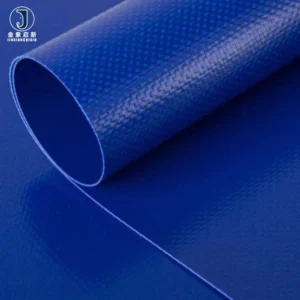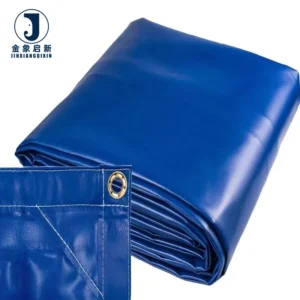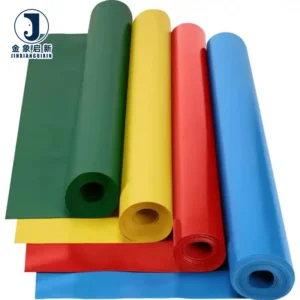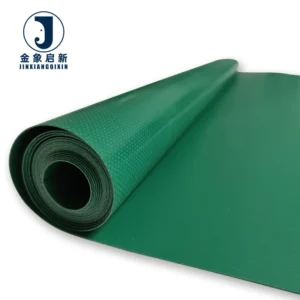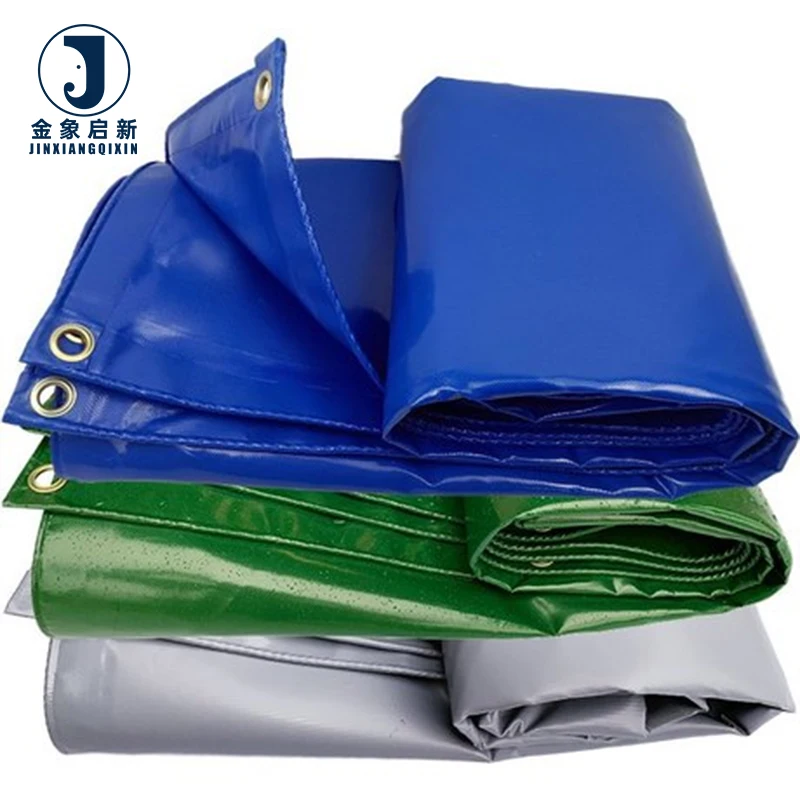
Bulk Roll Consistency — every roll verified for weight and coating adhesion before dispatch, so fleet fabricators cut with confidence knowing the specification matches what arrived.
Technical Specifications
| Parameter | Value |
|---|---|
| Product Type | PVC Coated Tarpaulin |
| Weight | 650gsm |
| Base Fabric | 100% high tenacity polyester yarns |
| Coating Material | PVC |
| Coating Technology | Laminated & Hot-melt Coating technology |
| Waterproof | Yes |
| Cold Crack Resistance | Yes |
| Anti-Mildew | Yes |
| Color Fastness | High |
| Available Special Treatments | Flame retardant, anti-static, anti-cold, anti-mildew, 3P (grades available — confirm the certification required for your market) |
| Standards | ISO, CE |
Application Suitability
| Application | Exposure & Requirement |
|---|---|
| Truck and trailer side curtains | Constant flexing, road vibration, abrasion at tie-down points, UV exposure across seasons |
| Flatbed and load covers | Wind load stress, pooling water, mechanical abrasion from cargo contact |
| Transport fleet load protection | Daily tensioning and release cycles, temperature swings during transit |
| Industrial equipment covers | Dust and moisture ingress, outdoor storage, periodic handling and repositioning |
| Construction site enclosure panels | Wind-driven rain, site debris impact, repeated installation and teardown |
What "650gsm" Actually Tells a Fleet Fabricator About Weld Integrity
Weight is only meaningful when paired with adhesion data and base fabric tensile values.
A PVC coated tarpaulin for truck and trailer applications lives or dies at the weld line. I have seen heavy-grade coated rolls arrive at the fabrication floor, get cut to panel size, and then fail a peel test at the seam — not because the fabric was weak, but because the coating delaminated from the base yarn under heat. The quoted 650gsm tells you the total mass per square metre; it does not tell you how that mass is distributed between base fabric and coating, nor whether the two layers will stay bonded after a hot wedge passes through them. [NEED_CITE: ISO 1421 tensile and tear test methods for coated fabrics]
This roll uses laminated and hot-melt coating technology, which forces the PVC into the polyester weave under heat and pressure rather than simply sitting on the surface. That mechanical bond is what gives the fabric its tearing strength at welded joints, where the curtain flexes every time the trailer rounds a corner or the driver tensions a strap.
Coating Adhesion and Its Role in Curtain Longevity
The separation between a PVC coated tarpaulin for truck and trailer use lasting through its service window or failing early at the hem is almost always an adhesion story. Hot-melt coating drives the PVC compound into the interstices of the high tenacity polyester yarns, creating a mechanical lock that resists the peeling forces generated when a side curtain flexes under aerodynamic load. Laminated construction adds a further bonding pass, compressing the coating layers onto both faces of the scrim simultaneously so the total 650gsm is achieved through controlled, uniform buildup rather than surface over-application.
Tear Strength Where the Fabric Is Cut and Joined
Tear resistance in a roll stock is not a single number — it behaves differently at the body of the panel versus at a slit edge or a welded overlap. The 100% high tenacity polyester yarn base provides the structural backbone that resists tear propagation, but the coating method determines whether a small nick in the curtain will stay localised or run. Hot-melt coated fabrics tend to contain damage because the coating penetrates the yarn bundle, holding individual filaments together even after a puncture event. [NEED_CITE: tear propagation behaviour in PVC coated polyester per EN ISO 13937]
How GSM, Base Fabric, and Coating Weight Interact
Reading a material data sheet requires understanding that 650gsm is a composite figure — it sums the base fabric weight and both sides of coating together. A roll with a heavier base scrim but thinner coating will behave very differently under heat welding than one with a lighter scrim and thicker surface coat, even though both may read the same on the scale. The hot-melt and laminated process used here prioritises coating penetration over surface thickness, which directly affects how the material responds to high-frequency or hot-wedge welding. Base fabric denier and yarn count determine the tear path: a tighter weave forces a tear to change direction more often, absorbing energy at each deflection. Cold crack resistance ensures the PVC layer remains pliable in low-temperature transit, preventing the brittle micro-fractures that let moisture reach the polyester core and begin mildew formation from the inside.
The Cost of Receiving the Wrong Roll Specification
When a transport fleet orders multiple rolls for a curtain replacement programme and the material arrives lighter than quoted, the consequences compound. Panels cut to pattern come out undersized, weld parameters set for the specified thickness produce burnt-through seams on thinner stock, and colour drift between rolls becomes visible once adjacent curtains are hung on the same trailer. [NEED_CITE: batch colour consistency standards in coated fabric procurement] Flame retardant or anti-static treatments claimed on the quotation but unsupported by a test report surface as a compliance failure only when the site safety officer asks for documentation — by which point the curtains are already fabricated and installed. The financial exposure is not the material cost; it is the tear-down, re-fabrication, and vehicle downtime while new panels are made.
Why Fabricators Source This Roll Stock Here
Three full production lines and a dedicated coating facility give this mill the capacity to hold colour and weight consistency across a multi-roll order — verified through 100% pre-shipment inspection rather than spot sampling. A ten-person R&D team develops custom widths and treatment combinations in-house, producing samples within days so fabricators can confirm weld parameters before committing to production volume. The hot-melt and laminated coating process is controlled at each stage with in-process QA checks on adhesion and coating weight, so the specification on the quotation matches the roll that arrives at the cutting table. ISO and CE certification underpins the documentation package, not as a wall display but as a traceable record shipped with each consignment.
Documentation & Verification
- Weight verification per roll against the stated 650gsm before dispatch, with recorded values on the packing list
- Material specification sheet confirming base fabric denier, coating method, and GSM breakdown
- Test reports for flame retardant and anti-static treatments where applicable — specify your market requirement at inquiry stage
- Pre-shipment inspection record documenting coating adhesion, colour reference, and roll dimensions
- Certificate of origin and customs documentation included with each shipment
Fabrication, Handling & Storage
- Hot-wedge welding at temperatures matched to the hot-melt coating layer — run test welds on offcuts before production
- Reinforced hems at tie-down zones should account for the 650gsm thickness to avoid stitch pull-through under tension
- Store rolls horizontally on pallets in a dry, shaded area to prevent compression marks on the PVC surface
- Allow rolls to acclimatise before unrolling in cold conditions to protect the cold crack resistance performance of the coating
- Use mild detergent and soft brush for cleaning; avoid solvents that attack the PVC coating bond to the polyester base
- Cut panels with a rotary blade rather than shears to produce a clean edge suitable for immediate heat welding
Requesting a Quote or Sample
Provide your trailer model or panel dimensions, target roll width, and annual volume so the quotation reflects actual cutting yield rather than generic roll pricing. If your fleet operates under specific fire safety or anti-static regulations, name the standard you need documented — treatment grades are available but must be specified at inquiry. State whether you need raw roll stock or pre-cut panels with hem and eyelet finishing.
Frequently Asked Questions
Q: How do I verify the 650gsm weight matches the quotation when the rolls arrive?
A: Cut a measured sample from each roll — typically a one-metre square — and weigh it on a calibrated scale. Compare the result against the specification sheet supplied with the shipment. Our pre-shipment inspection record includes per-roll weight data, giving you a baseline to confirm on receipt before cutting begins.
Q: Are flame retardant and anti-static treatments available with test reports?
A: Both treatments are available as options on this PVC coated tarpaulin for truck and trailer use. Specify the standard required for your market or operating site at inquiry stage — we supply the corresponding test report with the shipment. Do not assume a treatment is included unless it is listed on your material specification sheet.
Q: What is the lead time for custom widths or colours on bulk roll orders?
A: Standard widths ship from stock within typical production schedules. Custom widths, colours, and treatment combinations require sample development and approval before production runs begin. Provide your target specification early so samples can be confirmed and the production slot reserved accordingly.
Q: How is colour consistency maintained across multiple rolls in a single order?
A: All rolls in a batch order are coated from the same compound mix and inspected against a single colour reference standard. The pre-shipment inspection verifies roll-to-roll consistency before packing. If your application places adjacent panels side by side on a trailer, flag this at inquiry so the inspection tolerance is set accordingly.
Q: Can I get a sample roll before placing a bulk order?
A: Samples are developed within days for custom width, colour, and treatment requirements. We recommend running weld tests and physical checks on the sample to confirm fabrication parameters before authorising full production. Request a sample through your inquiry with your target specification attached.