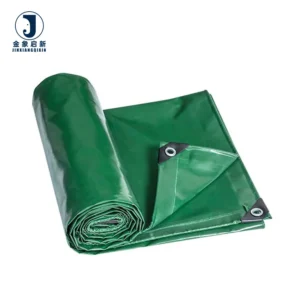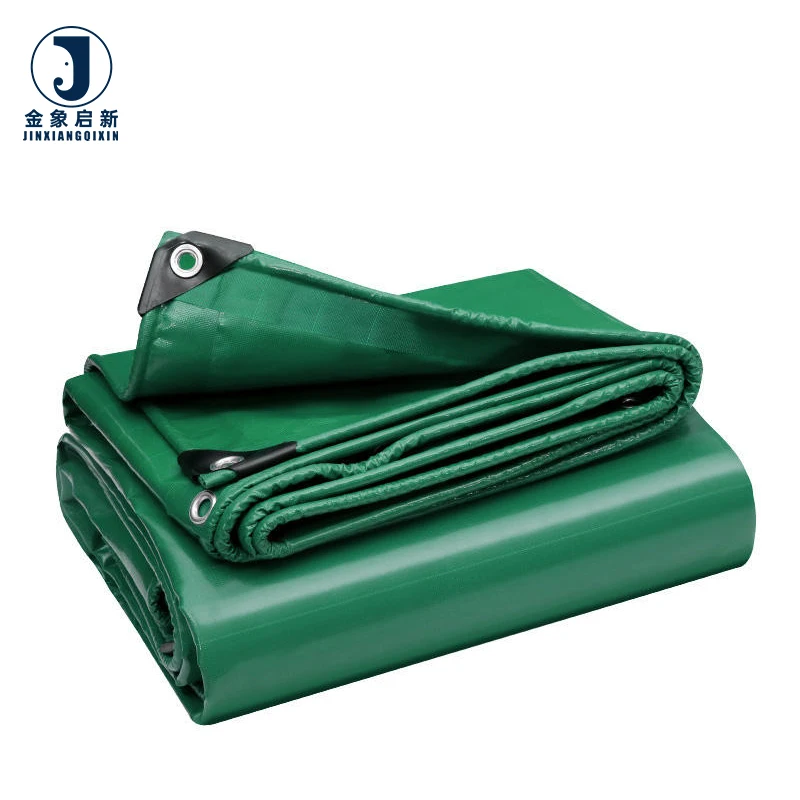
Process Control Over Coating Weight — verified through in-process QA at every stage, ensuring each roll of PVC tarpaulin for truck and transport meets the stated GSM before dispatch.
Technical Specifications
| Parameter | Value |
|---|---|
| Product Type | PVC Coated Tarpaulin |
| Weight Range | 250gsm–1500gsm (confirm the grade for this item) |
| Base Fabric Denier | 200DX300D, 500DX500D, 840DX840D, 1000DX1000D |
| Available Sizes | 3x4m, 6x8m, 8x10m, 10x12m or custom made |
| Surface Finish | Glossy or matte |
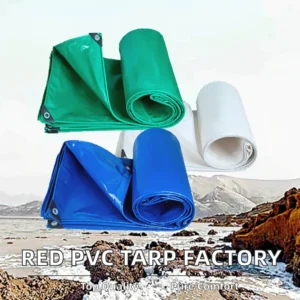
| Colour Options | Blue, yellow, black, green, white, etc. |
| Temperature Range | -15°C to 70°C |
| Treatment Options | Waterproof, UV, FR and anti-fungal (grades available — confirm the grade required for your market) |
| Key Features | Water-proof, rain-resistant, tear-resistant, good flexibility, good abrasion resistance |
| Working Life | Suited to extended outdoor exposure depending on usage environment |
| Standards | ISO, CE certified production |
Application Suitability
| Application | Exposure & Requirement |
|---|---|
| Dump trailer cover | Constant loading abrasion, road debris impact, UV exposure, repeated flex at hinge points |
| Boat transport and storage | Salt or fresh water splash, UV exposure, wind flap fatigue, tie-down tension at eyelets |
| Flatbed truck cargo cover | High-speed wind load, rain ingress, cargo shift abrasion, tie-down strap friction |
| Firewood and outdoor stack cover | Moisture wicking, ground contact, fungal growth risk, seasonal UV exposure |
| Roof and construction material cover | Prolonged sun exposure, pooling water, puncture from sharp edges, wind uplift |
Why Generic Tarps Fail on Moving Loads — And What PVC Tarpaulin for Truck and Transport Changes
A tarp cut to a standard size leaves slack at corners and stress at anchor points, which is where most failures begin.
Fleet operators routinely buy off-the-shelf covers that do not match the exact deck length or side curtain drop of a specific trailer model. The result is fabric that flaps in crosswinds, eyelets that pull out under tension, and seams that split within weeks. [NEED_CITE: tensile and tear test methods for coated fabrics per ISO 1421] A heavy duty tarpaulin cut to the precise vehicle dimensions eliminates the excess material that catches wind and the shortage that overstretches anchor hardware. This is not about adding more GSM — it is about geometry matching the load profile.
How Trailer-Specific Sizing Eliminates the Most Common Cover Failures
When a PVC tarpaulin for truck and transport is patterned to a specific dump trailer or flatbed, every edge aligns with a structural member. Tie-down points sit directly over D-rings or stake pockets, so strap tension distributes across reinforced webbing rather than concentrating on a single eyelet. Side curtain drops match the exact rail-to-floor distance, removing the fold that collects rainwater and accelerates mildew.
What Happens at the Weld Line When the Load Flexes
Every time a trailer articulates over uneven road, the cover bends at predictable stress zones — typically above the axle line and near the tailgate hinge. If the welded seam is weaker than the parent fabric, the joint opens before the PVC coating shows any sign of wear. [NEED_CITE: hot air welding parameters for PVC coated polyester] Specifying a thermal weld process that matches the coating chemistry ensures the bond strength tracks with the base fabric tensile value, so the seam outlasts the panel.
Reading GSM Alongside Denier to Understand Real Strength
Weight in grams per square metre tells you how much coating sits on the fabric, but it does not describe the yarn thickness or weave density underneath. A 200DX300D base with heavy coating may weigh the same as a 1000DX1000D base with lighter coating, yet the second option will resist tear propagation substantially better because the thicker yarns bridge any puncture. For dump trailer and heavy equipment covers, the higher denier options in this range deliver the tear resistance needed when cargo shifts against the fabric during transit.
The Hidden Cost of Skipping Pre-Shipment Weight Verification
A quoted GSM that is not confirmed on arrival means the coating layer may be thinner than the design assumed. Thinner coating reduces waterproof performance at the seams, lowers the abrasion threshold where straps bear against the cover, and shortens the interval before UV degradation reaches the base yarns. [NEED_CITE: effect of coating weight deviation on coated fabric service life] Fleet operators who do not request a roll-by-roll weight check before dispatch often discover the shortfall only when the first cover fails in the field, triggering warranty disputes and unplanned replacement costs.
Why Sourcing This PVC Tarpaulin for Truck and Transport Here Makes Sense
Three full production lines and 36 sets of professional equipment support bulk orders without splitting a single run across different machines, which keeps batch-to-batch colour and coating weight consistent. A 10-person R&D team handles vehicle-specific pattern development, producing cut samples for your trailer model before full production begins. Dedicated QA and QC inspection at every production stage — including coating weight checks and weld strength tests — catches deviations before the roll is packed. ISO and CE certified production underpins the documentation your compliance team needs. Pre-shipment inspection records accompany every order, so you can verify GSM and dimensions against the purchase specification before the container leaves the factory.
Documentation & Verification
- Material specification sheet stating exact GSM, base fabric denier and coating type for each roll
- UV and flame retardant test reports provided for treated grades where applicable
- Pre-shipment inspection record confirming weight, dimensions and weld integrity
- Roll packing list with individual roll numbers for traceability
- Certificate of origin and customs documentation for cross-border shipment
Fabrication, Handling & Storage
- Hot air weld temperature and speed must match the PVC coating grade to maintain seam peel strength
- Reinforced webbing patches at tie-down zones distribute strap load across the 250gsm–1500gsm fabric
- Store rolls vertically on pallets to prevent flat-spot creases in glossy or matte surfaces
- Allow cold-stored rolls to reach ambient temperature before unrolling to avoid coating micro-cracking
- Use mild detergent for cleaning; solvent-based agents may attack the PVC surface layer
- Field repairs with compatible PVC adhesive patches restore waterproof integrity at minor punctures
What to Include in Your Enquiry
Provide the exact trailer deck dimensions, side curtain drop and any tailgate profile details so the pattern can be developed to match your fleet. Specify the operating climate and whether flame retardant or anti-fungal treatment is required for your market compliance. Indicate whether you need finished covers with eyelets and hems, or roll stock for your own fabrication line.
Frequently Asked Questions
Q: How do I supply trailer dimensions so the tarp fits my specific model?
A: Send the overall deck length, width, side curtain drop and any tailgate or bulkhead profiles. If possible, include the positions of D-rings, stake pockets and tie-down rails. The R&D team develops a cut pattern from these measurements and produces a sample for fitment check before full production begins.
Q: How is the quoted GSM confirmed before the order ships?
A: Every roll undergoes in-process weight verification during production. A pre-shipment inspection record documents the actual GSM measured against the quoted value. This report is included with the packing list so you can cross-check before the goods leave the factory.
Q: Are UV and flame retardant treatments backed by test reports?
A: UV and flame retardant treatments are available in multiple grades depending on market requirements. When you specify the standard your end-use demands, the matching test report is supplied with the shipment documentation. Confirm the grade needed for your region at the enquiry stage.
Q: How is colour consistency controlled across multiple rolls in one order?
A: All rolls in a single production run are processed on the same line with identical coating batches and colour formulations. Pre-shipment inspection includes a visual panel comparison across rolls to flag any shade variation before packing, ensuring uniform appearance when covers are installed side by side.