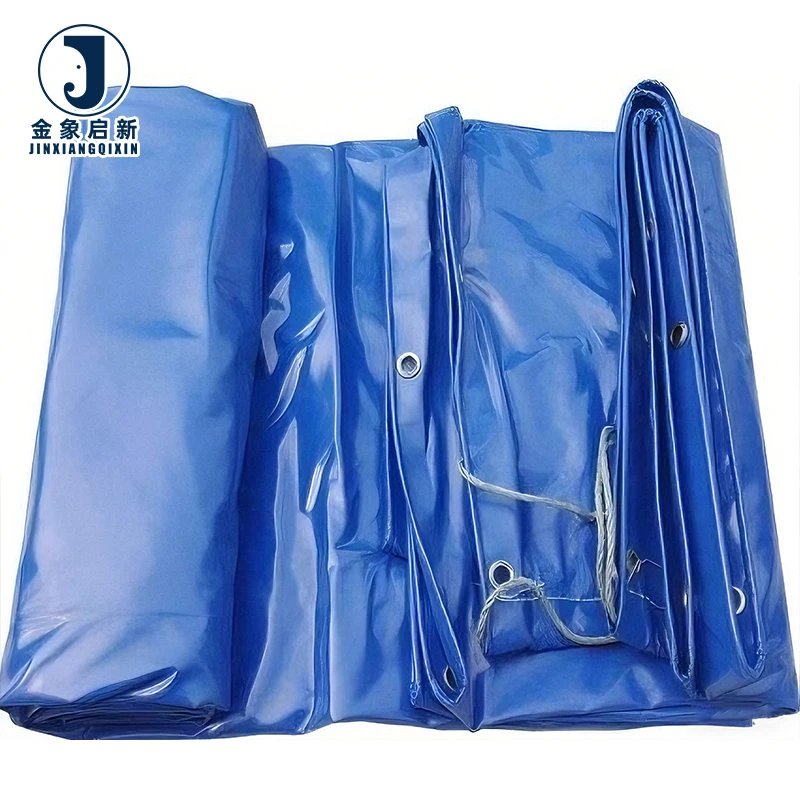
Custom PVC Coated Tarpaulin Fabric for Truck – Manufacturer
Deep Coating Process Control — Three dedicated production lines with 36 equipment sets allow strict adhesion and weight tolerance checks on every PVC coated tarpaulin batch before it leaves the facility.
Technical Specifications
| Parameter | Value |
|---|---|
| Product Type | PVC Coated Tarpaulin |
| Weight Range | 250gsm-1500gsm (range covers product family — confirm the grade for this item) |
| Base Fabric Denier | 200DX300D, 500DX500D, 840DX840D, 1000DX1000D |
| Coating Material | PVC |
| Surface Finish | Glossy or matte |
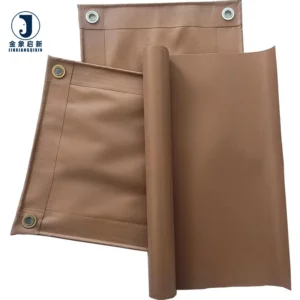
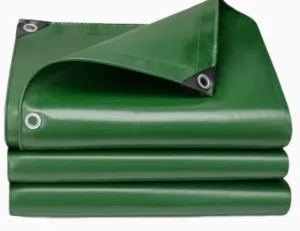
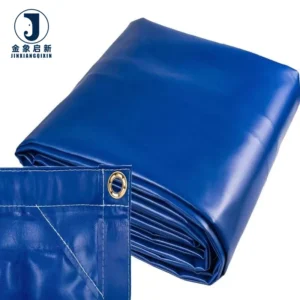
| Color Options | Blue, yellow, black, green, white, etc. |
| Size | 3x4m, 6x8m, 8x10m, 10x12m or custom made |
| Temperature Range | -15°C to 70°C |
| UV Treatment | Customized (test basis not stated in source) |
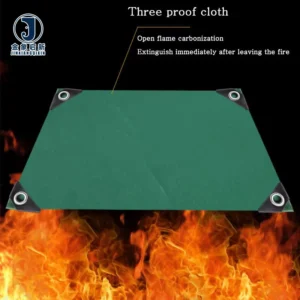
| Flame Retardant Grade | FR treated (grade not stated in source) |
| Additional Treatment | Anti-fungal treated |
| Key Features | Waterproof, rain-resistant, tear resistant, durable, good flexibility, good adhesion strength, good abrasion resistance |
| Working Life | 3-10 years depend on different usage environment |
| Standards | ISO, CE |
Application Suitability
| Application | Exposure & Requirement |
|---|---|
| Truck side curtain and top cover | Constant flexing at load shifts, road spray, UV exposure, tie-down tension at hems |
| Trailer load protection | Wind lift during transit, abrasion from cargo movement, temperature fluctuation across routes |
| Construction equipment covers | Stationary outdoor exposure, UV degradation, dust ingress, handling and repositioning stress |
| Agricultural stock covering | Moisture penetration prevention, wind resistance, repeated deployment and folding cycles |
Why a Generic-Size Truck Cover Fails on the Road
A PVC coated tarpaulin cut to exact vehicle dimensions eliminates flapping damage and cargo exposure that generic covers cause.
When a fleet operator orders truck covers, the quotation often lists a standard size that does not match the specific trailer model. The result is excess fabric that flaps at highway speed, concentrating stress at the seams and eyelets until the cover tears prematurely. [NEED_CITE: aerodynamic load and flap fatigue on heavy vehicle covers] I have seen transport companies replace entire batches of covers within months because the pattern was never matched to the trailer drawing. A PVC coated tarpaulin for truck and trailer use must account for the exact body dimensions, door swing radius, and tie-down rail positions before production starts.
Pattern Matching to Specific Trailer Models
Each truck and trailer body has distinct dimensions that dictate how the PVC coated tarpaulin should be cut, welded, and reinforced. Fleet operators who provide vehicle drawings receive covers that align with existing tie-down points, eliminating the need for field modifications. The base fabric denier — from 200DX300D for light-duty panel vans up to 1000DX1000D for heavy flatbed trailers — is selected based on the route exposure and cargo type the fleet typically handles.
Reinforcement at High-Stress Tie-Down Points
The areas where straps and ropes apply tension experience concentrated peel forces that can delaminate the coating from the base fabric. Reinforced hems and strategic eyelet placement distribute these loads across a wider fabric area, preventing the common failure pattern where the eyelet pulls through the material. The PVC coating’s adhesion strength — verified during production — ensures that welded seams at corners and edges hold through repeated tightening and release cycles. [NEED_CITE: peel strength test methods for coated fabric seams per ISO 1421]
Understanding How Denier and GSM Work Together
The base fabric denier determines the yarn thickness in the warp and weft directions, while the GSM reflects the total weight including the PVC coating on both sides. A 500DX500D base at a given GSM will behave differently than an 840DX840D base at the same GSM because the coating-to-yarn ratio changes. Heavier denier yarns resist tear propagation more effectively, while the PVC coating weight governs surface abrasion resistance and waterproof integrity. Choosing the right combination depends on whether the primary stress is tensile — from tie-down tension — or abrasion — from cargo rubbing against the inner surface during transit.
The Hidden Cost of Specifying the Wrong Grade
Ordering a PVC coated tarpaulin at a lighter GSM than the application demands leads to predictable failure patterns. On long-haul truck routes, underspecified covers develop pinholes at flex points within weeks, allowing moisture to reach the cargo. [NEED_CITE: premature coating failure on underspecified transport covers] Fleet operators then face double costs — replacing the cover and addressing cargo damage claims. Similarly, colour inconsistency across rolls in a fleet-wide order becomes visible when covers are deployed side by side, undermining the professional appearance of branded transport equipment.
Why Fleet Operators Source From This Facility
Nearly 30 years of focused PVC coated fabric production translates to process control that covers coating weight consistency and adhesion reliability across production runs. Three full production lines handle bulk fleet orders with on-time delivery scheduling, while the 10-person R&D team develops samples for custom trailer dimensions within days. Dedicated QA and QC at every stage — from incoming yarn inspection to final roll packing — ensures the PVC coated tarpaulin leaving the facility matches the quotation. Every shipment receives 100% pre-shipment inspection, catching GSM deviation and surface defects before they reach the fleet yard.
Documentation & Verification
- Material specification sheet confirming GSM, base fabric denier, and coating type per roll or cut piece
- Pre-shipment inspection record verifying coating weight against the quoted specification
- UV and flame retardant test reports supplied where applicable to support treatment claims
- Certificate of origin and customs documentation for cross-border fleet procurement
- Roll packing list with individual roll dimensions and net weight for warehouse receiving
Fabrication, Handling & Storage
- Hot-air welding at appropriate temperature for the selected GSM ensures seam adhesion matches the base fabric strength
- Eyelet installation through reinforced PVC patches prevents pull-through at tie-down points on heavy-denier grades
- Store rolls horizontally on pallets to avoid permanent crease marks in the PVC coating surface
- Allow cold-stored rolls to reach ambient temperature before unrolling to prevent coating cracking at -15°C threshold
- Use mild detergent and soft brush for cleaning; avoid solvent-based cleaners that degrade the PVC surface finish
Preparing Your PVC Coated Tarpaulin for Truck and Trailer Inquiry
To specify the correct PVC coated tarpaulin for truck and trailer applications, provide the exact trailer model and body dimensions so the pattern can be matched before production. Indicate the primary route climate — whether high UV exposure, cold-temperature transit, or humid corridors — so the appropriate treatment package is selected. Specify whether you need roll stock for in-house fabrication or finished cut-to-size covers with hem and eyelet reinforcement already applied.
Frequently Asked Questions
Q: How do you verify GSM on arrival matches the quoted specification?
A: Each roll or cut piece undergoes weight verification during 100% pre-shipment inspection, and the inspection record is included with dispatch documentation. The material specification sheet states the confirmed GSM, base fabric denier, and coating weight, allowing the receiving warehouse to cross-check against the original quotation before accepting delivery.
Q: What UV and flame retardant test reports are supplied with each shipment?
A: Where UV or flame retardant treatment is specified in the order, the corresponding test reports are provided with the shipment documentation. The specific grade and test standard depend on the market requirement — confirm the regulation applicable to your region so the correct treatment and certification package is prepared before production begins.
Q: How is the tarp pattern matched to a specific truck or trailer model?
A: Provide the vehicle body drawing or dimensional measurements including door openings, tie-down rail positions, and corner radii. The R&D team develops a pattern from these dimensions and produces a sample for approval before full production, ensuring the PVC coated tarpaulin fits the trailer without excess fabric that would flap at highway speed.
Q: What eyelet spacing and hem reinforcement options are available for tie-down loads?
A: Eyelet spacing and hem construction are specified based on the tie-down method and load type the fleet uses. Reinforced PVC patches are welded behind eyelet positions on heavy-denier grades to distribute strap tension, and the spacing is matched to standard ratchet strap or rope intervals used in your transport operation.
Q: How do you control colour consistency across rolls in a fleet-wide order?
A: Batch colour matching is controlled during the PVC coating stage, with reference samples checked against the specified colour standard. Rolls within the same fleet order are produced in a single coating run wherever possible to maintain uniform colour, and pre-shipment inspection includes a side-by-side visual check before packing.