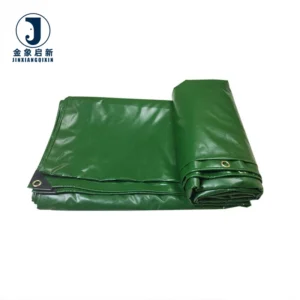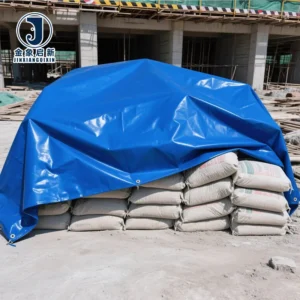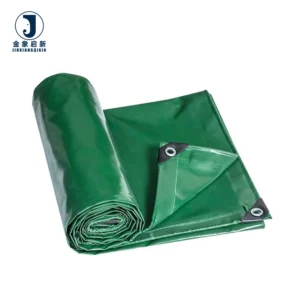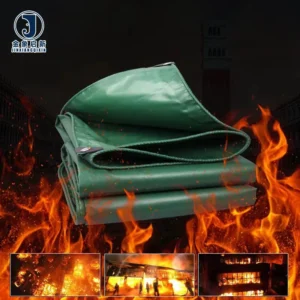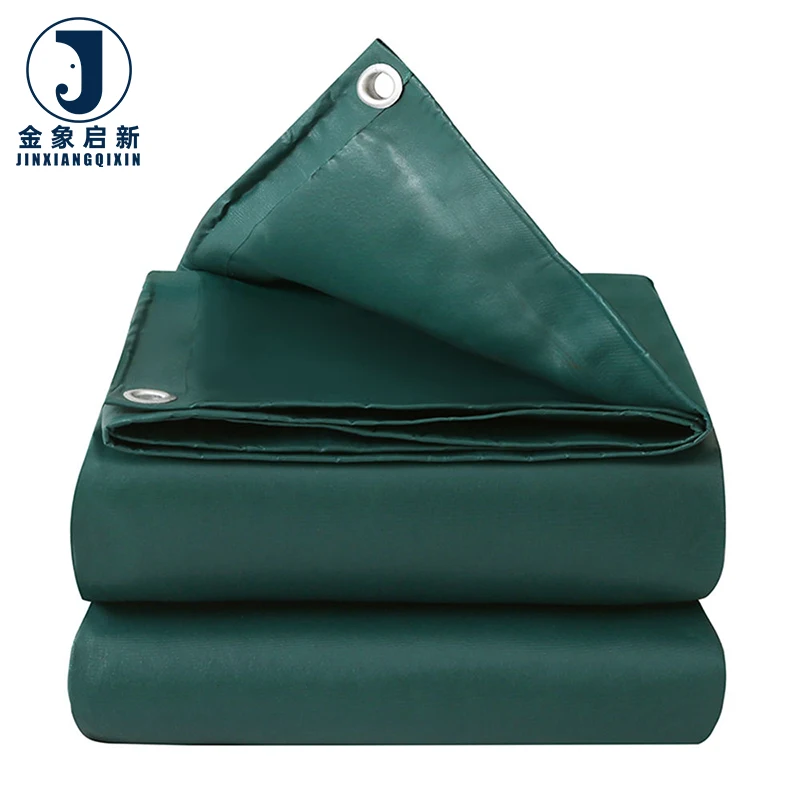
Precision coating control — our hot-melt coating lines maintain uniform adhesion between the PVC layer and polyester mesh base, verified at every production stage to ensure consistent performance across every roll shipped.
Technical Specifications
| Parameter | Value |
|---|---|
| Product Type | PVC Coated Tarpaulin |
| Material | PVC + High-strength polyester mesh fabric |
| Weight (GSM) | 350gsm / 420gsm / 500gsm / 550gsm / 600gsm / 750gsm (confirm the grade for this item) |
| Total Thickness | 0.32mm / 0.35mm / 0.4mm / 0.45mm / 0.5mm / 0.65mm (confirm the grade for this item) |
| Coating Technology | Laminated technology & Hot-melt coating technology |
| Color | Blue / Red / Yellow / Light blue / Grey (Customized) |
| Roll Width | 2m / 2.1m |
| Roll Length | 75m (for 2m width) / 50m (for 2.1m width) |
| Key Features | Cold crack resistance, Anti-mildew, Anti-static treatment (grade not stated), Waterproof, Sunproof (test basis not stated), Flame retardant (grade not stated) |
| Standards | ISO, CE |
Application Suitability
| Application | Exposure & Requirement |
|---|---|
| Truck side curtain fabric | Constant flexing at load points, road debris abrasion, UV exposure, wind flap fatigue |
| Flatbed trailer cargo covers | Heavy tie-down strap pressure, weather ingress prevention, repeated folding and unfolding |
| Transport equipment OEM builds | Model-specific fitment, batch color consistency across a fleet run, weld seam integrity |
| Replacement covers for regional haul fleets | Abrasion at buckle contact zones, cold crack resistance in winter routes, dimensional stability |
| Construction and scaffolding enclosure | Wind loading, rain exposure, site dust and chemical contact |
Why a Generic-Size PVC Coated Truck Tarpaulin Costs Your Fleet More Than a Custom Fit
A cover cut to your exact trailer dimensions eliminates the flap, abrasion and premature seam failure that generic sizing causes on the road.
Fleet operators who buy off-the-shelf truck covers often discover the fabric bunches at the rear or leaves the forward load exposed. The loose material flaps at highway speed, which concentrates stress at the hem and eyelet line until the weld peels away from the base fabric. [NEED_CITE: tensile and tear test methods for coated fabrics per ISO 1421]. Meanwhile, a PVC coated truck tarpaulin that is too tight pulls against the tie-down points and stretches the coating beyond its recovery limit. Both scenarios shorten service intervals and increase replacement frequency. Sourcing a PVC coated truck tarpaulin cut to your specific trailer make and model removes these failure modes before the first trip.
Cut to the Trailer, Not to a Stock Pattern
Every trailer model has different body rail heights, headboard angles and rear door clearances. Our PVC coated truck tarpaulin is measured and cut to those exact dimensions rather than a generic rectangle. This means the fabric sits flush against the load without excess material that can trap wind or pool water, reducing the fatigue cycle on welded seams throughout transit.
Reinforced Zones Where the Load Flexes Most
The areas around tie-down straps and body hinges experience repeated bending as the trailer frame twists over uneven road surfaces. We apply additional PVC layers and adjust eyelet spacing at these high-stress zones so the PVC coated truck tarpaulin absorbs flex energy without the coating cracking or the hem lifting from the base fabric. [NEED_CITE: hot-melt coating adhesion and peel strength standards for truck curtain fabric].
Reading GSM, Coating Method and Base Fabric Together
A PVC coated truck tarpaulin specification lists GSM, but that number alone does not predict how the cover will perform on a moving trailer. The high-strength polyester mesh base provides the structural skeleton — its denier and weave density determine how far a tear will propagate once initiated. The hot-melt coating method bonds PVC into the mesh rather than sitting on the surface, which improves peel strength at welded seams where laminated-only constructions tend to delaminate under flex load. Selecting between 350gsm and 750gsm should therefore be matched to both the load weight and the frequency of tie-down strap contact, not chosen on GSM alone. Thickness values from 0.32mm to 0.65mm across the range reflect the combined contribution of base fabric density and coating weight, so requesting a sample at your target GSM confirms the actual hand feel and drape before you commit to a fleet order.
When the Wrong Specification Reaches the Road
A truck cover that arrives lighter in GSM than quoted puts the fleet at risk the moment the first winter storm hits — the thinner coating cracks at fold lines and exposes the cargo to water ingress. Flame retardant grades claimed without a supporting test report can cause a load to be turned away at a terminal that audits fire compliance documentation. [NEED_CITE: fire classification requirements for transport cover materials]. Colour variation between rolls in the same fleet order becomes visible once covers are installed side by side, forcing a cosmetic replacement that was entirely preventable with pre-dispatch batch matching.
How Our Production Process Supports Your Fleet Specification
Nearly 30 years of coated fabric production gives us process data on how each GSM grade behaves during welding and folding, which we apply directly to your truck cover order. Three full production lines and 36 sets of professional equipment mean we hold capacity for multi-cover fleet runs without compressing lead times. A 10-person R&D team develops samples within days so you can verify drape, weld behaviour and colour before full production begins. Dedicated QA/QC inspection at every stage includes GSM verification against the quotation value, so the fabric that arrives at your depot matches the specification you approved.
Documentation & Verification
- Material specification sheet confirming GSM, base fabric construction and coating method per roll
- Test report for UV and flame retardant grades where applicable to your market requirements
- Pre-shipment inspection record verifying coating weight and colour consistency across the order
- Roll packing list with individual roll IDs for traceability through your fleet maintenance records
- Certificate of origin and customs documentation supporting cross-border dispatch
Fabrication, Handling & Storage
- Hot-melt coated rolls require calibrated heat settings at weld stations to avoid delamination on high-GSM grades
- Reinforce eyelet zones with additional PVC patches where 600gsm and above grades meet tie-down hardware
- Store rolls upright on pallets in shaded, ventilated areas to prevent flat-spot creasing on the 2.1m width
- Allow cold-stored rolls to reach ambient temperature before unrolling to protect cold crack resistant coating
- Clean with neutral pH detergent to preserve anti-mildew treatment on the PVC surface
- Plan cutting layout around 2m × 75m or 2.1m × 50m roll dimensions to minimise offcuts and weld joins
What We Need to Quote Your Truck Cover Accurately
Provide your trailer make, model and body dimensions so we can confirm the cut pattern rather than defaulting to a generic size. Tell us the route climate and whether your terminal requires a specific flame retardant grade or anti-static certification. Indicate the GSM range you are considering and the annual cover volume so we can align production scheduling with your fleet replacement cycle.
Frequently Asked Questions
Q: How do I specify the right GSM and thickness for my truck cover application?
A: Match the GSM to your load weight and tie-down frequency rather than selecting the heaviest option by default. Lighter grades such as 350gsm suit enclosed curtain-side trailers with moderate flex, while 600gsm to 750gsm grades handle flatbed loads with heavy strap pressure. We provide sample swatches at each GSM so you can verify drape and weld behaviour before confirming the order.
Q: Can you cut covers to fit my specific trailer model rather than generic sizes?
A: Yes. We cut each PVC coated truck tarpaulin to the exact body rail height, headboard angle and rear door clearance of your trailer make and model. This eliminates excess fabric that flaps at speed and reduces stress concentration at the hem and eyelet line, extending the interval between replacements.
Q: What test reports are available for anti-UV and flame retardant treatments?
A: Where flame retardant or UV treatments are specified, we supply test reports that document the grade achieved and the test method used. Confirm the fire classification or UV standard required by your market or terminal operator, and we will match the treatment grade and include the corresponding documentation with your shipment.
Q: How do you ensure color consistency across multiple rolls in one order?
A: Every roll in a fleet order is checked against the approved colour reference before dispatch. Our pre-shipment inspection record documents batch-to-batch colour matching so that covers installed side by side on adjacent trailers show no visible variation once fitted.
Q: What reinforcement options are available for eyelets and hems at high-stress points?
A: We apply additional PVC layers at tie-down and flex zones and adjust eyelet spacing to distribute load across a wider area of the base fabric. Reinforced hems are welded rather than stitched where possible, using the hot-melt coating’s adhesion properties to prevent peeling under repeated strap tension.