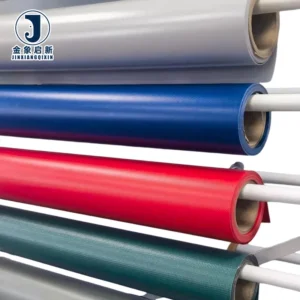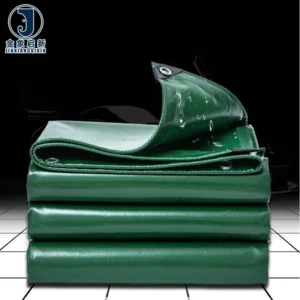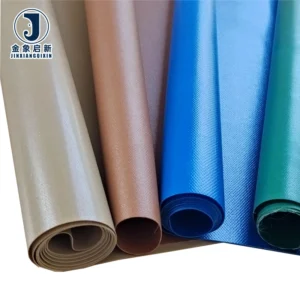
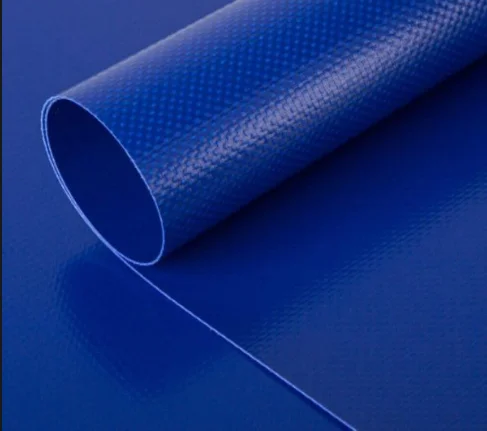
Truck Cover Fitment Expertise — three full production lines cut PVC knife coated tarpaulin to specific trailer models, eliminating the slack and wind drag of generic-size tarps.
Technical Specifications
| Parameter | Value |
|---|---|
| Product Type | PVC Knife Coated Tarpaulin Roll |
| Coating Method | Knife Coated |
| Coating Material | PVC |
| Surface Finish | Self-Cleaning System |
| Welding Options | HF, Hot Air, Sewing |
| Flexibility | Highly flexible, resistant to cracking |
| Waterproof | Fully waterproof coated construction |
| Temperature Resistance | High temperature and cold resistance |
| Treatment Options | Fire retardant, UV resistance, antibacterial, mildew proof, oil and stain resistance, acid and alkali resistance (grades available on request — confirm the grade required for your market) |
| Weather Resistance | Anti-oxidation, weather-resistant |
| Standards | ISO, CE (facility-level certification) |
Application Suitability
| Application | Exposure & Requirement |
|---|---|
| Flatbed truck covers | Constant road vibration, tie-down abrasion, UV and rain exposure, repeated folding at load flex points |
| Trailer side curtains | Continuous flex cycling during transit, wind-load stress at welded seams, roadside debris impact |
| Fleet tarp systems | Multi-vehicle colour consistency, model-specific fitment, eyelet reinforcement at high-stress zones |
| Transport equipment covers | Prolonged outdoor storage, oxidation and mildew risk, oil and stain contact during loading |
| Portable storage structures | Wind uplift, UV degradation, structural frame abrasion at contact points |
Why Welded Seams Fail Before the Fabric Does on Truck Covers
Seam failure on a PVC knife coated tarpaulin for truck and transport cover almost always traces back to adhesion breakdown between coating and base fabric at the flex point.
I have seen heavy-grade coated rolls fail at the weld line while the body of the fabric remained intact. The reason is straightforward: when a trailer side curtain flexes under load shift, the welded seam bears concentrated stress that the surrounding coated fabric distributes across its weave. If the knife coating did not achieve full penetration into the base fabric during production, the heat-welded joint delaminates before the PVC itself reaches its tear threshold. Fleet operators then face cargo exposure claims and unplanned tarp replacement mid-route. [NEED_CITE: tensile and tear test methods for coated fabrics per ISO 1421]
Model-Specific Sizing Eliminates Slack and Wind Drag
A generic-size PVC knife coated tarpaulin for truck and transport cover drapes loosely over the load, creating pockets where wind catches and water pools. By cutting to the exact dimensions of your trailer model — including the placement of side curtain runners, buckle rails and tie-down rings — the tarp sits flush against the load profile. This reduces aerodynamic drag on long-haul routes and prevents the flapping that accelerates abrasion at hem edges. Our R&D team works from vehicle model drawings to develop patterns before production begins.
Weld Selection Matched to Load-Flex Stress Zones
Different joining methods handle stress differently. High-frequency welding produces a bond that fuses the PVC coating layers into a single continuous membrane, suitable for seams running parallel to the direction of flex. Hot-air welding allows on-site repair and is often used for field-applied patches. Sewing with thread and sealing tape suits applications where the seam must carry mechanical load independently of the coating bond. Choosing the correct method for each zone of a truck cover prevents the premature seam failure that accounts for a significant share of transport tarp warranty claims. [NEED_CITE: HF versus hot air welding bond characteristics on PVC coated fabrics]
How Knife Coating Adhesion Drives Long-Haul Durability
Knife coating forces liquid PVC into the interstices of the base fabric under controlled blade pressure, creating a mechanical and chemical bond between coating and yarn. This penetration depth determines how well the fabric resists delamination when a welded seam is stressed during load flexing. Compared to laminated or calendered constructions, knife coated PVC tarpaulin delivers higher peel strength at the coating-to-fabric interface, which directly translates to longer service life at the tie-down and hem zones where trucks experience the most repetitive stress. The self-cleaning surface finish further reduces dirt accumulation that can accelerate UV degradation on south-facing trailer sides.
The Cost of Ignoring Batch Colour Consistency Across a Fleet Order
When rolls within the same order vary in shade, the difference becomes visible the moment two panels are installed side by side on adjacent trailers. For fleet operators, this means either accepting a mismatched appearance or returning rolls for replacement — both options delay vehicle deployment and increase material cost. Colour consistency depends on pigment dispersion control at the compounding stage and on maintaining identical coating thickness across every roll in the production run. Without a documented batch inspection record, buyers have no basis to hold the supplier accountable when shade variation appears on the loading dock. [NEED_CITE: colour consistency control methods in PVC coating production]
Why Procurement Teams Consolidate Truck Tarp Orders Here
Our three full production lines handle bulk roll output while maintaining the coating weight control that fleet buyers verify on arrival. The 10-person R&D team develops model-specific patterns and custom colour samples within days, reducing the approval cycle before full production. Every roll undergoes 100% pre-shipment inspection at flex and tie-down zones, with weld seam integrity checked against the specified joining method. Near thirty years of coated fabric focus means the process parameters for knife coating adhesion are established and repeatable, not adjusted per batch. Dispatch documentation includes packing lists and certificates of origin to clear customs without delay.
Documentation & Verification
- GSM verification record confirming actual coating weight per roll against the quoted specification
- Weld seam inspection log covering flex zones and tie-down reinforcement areas
- Fire retardant and UV treatment test reports matching the grade specified at order
- Roll-by-roll colour consistency record for multi-vehicle fleet orders
- Certificate of origin and customs documentation for cross-border shipment
Fabrication, Handling & Storage
- HF welding parameters should be calibrated to the specific PVC knife coated thickness before full production runs
- Hot-air repair welding requires matching PVC filler rod composition to maintain coating bond integrity
- Store rolls upright on pallets to prevent flat-spot deformation of the coated surface
- Avoid dragging rolls on unprotected concrete to prevent abrasion of the self-cleaning finish
- Clean with mild detergent only; solvent-based cleaners may degrade the PVC coating surface layer
- Allow cold-stored rolls to reach ambient temperature before unrolling to prevent coating micro-cracking
What We Need to Quote Your Truck Tarpaulin Accurately
Provide the truck or trailer model reference, the type of cover required (flatbed top, side curtain, full enclosure) and the joining method your fabrication team prefers. If your market mandates a specific fire retardant grade, include the standard reference so we can match the treatment. Confirm whether you need rolls in stock width or custom-cut panels with finished hems, and indicate the annual volume to determine the most efficient production run.
Frequently Asked Questions
Q: Can you cut the PVC knife coated tarpaulin to my exact trailer model dimensions?
A: Yes. Our R&D team works from vehicle model drawings or physical measurements to develop a cutting pattern before production. This ensures the tarp fits flush over the load profile, eliminating the slack and wind drag caused by generic-size covers. Samples are produced for fitment approval before the full order runs.
Q: Why do welded seams fail before the fabric tears on a truck side curtain?
A: Welded seams concentrate stress at the coating-to-fabric interface. If knife coating penetration into the base fabric was insufficient during production, the bond delaminates under repeated flex cycling before the PVC itself reaches its tear limit. We inspect every weld zone at flex and tie-down points before dispatch to catch adhesion issues early.
Q: Will the fire retardant tarpaulin come with a third-party test report?
A: Fire retardant treatment is available in multiple grades. We supply the test report corresponding to the grade you specify at order. Confirm the standard required by your destination market — such as regional building or transport fire codes — so we match the correct treatment level and documentation.
Q: How do you control colour consistency across multiple rolls in one fleet order?
A: Pigment dispersion is controlled at the compounding stage and coating thickness is held constant across every roll in the production run. Each roll is logged in a batch colour consistency record. This documented traceability lets you verify shade uniformity on arrival and holds us accountable to the agreed colour reference.
Q: What is the minimum order for custom width, colour or printed branding?
A: Minimum quantities depend on the level of customisation. Standard stock widths and colours carry lower thresholds, while custom dye lots and pattern printing require a production run minimum to ensure batch consistency. Share your target specification and annual volume so we can propose the most efficient order structure.