Three-Line QA Protocol — every roll of PVC coated tarpaulin passes in-process coating weight checks, adhesion peel tests, and a full pre-shipment inspection before it leaves the facility, ensuring the GSM and weld performance match your transport cover specification.
Technical Specifications
| Parameter | Value |
|---|---|
| Product Type | PVC Coated Tarpaulin |
| Material Construction | PVC coating on high-strength polyester mesh fabric |
| Coating Method | Laminated technology & Hot-melt Coating technology |
| Available Weight Grades | 350gsm / 420gsm / 500gsm / 550gsm / 600gsm / 750gsm |
| Available Thickness | 0.32mm / 0.35mm / 0.4mm / 0.45mm / 0.5mm / 0.65mm |
| Roll Width Options | 2m / 2.1m |
| Roll Length Options | 75m (for 2m width) / 50m (for 2.1m width) |
| Key Features | Cold crack resistance, anti-mildew, anti-static, waterproof, sunproof treatment |
| Special Treatment Options | Flame retardant (confirm the grade required for your market), anti-cold, anti-mildew, 3P |
| Colour Options | Blue / Red / Yellow / Light blue / Grey (Customised) |
| Printing Option | Custom branding available |
| Service Life Reference | 3-7 years under normal circumstances |
| Standards | ISO, CE |
Application Suitability
| Application | Exposure & Requirement |
|---|---|
| Truck and trailer side curtains | Constant flexing at hinges, road debris abrasion, UV and rain exposure, high-frequency welding at stress points |
| Flatbed and curtain-side load covers | Tie-down strap tension at corners, wind flap fatigue, hydrostatic load from pooled rainwater |
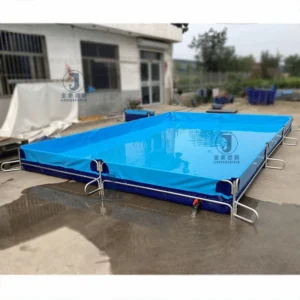
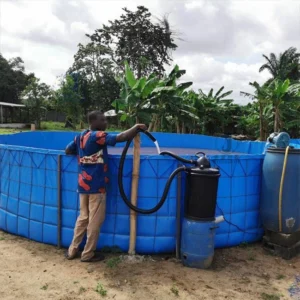
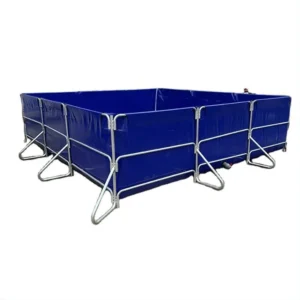
| Fish pond and aquaculture liners | Permanent water immersion, soil chemistry contact, puncture risk from substrate, welded seam integrity under water pressure |
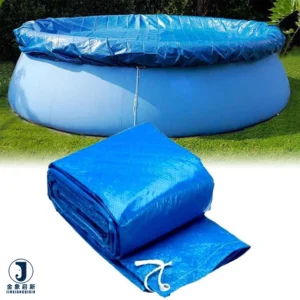
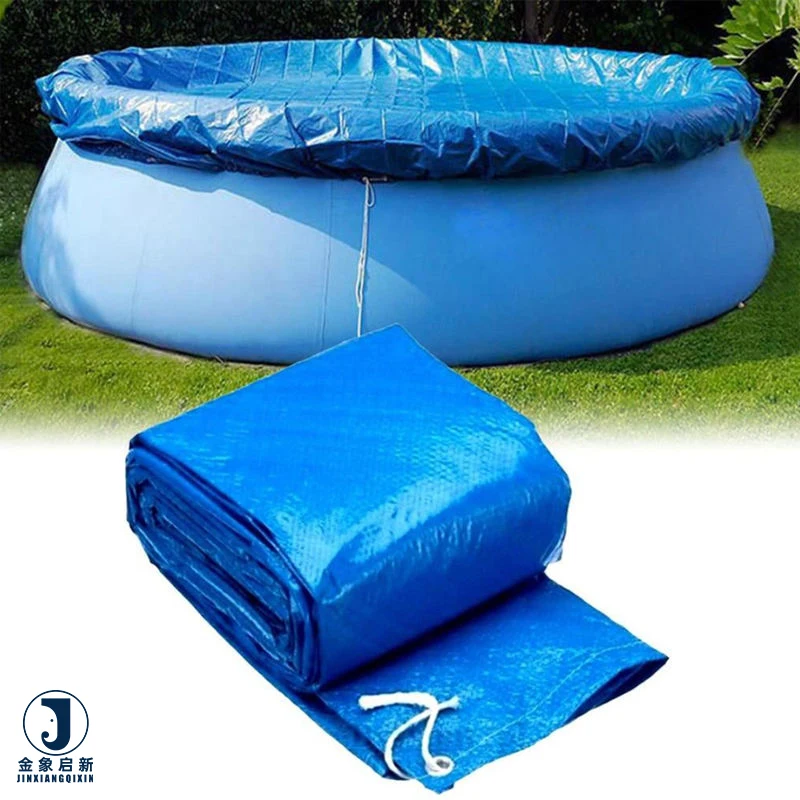
| Inground and above-ground pool covers | UV exposure during off-season storage, snow and debris load, anchor hardware stress at perimeter eyelets |
| Cargo ship deck covers | Salt spray corrosion, heavy sea weather, large-panel welding with minimal seam count |
Why Welded Seams Fail Before the Fabric Does on Truck Covers
The seam is only as strong as the coating adhesion to the base fabric.
Fleet operators frequently report that a truck cover fails first at the welded joint, not in the middle of the panel. This typically happens where the load flexes most — near tie-down points and curtain tracking rails. When the coating does not bond fully to the polyester mesh, heat welding creates a joint that looks clean on the surface but delaminates under repeated tension cycles [NEED_CITE: weld peel test methods for PVC coated polyester fabrics]. PVC coated tarpaulin for truck cover applications must deliver consistent adhesion across the entire roll so that the weld line matches the tear strength of the parent material.
Hot-Melt Coating and the Weld Line Advantage
Hot-melt coating technology forces PVC compound into the interstices of the high-strength polyester mesh under heat and pressure. This produces a mechanical lock between coating and yarn that supports reliable heat welding. When fabricators apply high-frequency or hot-air welding to this PVC coated tarpaulin for truck cover use, the coating at the seam melts and fuses with the adjacent panel, creating a joint where the PVC layers interlock rather than simply sitting on top of the base fabric. Laminated technology complements this by bonding the top and bottom coating films through the mesh, reducing the risk of delamination at the cut edge.
Cold Crack Resistance Across Long-Haul Routes
Truck fleets operating across regions with wide temperature variation need covers that remain flexible in sub-zero conditions without becoming brittle. The cold crack resistance built into this PVC coated tarpaulin addresses that requirement by maintaining coating flexibility at low temperatures [NEED_CITE: cold crack test standards for flexible PVC coated fabrics]. This matters most at welded seams and folded edges, where stiffening material is prone to cracking. For operators running routes from cold northern depots to warmer southern terminals, the material must perform across that entire thermal range without developing micro-fractures at flex points.
Reading GSM and Thickness Together for Transport Covers
Specifying a truck or trailer cover by GSM alone gives an incomplete picture. The weight figure combines the base polyester mesh and the PVC coating, so two fabrics at the same GSM can have very different base fabric densities and coating thicknesses. A 600gsm material with a heavier base mesh and thinner coating will tear differently than a 600gsm material with a lighter mesh and thicker coating. The hot-melt coating method used here drives PVC into the yarn structure, meaning the adhesion strength is less dependent on coating thickness alone. When selecting between the 350gsm and 750gsm grades, consider whether the cover will be a side curtain requiring frequent folding or a flatbed tarp subjected to static load and abrasion.
What Happens When Colour Drifts Across a Fleet Order
When a transport company orders multiple truck covers in the same colour for fleet uniformity, even slight batch-to-batch colour variation becomes visible once the covers are installed side by side on adjacent trailers. This is a common pain point for logistics operators who expect a professional fleet appearance. Consistent pigment dosing during the coating process is essential to prevent this [NEED_CITE: colour fastness and batch consistency standards for coated fabrics]. Requesting roll-to-roll colour verification and inspecting panels before fabrication saves the cost and downtime of re-covering a trailer that arrived in a noticeably different shade.
Why This Source Supports Transport Fleet Procurement
The three full production lines and 36 sets of professional equipment support bulk roll output with repeatable coating weight, so GSM stated on the quotation is verified at pre-shipment inspection. The 10-person R&D team handles custom sizing and pattern printing development, producing samples within days for fleet-specific cover dimensions. Dedicated QA/QC runs at every production stage, catching coating adhesion defects and colour drift before the roll is packed. Material specification sheets, test reports for UV and flame-retardant grades where applicable, and pre-shipment inspection records are supplied as standard documentation. Nearly 30 years of focused coated fabric production underpins process control over coating weight and adhesion.
Documentation & Verification
- Material specification sheet stating exact GSM, base fabric denier, and coating type per roll
- UV and flame-retardant test reports supplied where treatment is specified on the order
- Pre-shipment inspection record confirming weight and colour match the quotation
- Roll packing list with individual roll weights and dimensions for receiving verification
- Certificate of origin and customs documentation for cross-border shipment
Fabrication, Handling & Storage
- Heat welding parameters should match the selected GSM grade — heavier grades like 750gsm need higher energy input for full seam fusion
- Store rolls upright on pallets to prevent flat-spot creasing on the 2m or 2.1m width that transfers to the finished cover
- Unroll and allow the material to relax at ambient temperature before cutting, especially after cold transport
- Clean with mild detergent only — solvent-based cleaners can degrade the PVC coating surface and compromise printed branding
- Reinforce tie-down eyelet zones with extra PVC patches to distribute strap load across the polyester mesh base
- Plan panel layout to minimise transverse welds across the roll width, reducing potential flex-fatigue points
Specifying Your Transport Cover Requirements
To receive an accurate recommendation, share the trailer model and dimensions, the operating climate range, and whether the cover will be a side curtain or a flatbed tarp. Indicate the target GSM or let the specification be matched to the flex and abrasion profile of your application. If fleet colour matching or printed branding is required, provide the Pantone or RAL reference and the number of covers in the order so batch consistency can be planned from the coating stage.
Frequently Asked Questions
Q: How do I verify the GSM on arrival matches what was quoted?
A: Each shipment includes a pre-shipment inspection record and material specification sheet stating the exact coating weight and base fabric construction per roll. You can also conduct a sample weight check by cutting a measured square from the roll edge and weighing it against the stated GSM figure.
Q: Are welded seams stronger than stitched seams for truck covers?
A: Heat-welded seams fuse the PVC coating layers together, creating a waterproof joint that distributes load across the mesh base. Stitched seams introduce needle holes that can propagate tears under the constant flexing experienced by side curtains and load covers during transit.
Q: How is batch colour consistency maintained across multiple fleet covers?
A: Pigment dosing is controlled at the coating stage with batch-to-batch colour verification against the approved reference. When ordering multiple covers for fleet uniformity, all panels are cut from rolls produced in the same coating run to eliminate visible shade variation once installed.
Q: Can I specify exact dimensions for a particular trailer model?
A: Yes. Provide the trailer make, model, and measured dimensions including any protrusions or hardware clearances. The R&D team develops a sample for fitment approval before bulk production, ensuring the PVC coated tarpaulin for truck cover use matches the vehicle profile without generic overhang.
Q: What reinforcement options exist for high-stress tie-down points?
A: Eyelet zones at corners and along edges can be reinforced with additional PVC patches welded over the base fabric to distribute strap tension across a wider area of the polyester mesh. Hem folding and rope-insert options are also available depending on the tie-down hardware used by the fleet.