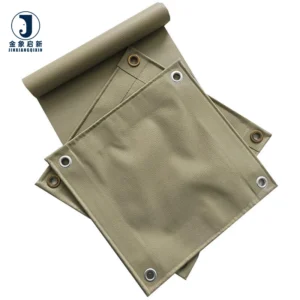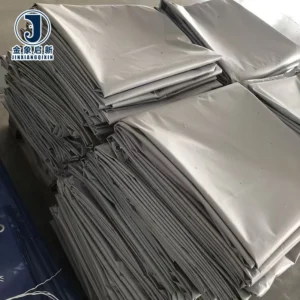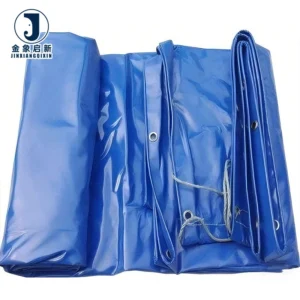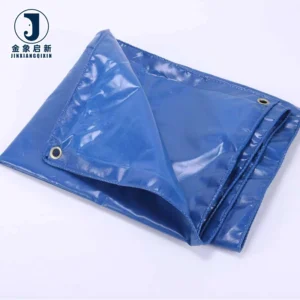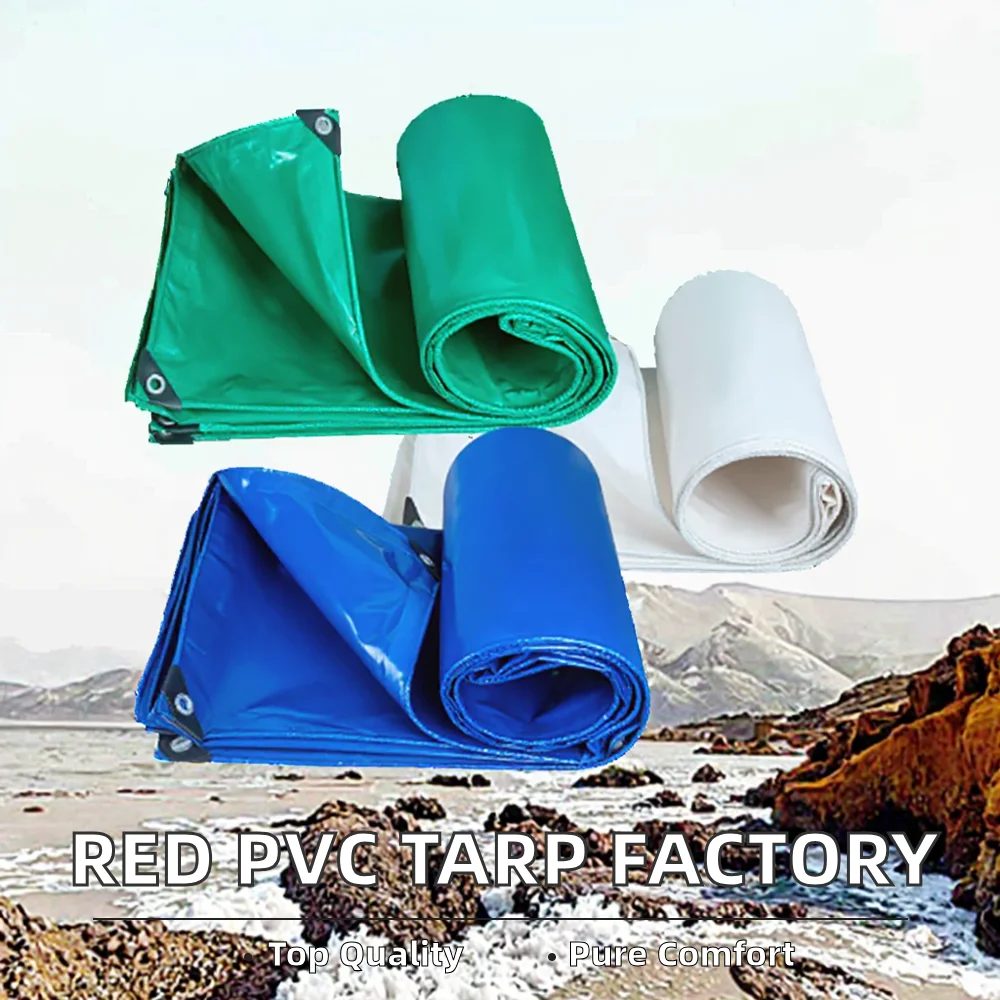
Deep process control over coating weight and adhesion — three full production lines and dedicated QA/QC stages ensure every roll of this knife-coated PVC tarpaulin leaves the facility with verified GSM, consistent colour, and full traceability from base fabric to finished dispatch.
Technical Specifications
| Parameter | Value |
|---|---|
| Product Type | PVC Coated Tarpaulin |
| Base Fabric Denier | 1000×1000 |
| Weight | 420 g/m² |
| Coating Material | PVC |
| Coating Method | Knife Coated |
| Waterproof | Yes |
| Tear-Resistant | Yes |
| Anti-UV Treatment | Available (test basis not stated) |
| Flame Retardant | Available (grade not stated) |
| Anti-Static | Available (test basis not stated) |
| Anti-Cold | Available |
| Anti-Mildew | Available |
| Key Features | Oilproof, tear-resistant, waterproof coated construction |
| Color Option | Black back available |
| Custom Size | Available |
| Outdoor Weather Resistance | 3–5 years (source value — verify against manufacturer catalog) |
| Standards | ISO 9001 (company-level) |
Application Suitability
| Application | Exposure & Requirement |
|---|---|
| Truck side curtain fabric | Constant flexing at articulation points, road abrasion, wind load, UV exposure during transit |
| Flatbed load cover | Direct weather exposure, tie-down strap pressure, puncture risk from cargo edges |
| Transport equipment cover | Fitted drape over vehicle or machinery profile, resistance to dust ingress and moisture |
| Outdoor tent fabric | Sustained UV exposure, wind tension on frame anchors, repeated fold-and-store cycles |
Why Generic-Sized PVC Coated Tarpaulin for Truck and Transport Fails at the Flex Points
A truck cover cut to a generic rectangle will always leave gaps at the corners and concentrate stress at the tie-down zones — the exact spots where road vibration and load flex are most intense.
Fleet operators who specify PVC coated tarpaulin for truck and transport often receive covers that fit the overall trailer dimensions on paper but do not account for the actual geometry of side rails, rear doors, and headboard profiles. The result is excess material that flaps in transit and insufficient material at high-flex zones where the fabric meets the load. Over time, the fabric fatigues at these stress concentrations long before the rest of the cover shows wear. [NEED_CITE: stress concentration at tie-down zones in heavy-duty transport covers]
When a fleet replaces covers prematurely, the cost is not only the replacement fabric but also vehicle downtime, re-lashing labour, and potential cargo exposure claims. The more precisely a cover matches the trailer model, the fewer weak points exist in the field.
How Knife Coating Builds the Adhesion Needed for Transport Loads
The 420 g/m² PVC coated tarpaulin uses a knife coating process, which applies liquid PVC directly onto the 1000×1000 denier base fabric under controlled tension. This method forces the coating compound into the weave interstices rather than sitting as a surface layer. For truck covers subjected to constant road vibration, this mechanical interlock between coating and yarn is what prevents delamination at the seams and hem lines where flex cycles accumulate.
Unlike lamination processes that bond pre-formed PVC films to the base cloth, knife coating produces a single integrated structure. The bond strength between layers is inherently higher, which matters when welded seams are subjected to repeated folding during cover removal and reinstallation on trailers.
Custom Sizing That Matches the Trailer, Not Just the Load
A fleet running mixed trailer types — curtain-siders, flatbeds with headboards, and low-loaders — cannot rely on one cover dimension. This PVC coated tarpaulin for truck and transport is available in custom-cut sizes matched to specific trailer model profiles. The cutting pattern accounts for the actual shape of the vehicle structure, not just the cargo envelope, which reduces excess fabric that creates wind drag and eliminates the gaps that allow water ingress at joints. [NEED_CITE: trailer-specific cover patterning for articulated and rigid transport vehicles]
What the 1000×1000 Denier and 420 g/m² Combination Means in Practice
The 1000×1000 denier base fabric provides a dense yarn count in both warp and weft directions, creating a grid that resists tear propagation from any puncture point. At 420 g/m², the total weight reflects the combined mass of base cloth and PVC coating. This mid-range weight positions the fabric as suitable for covers that need reasonable handling weight for daily removal and reinstallation while still providing adequate tensile performance for road-speed wind loads.
The knife coating method ensures that the PVC fully penetrates the base fabric weave, which directly supports weldability. When two panels are joined by hot-air or high-frequency welding, the coating material fuses into a homogeneous bond rather than relying on adhesive between layers. This matters for truck covers where welded seams carry structural load during tensioning. The availability of flame retardant and anti-static treatment options means the fabric can be specified for regulated transport environments, though the exact grade should be confirmed against the compliance requirements of the destination market. The anti-cold and anti-mildew treatments address conditions encountered in cold-climate routes and humid storage environments respectively.
The Hidden Cost of Specifying Coating Without Process Verification
When a PVC coated tarpaulin arrives with a coating layer that peels away from the base fabric under minimal force, the cover is effectively useless for transport duty regardless of its stated GSM. This delamination typically first appears at welded seams and eyelet zones, where mechanical stress concentrates. Fleet operators discover the problem only after the cover has been in service, because pre-delivery visual inspection cannot reveal interlayer adhesion quality. [NEED_CITE: delamination failure modes in knife-coated versus laminated tarpaulin]
Batch-to-batch colour variation is another issue that surfaces only at installation. When panels from different rolls are placed side by side on a trailer, visible shade differences compromise the professional appearance of a fleet and can trigger rejection by logistics clients who enforce branding standards.
Why Procurement Teams Source This PVC Coated Tarpaulin Here
Deep process control over coating weight and adhesion, developed through nearly 30 years of focused coated fabric production, means the knife coating parameters are tuned for consistent PVC penetration across every roll.
Three full production lines and 36 sets of professional equipment support volume orders with maintained delivery schedules, so fleet procurement is not delayed by capacity constraints.
A 10-person R&D team handles custom sizing, pattern development, and sample preparation, allowing transport equipment builders to validate fit on actual trailer models before committing to bulk production.
Dedicated QA/QC at every production stage, culminating in 100% pre-shipment inspection, catches GSM deviation, colour shift, and coating defects before material leaves the facility.
Full documentation accompanies each dispatch — material specification sheets, test reports for applicable treatments, and packing records — so receiving teams can verify what arrived matches what was ordered.
Documentation & Verification
- Material specification sheet confirming 420 g/m² weight and 1000×1000 denier base fabric per roll
- Flame retardant and anti-static test reports supplied where treatment is specified for the order
- Pre-shipment inspection record documenting GSM verification and visual quality check
- Roll packing list with roll count, dimensions, and net weight for container loading reconciliation
- Certificate of origin and customs documentation for cross-border transport clearance
Fabrication, Handling & Storage
- Hot-air welding temperature should be calibrated to the 420 g/m² knife-coated PVC thickness for optimal seam fusion
- Reinforce eyelet zones with additional PVC patches to distribute tie-down strap loads across the 1000×1000 base fabric
- Store rolls horizontally on pallets to prevent edge compression marks on the knife-coated surface
- Allow cold-stored rolls to reach ambient temperature before unrolling to avoid coating cracking on the PVC layer
- Use mild detergent for cleaning; avoid solvent-based agents that may degrade the PVC coating finish
- When cutting custom panels, nest patterns to maximise yield from the available roll width and reduce offcut waste
What We Need to Prepare Your Quotation
To provide an accurate specification and lead time for your PVC coated tarpaulin for truck and transport requirements, share the trailer model references or dimensional drawings for the vehicles the covers must fit. Indicate whether flame retardant or anti-static certification is required for your operating routes and which standard applies. Confirm whether you need finished cut-and-hemmed covers or roll stock for your own fabrication, along with colour requirements and estimated annual volume.
Frequently Asked Questions
Q: How is GSM verified at delivery against the quoted specification?
A: Each roll undergoes weight verification during the 100% pre-shipment inspection. A material specification sheet is included in the dispatch documentation stating the measured GSM alongside the 1000×1000 base fabric reference and 420 g/m² target weight, so your receiving team can cross-check on arrival without relying solely on the quotation.
Q: What flame retardant grade is available and does it meet my market’s transport regulations?
A: Flame retardant treatment is available for this PVC coated tarpaulin, but the specific grade must be confirmed against your market’s requirements. Before placing a bulk order, request the test report for the grade you need so you can verify compliance with the transport or site regulations applicable to your fleet’s operating territory.
Q: How are welded seams reinforced at high-flex tie-down and eyelet points?
A: The knife-coated PVC construction allows hot-air or high-frequency welding that fuses the coating into a homogeneous bond at seams. At eyelet and tie-down zones where load flex concentrates, additional PVC patches can be welded over the 1000×1000 base fabric to spread strap pressure and delay fatigue cracking at those stress points.
Q: How do you ensure colour consistency across multiple rolls in the same order?
A: Colour consistency is managed through controlled coating compound batching and verified during pre-shipment inspection. Rolls destined for the same truck cover order are grouped and checked side by side before dispatch. The inspection record documents the result, so fleet operators can confirm visual uniformity before panels are installed next to each other on trailers.
Q: What is the lead time and minimum order for custom-cut truck tarpaulin to a specific trailer model?
A: Lead time and minimum order quantity depend on the number of trailer models, colour requirements, and whether finished covers or roll stock is specified. The 10-person R&D team can develop samples for fit validation before bulk production. Contact the sales team with your trailer references and volume estimate for a project-specific schedule.