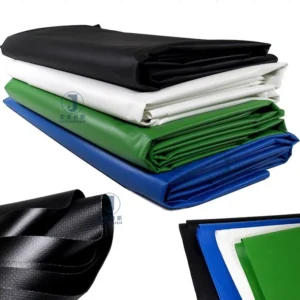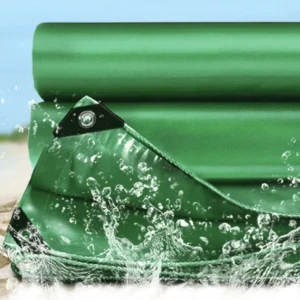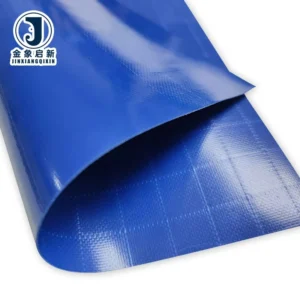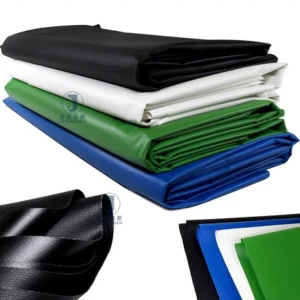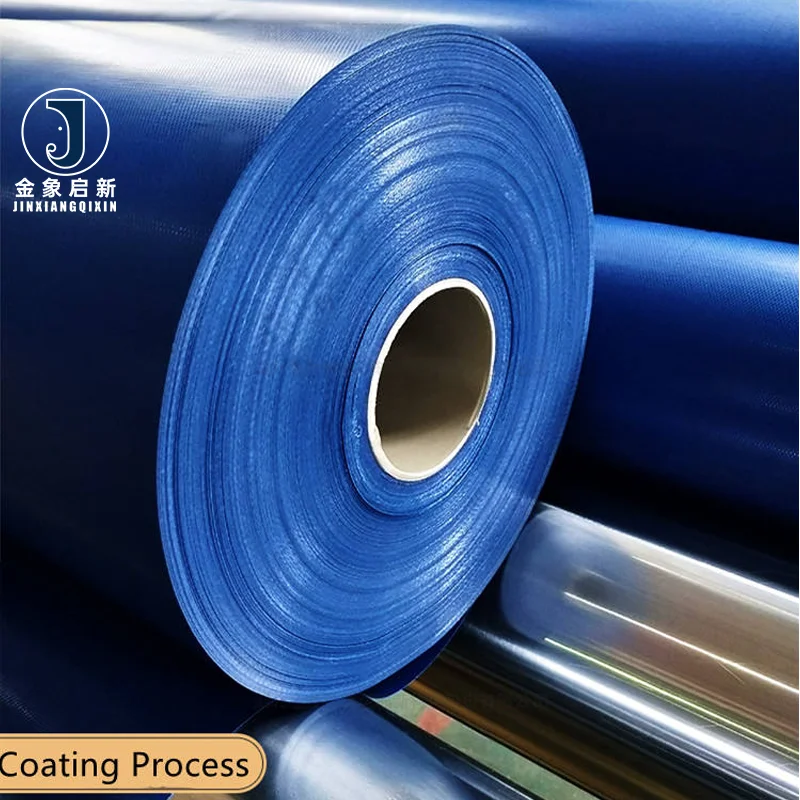
Verified Coating Adhesion — Each roll undergoes 100% pre-shipment inspection to confirm the PVC layer bonds securely to the base fabric at 650 GSM, eliminating delamination risks at the flex and tie-down points where transport loads move most.
Technical Specifications
| Parameter | Value |
|---|---|
| Product Type | PVC Coated Tarpaulin Roll |
| Weight | 650 GSM |
| Base Fabric Denier Options | 200D×300D / 500D×500D / 840D×840D / 1000D×1000D |
| Coating Material | PVC |
| Surface Finish | Available in glossy or matte finish |
| Temperature Range | -15°C to 70°C |
| Waterproofing | Fully waterproof coated construction |
| UV Treatment | Available in UV treated grades — confirm the grade required for your route |
| Flame Retardant | Available in flame retardant grades — confirm the grade required for your market |
| Anti-Mildew | Anti-fungal treated |
| Colour Options | Blue, yellow, black, green, white, or custom reference |
| Size Options | 3×4m, 6×8m, 8×10m, 10×12m or custom dimensions |
| Working Life | Suited to extended outdoor exposure depending on environment |
Application Suitability
| Application | Exposure & Requirement |
|---|---|
| Articulated trailer side curtain | Constant flexing at articulation points, road abrasion, tie-down strap wear, cross-climate UV exposure |
| Flatbed load cover | Direct weather exposure, wind flap fatigue, strap tension at eyelets, loading dock abrasion |
| Truck cab and cargo area cover | Fitted geometry, daily removal and reinstallation, temperature swings across transport routes |
| Roof and outdoor protective cover | Standing water, wind uplift, seasonal temperature cycling, long-term UV exposure |
Why Generic-Size Covers Fail Where Your Load Flexes Most
A truck cover cut to a standard rectangle will always fail first at the seams and tie-down points because it cannot distribute the load’s movement evenly.
When a fleet operator specifies a PVC Coated Tarpaulin for truck and trailer cover applications, the most common failure point is not the fabric itself but the welded seams and eyelet hems. A generic-size cover leaves excess material that flaps in road wind, creating fatigue cracks at the weld lines within months. The tie-down points bear the entire restraining force on a small hem area, and when the cover is not cut to match the trailer geometry, those points shift under load, tearing the fabric around the eyelets. [NEED_CITE: common failure modes in heavy-duty transport tarpaulin installations]
Cut to the Trailer, Not to a Template
The PVC Coated Tarpaulin Roll 650 GSM is supplied in custom dimensions matched to the specific truck or trailer model in your fleet. Side curtain applications for articulated trailers require panels that align with the curtain rail and buckle spacing, with eyelets positioned at the exact intervals the ratcheting system demands. Flatbed covers need additional length allowance for load height variation without creating wind-catching loose material at the rear.
Reinforcement Where the Load Moves
High-stress zones — corners, tie-down hems, and the flex line where a side curtain bends during articulation — require a different construction approach than the body of the cover. Reinforced hems at these points distribute strap tension across a wider fabric area rather than concentrating it at a single eyelet row. The glossy or matte finish options allow fleet operators to match existing livery while selecting a surface that reduces glare for drivers inspecting loads roadside or a matte surface that minimizes reflection in depot lighting.
Understanding What 650 GSM Means for a Transport Cover
Coating weight and base fabric denier work together to determine how a PVC Coated Tarpaulin Roll performs under road conditions. A 650 GSM fabric with a 500D×500D base offers balanced tensile and tear resistance for daily curtain-side use, while a 1000D×1000D base at the same weight provides a heavier yarn structure that resists tear propagation at cut edges and eyelet holes. The PVC coating method — whether knife-over-roll or calendered — directly affects the bond strength between the coating and the base fabric, which determines whether the layers separate under repeated flexing. Surface finish also plays a role: glossy surfaces shed water and dirt more readily on road-exposed covers, while matte surfaces accept printed fleet branding with stronger ink adhesion. [NEED_CITE: coating adhesion test methods for PVC tarpaulin per ISO 1421]
The Cost of a Specification Gap Between Quotation and Delivery
When a transport fleet receives tarpaulin rolls that are lighter than the quoted GSM, the covers will reach their fatigue limit earlier than planned, forcing premature replacement across the entire fleet rather than on a scheduled cycle. A flame retardant treatment claimed without a supporting test report becomes a compliance liability at the depot inspection, especially where tunnel or ferry transport regulations require documented fire classification. Colour variation between rolls in the same order is visible the moment two panels are hung side by side on adjacent trailers, turning a specification oversight into a branding problem for the fleet operator. [NEED_CITE: pre-shipment inspection standards for coated fabric consistency]
What Separates a Reliable Supply From a Repeat Order Problem
Our 30-year focus on coated fabric translates directly into process control you can verify at delivery. Three full production lines and 36 sets of professional equipment handle bulk roll orders with consistent on-time delivery across fleet-scale quantities. A dedicated 10-person R&D team develops samples within days for custom sizing, colour matching, or pattern printing requirements specific to your trailer configuration. Every roll passes through QA/QC at each production stage with 100% inspection before dispatch, catching coating weight variation and colour drift before they reach your depot. The material specification sheet provided with each shipment states the exact base fabric denier, coating weight, and surface finish — not a range.
Documentation & Verification
- Material specification sheet stating 650 GSM, base fabric denier, and PVC coating type per roll
- Test report for UV treatment and flame retardant grade where specified on your purchase order
- Pre-shipment inspection record confirming GSM, colour reference, and roll-to-roll consistency
- Roll packing list with roll count, individual roll weight, and container load plan
- Certificate of origin and customs documentation matched to your import requirements
Fabrication, Handling & Storage
- Heat weld parameters must match the 650 GSM PVC coating to prevent seam failure at flex points
- Eyelet installation at tie-down hems requires reinforced webbing to distribute strap tension
- Rolls stored horizontally on pallets to prevent coating crease marks on the glossy or matte surface
- Cold-weather handling below -15°C risks micro-cracking; allow rolls to acclimatize before unrolling
- Cut panels laid flat for 24 hours before welding to release any roll-set tension in the base fabric
- Abrasion pads recommended at high-wear contact points between the cover and trailer hardware
Before You Request a Quotation
Provide your truck or trailer make and model, the number of units in the fleet requiring covers, and the primary transport climate — this allows us to recommend the correct UV and flame retardant grade for your routes. Specify whether you need finished cut-to-size covers with eyelets and hemming or PVC Coated Tarpaulin Roll stock for in-house fabrication. If fleet branding or a specific colour reference is required, share the RAL or Pantone code so we can develop a sample for your approval before production.
Frequently Asked Questions
Q: How is the 650 GSM weight verified on arrival and what is the tolerance?
A: Each roll is weighed and recorded during our 100% pre-shipment inspection. The dispatch record states the measured GSM per roll against the ordered specification. On arrival, you can verify by cutting a measured sample from the roll edge and weighing it on a calibrated scale. We provide the inspection record so you have a baseline to compare against your own receiving check.
Q: Can the tarpaulin be cut to fit a specific truck or trailer model rather than a generic size?
A: Yes. Provide the trailer make, model, and body type, and we produce panels cut to those dimensions with eyelets spaced to match your curtain rail or tie-down system. This eliminates the excess material that causes wind flap fatigue and ensures the cover sits flush against the load profile without loose sections that abrade against hardware.
Q: What UV treatment test basis is applied and how does it relate to road-side exposure?
A: UV treatment grades are available and the specific test standard is confirmed based on the exposure conditions of your transport routes. Cross-climate fleets operating in high-UV regions require a different grade than depot-based covers. Request the test report for the grade specified on your order to verify performance against your market’s exposure requirements.
Q: How are eyelets and hems reinforced at the flex and tie-down points of the load?
A: Tie-down hem areas are reinforced with additional fabric layers to spread strap tension across a wider zone, preventing the eyelet from tearing through under load. At flex points such as trailer articulation zones, the hem construction allows movement without concentrating stress on a single row of eyelets, extending the service interval of the cover.
Q: What is the process for approving colour match across multiple rolls before dispatch?
A: Once your colour reference is confirmed, we produce a sample swatch or short roll section for your approval. After sign-off, production runs against that approved reference, and the pre-shipment inspection checks roll-to-roll colour consistency before packing. This prevents the visible mismatch that occurs when panels from different rolls are installed side by side on adjacent vehicles.