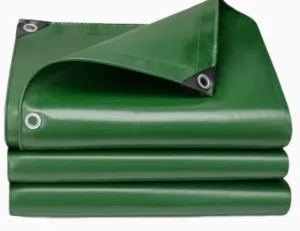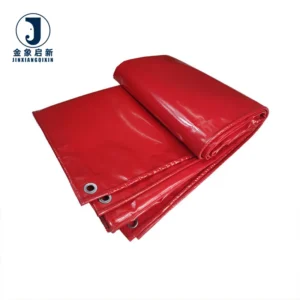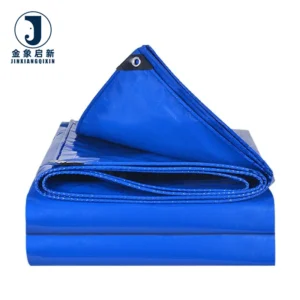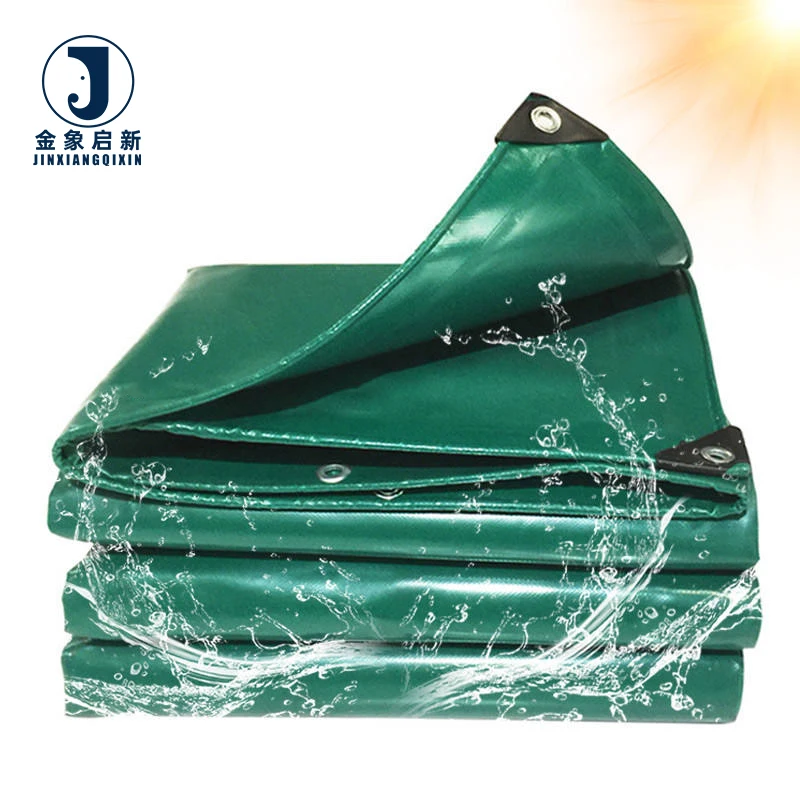
Coating Process Control — Nearly three decades of PVC coating production ensures consistent weight and adhesion across every roll of PVC coated tarpaulin for truck and transport applications.
Technical Specifications
| Parameter | Value |
|---|---|
| Product Type | PVC Coated Tarpaulin |
| Coating Material | PVC Vinyl |
| Base Fabric | Woven Fabric |
| Weight | At least 450 GSM |
| Waterproof | Yes |
| UV Treatment | Available in UV treated grades — confirm the grade required for your market |
| Flame Retardant Grade | Available in flame retardant grades — confirm the grade required for your market |
| Anti-Static | Available in anti-static grades — confirm the requirement for your application |
| Key Features | Fully waterproof PVC vinyl coating on woven base fabric for vehicle, equipment and outdoor structure protection |
Application Suitability
| Application | Exposure & Requirement |
|---|---|
| Flatbed truck load covers | Road vibration, load shifting at tie-down points, rain and road spray, constant tension at eyelets |
| Trailer side curtain fabric | Daily flexing along curtain runners, wind loading at highway speed, abrasion against load edges |
| Custom-fit machinery covers | Yard storage exposure, repeated fitting and removal, contact with sharp equipment edges |
| Construction transport covers | Aggregate dust, site debris impact, wet conditions during transit, frequent handling by crane or forklift |
When the Cover Fits the Trailer but Fails at the Flex Point
A truck cover that matches your trailer dimensions on paper can still tear within months if the seam construction ignores where the load moves most.
Fleet operators ordering PVC coated tarpaulin for truck and transport use often specify size accurately but overlook how the fabric behaves at high-stress zones. The cover fits the trailer when installed flat in the yard. Then on the road, the load shifts, the curtain flexes, and the seam at the tie-down zone takes the full force. [NEED_CITE: tensile and tear test methods for coated fabrics per ISO 1421]. The weld line fails before the fabric itself shows wear, and cargo is exposed mid-transit. This failure pattern repeats across fleets when procurement focuses on dimensions and price per square metre without interrogating seam specification for the actual operating conditions.
How Side Curtain Fabric Handles Highway Loads
A trailer side curtain made from woven PVC coated fabric must endure continuous flexing along the runner track while resisting wind pressure at speed. The base fabric weave construction determines how the material distributes load when the curtain billows outward. At the bottom rail attachment zone, the curtain experiences repeated tension cycles that concentrate stress on a narrow band of material. PVC coated tarpaulin for truck and transport applications requires the woven base to resist tear propagation from any nick or abrasion point along this stress band.
Tie-Down Reinforcement Where the Load Pushes Hardest
When a flatbed cover is tensioned over an uneven load, the eyelet and hem zones carry concentrated point loads rather than distributed force. The woven base fabric must resist pull-through at each eyelet under sustained road vibration. Reinforcement strategy at these zones — whether through additional webbing layers or doubled fabric folds — must match the specific trailer type and load profile. [NEED_CITE: load restraint standards for road transport covering tie-down point strength]. Fleet operators running mixed trailer types need covers specified per vehicle model, not cut from a single generic pattern that leaves critical zones under-reinforced.
Reading the Weight and Weave Together
The stated weight of a coated fabric in GSM reflects the combined mass of base fabric and PVC coating together. A 450 GSM material with a dense woven base and lighter coating will behave differently under tension than one with an open weave and heavy coating fill. The base fabric denier and thread count govern how the material resists tear propagation, while the coating weight contributes to abrasion resistance and waterproof barrier integrity. For truck and trailer covers that flex constantly, the weave construction matters as much as the total GSM. Heat-welded seam strength depends on coating composition and thickness at the weld zone, making coating method a practical factor in long-term seam durability. [NEED_CITE: coating adhesion and peel strength testing for PVC coated fabrics].
What Underweight Delivery Costs Your Fleet
When PVC coated tarpaulin arrives lighter than the GSM stated on the quotation, the shortfall is often in the coating layer. Thinner coating reduces waterproof performance and accelerates wear at abrasion points where the cover contacts load edges. On side curtains, reduced coating weight at the runner contact zone leads to early fabric exposure and rapid deterioration. Colour variation between rolls in the same delivery becomes visible when panels are installed side by side on adjacent trailers, forcing selective rejection and rework. [NEED_CITE: pre-shipment inspection procedures for coated fabric weight verification]. Welded seams on underweight material often fail at lower stress because the coating layer available for heat fusion is insufficient to form a bond matching the base fabric strength.
Why Transport Fleets Source This Fabric Here
Three full production lines with 36 sets of professional equipment handle bulk roll output while maintaining coating weight consistency across the production run. The 10-person R&D team develops cut-to-model patterns for specific truck and trailer dimensions, producing samples within days for fitment approval before bulk cutting proceeds. A dedicated QA/QC process runs at every production stage, with inspection records generated before any roll leaves the facility. Custom width and colour runs are accommodated without extended minimums, allowing fleet operators to order covers for mixed vehicle types in a single shipment. [NEED_CITE: ISO and CE certification scope for coated fabric manufacturing]. Documentation travels with each dispatch, including packing lists that let receiving teams verify roll count and specification on arrival.
Documentation & Verification
- Material specification sheet stating confirmed GSM, base fabric construction and PVC coating weight per roll
- Pre-shipment inspection record with measured coating weight against the stated value
- UV and flame retardant test reports included where specific treatment grades are ordered
- Roll packing list enabling weight and count verification at receiving
- Certificate of origin and customs documentation for cross-border transport shipments
Fabrication, Handling & Storage
- Heat-weld seams at temperatures suited to PVC vinyl coating thickness to achieve bond strength matching the woven base
- Allow welded seams to cool fully under pressure before tensioning the cover onto trailer frames
- Store rolls upright on pallets to prevent flat-spot creasing across the woven fabric width
- Avoid dragging cut covers over sharp load edges during fitting to protect the PVC coating surface
- Clean with mild detergent and soft brush to preserve the waterproof coating layer integrity
What to Include With Your Enquiry
Provide your trailer make, model and internal load dimensions so the cover pattern can be developed to fit the specific vehicle. State whether you require side curtain fabric by the roll or finished covers with hem and eyelet reinforcement already installed. Confirm any UV treatment or flame retardant grade required by your operating region so the correct formulation is applied.
Frequently Asked Questions
Q: How do I specify the exact cover size for my trailer model?
A: Provide the trailer manufacturer, model designation, internal load bed dimensions and curtain runner type. The R&D team develops a cut pattern to those measurements and produces a sample for physical fitment check on your actual vehicle before bulk production proceeds. This prevents the common problem of generic-sized covers that do not match specific trailer profiles.
Q: What eyelet spacing and hem reinforcement options are available?
A: Eyelet spacing is set according to your tie-down system and load restraint requirements. Hems can be reinforced with additional webbing or doubled fabric folds at high-stress zones. The reinforcement specification should match your trailer type and typical load profile to prevent pull-through failure under sustained road vibration and tension.
Q: How is GSM verified before shipment to prevent underweight delivery?
A: Each roll undergoes weight measurement during pre-shipment inspection, with results recorded against the stated GSM value on the specification sheet. The inspection record travels with the dispatch documentation so your receiving team can cross-check measured values on arrival and flag any discrepancy before the material enters production.
Q: What are heat-welding versus stitching considerations at flex points?
A: Heat-welded seams on PVC vinyl coating create a continuous bond that flexes with the woven base fabric, reducing the risk of thread cutting through the material at high-stress zones. Stitched seams may be specified for certain hem constructions but require UV-resistant thread and sealed needle holes. The choice depends on your trailer operating conditions and load movement profile.
Q: How do I order custom-cut covers for a mixed fleet?
A: Submit the dimensions for each trailer type in your fleet along with the quantity required per model. Covers are pattern-cut to each specific vehicle, and samples can be produced for fitment approval across all models before the full order enters production. This allows mixed fleets to receive correctly sized covers in a single consolidated shipment.