Deep Process Control Over Coating Weight and Adhesion — every roll of vinyl-coated polyester mesh for truck covers passes through a three-line production system with in-process QA verification at each coating stage before reaching the finishing department.
Technical Specifications
| Parameter | Value |
|---|---|
| Product Type | PVC Tarpaulin Truck Cover |
| Coating Material | PVC / PE (verify against order specification) |
| Base Fabric | Vinyl-coated polyester mesh (100% PES dipping coating process) |
| Weave Construction | Knitting and plain weave options available |
| Weight (GSM) | 50gr/m² ~ 220gr/m² (confirm specific grade per order) |
| Total Thickness | 0.2–0.4mm / 8 mil–16 mil |
| Roll Width Options | 6ft, 8ft, 10ft, 12ft, 2m, 4m, 6m |
| Roll Length Options | 100 yards, 100 meters, or custom |
| Finished Sizes Available | 2x2m through 8x10m (and corresponding ft sizes) |
| Edge Reinforcement | PP rope in hem on all four edges |
| Eyelets | Galvanized, every 3ft or 1 meter interval |
| Corner Reinforcement | Reinforced plastic corners |
| Waterproof | Yes |
| UV Treatment | Available (test basis not stated — confirm requirements) |
| Mildew Resistant | Yes |
| Anti-aging | Yes |
| Tear Resistant | Yes |
| Color Options | Blue, Blue/Orange, Green, Grey, Black, Clear, Grey/Green, Orange, or custom |
| Sewing Service | Lumber tarps, steel tarps, coil tarps, snow tarps, mesh tarps |
| Custom Printing | Accepted |
| Certifications | ISO, CE |
Application Suitability
| Application | Exposure & Requirement |
|---|---|
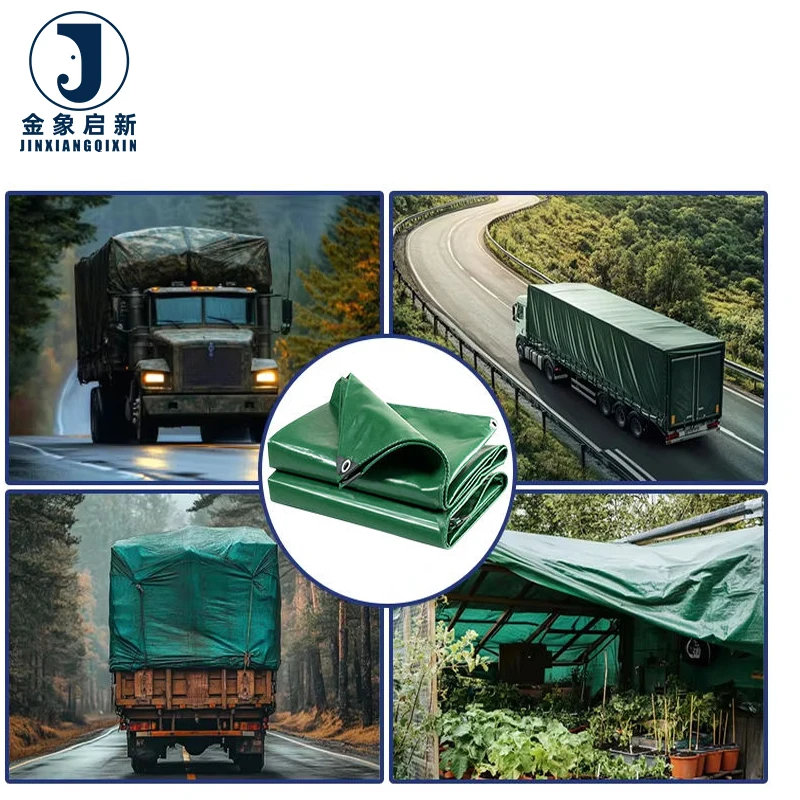
| Flatbed trailer load covering | Constant wind flex, road debris abrasion, UV and rain exposure, tie-down stress at eyelet points |
| Curtain-side trailer fabric | Repeated opening and closing cycles, vertical fold stress, weather sealing along rail channels |
| Lumber transport tarps | Heavy uneven loads, sap and moisture contact, forklift handling abrasion at corners |
| Steel and coil tarps | Sharp edge puncture risk, extreme point loads from steel coils, chain tie-down friction |
| Construction equipment transit covers | Long highway exposure, dust infiltration risk, frequent removal and refitting at job sites |
| Snow tarps for seasonal freight | Sub-zero temperature flexibility, ice accumulation weight, salt and de-icing chemical contact |
Why Stated GSM Means Nothing Without Coating Process Verification
Weight on paper does not prevent a truck cover from splitting at the hem when a flatbed load shifts at highway speed.
A PVC truck tarpaulin cover manufacturer can quote 180gr/m² and deliver fabric that tests at 155gr/m² on arrival. The difference is invisible to the eye but shows up within weeks on the road — edges fraying, eyelets pulling through, seams separating where the trailer flexes most. The coating application method, the dipping consistency across the polyester mesh, and the curing temperature all determine whether the stated weight translates into actual structural integrity. Without a documented in-process QA checkpoint at every coating stage, a GSM figure is just a number on a quotation. [NEED_CITE: ISO 1421 tensile and tear test methods for coated fabrics]
Pattern-Matched Covers for Specific Trailer Models
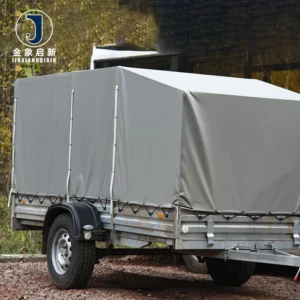
Generic-sized truck covers leave excess fabric that flaps in crosswinds and wears through at stress points within a single season. A PVC truck tarpaulin cover manufacturer with pattern-matching capability cuts each cover to the exact dimensions of the trailer model — including wheel arch clearances, door hinge offsets, and rail channel widths. This eliminates the loose material that catches wind load and accelerates abrasion at tie-down points. The 10-person R&D team develops a cut pattern from the trailer specification sheet before any fabric enters production.
Reinforced Edge and Eyelet Systems for Highway Loads
The perimeter of a truck cover absorbs the highest concentration of mechanical stress during transit. PP rope reinforcement in the hem distributes tie-down tension across a broader fabric area instead of concentrating it at individual eyelet holes. Galvanized eyelets spaced at 3ft or 1 meter intervals provide sufficient anchor points for ratchet straps without over-perforating the base fabric. Reinforced plastic corners protect the zones where two hemmed edges meet and where forklift tines typically contact the cover during loading. [NEED_CITE: edge reinforcement testing standards for transport tarpaulins]
How Base Fabric and Coating Weight Interact Under Load
The 100% PES dipping coating process saturates the polyester mesh rather than applying a surface film, which means the coating contributes to structural strength rather than merely waterproofing. Knitting and plain weave options affect how the fabric responds to multidirectional stress — plain weave offers higher dimensional stability for flat panel applications, while knitting provides the stretch recovery needed for curtain-side installations. The GSM range from 50gr/m² to 220gr/m² spans from lightweight dust covers to heavy-grade load-bearing tarps, but the actual tear performance depends on the denier of the base yarn and the mesh density as much as the total weight. A 220gr/m² fabric with low-denier base yarn can tear more easily than a 180gr/m² fabric woven from high-denier yarn. Thickness of 0.2–0.4mm correlates with puncture resistance but also affects how the fabric folds and stores — a factor that matters for tarpaulins that are removed and refitted daily.
The Cost of Underspecifying a Truck Cover
Ordering a truck cover based on the lowest GSM that "looks sufficient" leads to a predictable failure sequence. First, the eyelets begin to elongate and pull through the fabric within the initial months of highway use. Then the welded seams — which rely on coating adhesion to the base fabric — begin to delaminate at the flex zones where the load shifts during braking and cornering. Colour inconsistency across rolls in the same shipment becomes visible once the covers are installed side by side on a fleet, forcing the operator to replace entire sets rather than individual panels. These failures are not manufacturing defects; they are specification errors that originate at the inquiry stage. [NEED_CITE: common failure modes in PVC coated transport tarpaulins]
Why Fleet Operators Source PVC Truck Covers Through This Production System
Three full production lines and 36 sets of professional equipment support the volume requirements of fleet-scale orders without sacrificing lead-time reliability. The dedicated QA/QC checkpoint at every production stage means coating weight, adhesion strength, and colour match are verified during manufacturing — not only at final inspection when rework is most expensive. Sample development within days allows operators to confirm fitment on their specific trailer models before committing to bulk production. The 6m maximum roll width accommodates wide flatbed covers without requiring centre seams that become long-term failure points. Industrial sewing capability for lumber, steel, coil, snow, and mesh tarp configurations means the PVC truck tarpaulin cover manufacturer handles specialised cargo protection within the same order. Custom printing on products enables fleet branding without a separate decoration subcontractor.
Documentation & Verification
- Material specification sheet listing exact GSM, base fabric denier, coating type, and colour reference per order
- Weight verification per roll against the stated GSM before dispatch leaves the facility
- UV and mildew-resistance test reports provided where applicable to the specified treatment grade
- Pre-shipment inspection record documenting individual roll and finished-cover verification
- ISO and CE certificates, roll packing list, certificate of origin, and customs documentation included
Fabrication, Handling & Storage
- Heat-weld seams at temperatures matched to the PVC coating formulation — the dipping-coated polyester mesh requires different thermal profiles than knife-coated fabrics
- Space galvanized eyelets no closer than the specified 3ft or 1m intervals to prevent perforation weakening on the 0.2–0.4mm thickness range
- Store rolls horizontally on padded racks to avoid permanent creasing in the vinyl-coated mesh at the contact points
- Allow cold-stored covers to reach ambient temperature before unfolding to prevent coating crack at the fold lines
- Use mild pH-neutral cleaners on the mildew-resistant surface — aggressive solvents can degrade the PVC coating bond
What to Include in Your PVC Truck Cover Inquiry
Provide the exact trailer make, model, and year along with measured deck dimensions and any protrusions that affect cover fitment. Specify the cargo type — lumber, steel coil, palletised freight — because each application demands different GSM grades and reinforcement configurations. Indicate your target market so we can confirm any applicable fire or safety compliance requirements before production begins.
Frequently Asked Questions
Q: How do you verify that the GSM on arrival matches what was quoted?
A: Our QA process includes weight measurement at every production stage, with a documented pre-shipment inspection record for each roll. The material specification sheet provided with your order states the exact GSM, base fabric denier, and coating type. We do not substitute lighter-grade fabric under the same product code without written approval and re-sampling.
Q: Can truck covers be cut to my exact trailer model dimensions?
A: Yes. Our R&D team develops a cut pattern from your trailer specification sheet or measured dimensions before production begins. A sample cover is produced and shipped for fitment confirmation. Bulk production proceeds only after you approve the sample fit, ensuring every cover in the order matches your trailer geometry.
Q: How do you control colour consistency across multiple rolls in one order?
A: Colour matching is verified during the coating stage using reference standards, not only at final inspection. Rolls within a single order are produced in the same coating batch to minimise variation. The pre-shipment inspection includes a visual comparison of adjacent rolls under standardised lighting before packing.
Q: What eyelet spacing and reinforcement options are available for truck tarps?
A: Standard configuration includes galvanized eyelets at 3ft or 1m intervals, PP rope reinforcement in all four hem edges, and reinforced plastic corners. We adjust eyelet spacing, hem construction, and corner reinforcement based on your tie-down system and cargo type — specify your requirements during the inquiry stage.
Q: What is the lead time for custom-sized and custom-colour truck covers?
A: Lead times depend on order volume, colour specification, and whether custom printing is required. Sample development for fitment and colour confirmation is completed within days. Production scheduling follows sample approval, and we provide a confirmed dispatch date with the quotation rather than an estimated range.