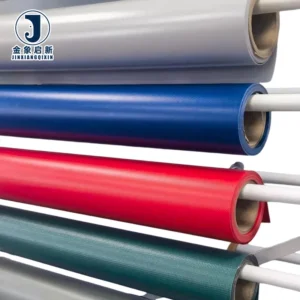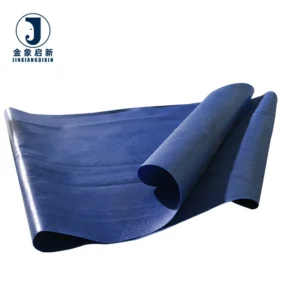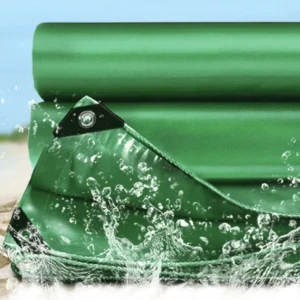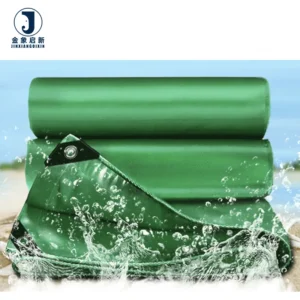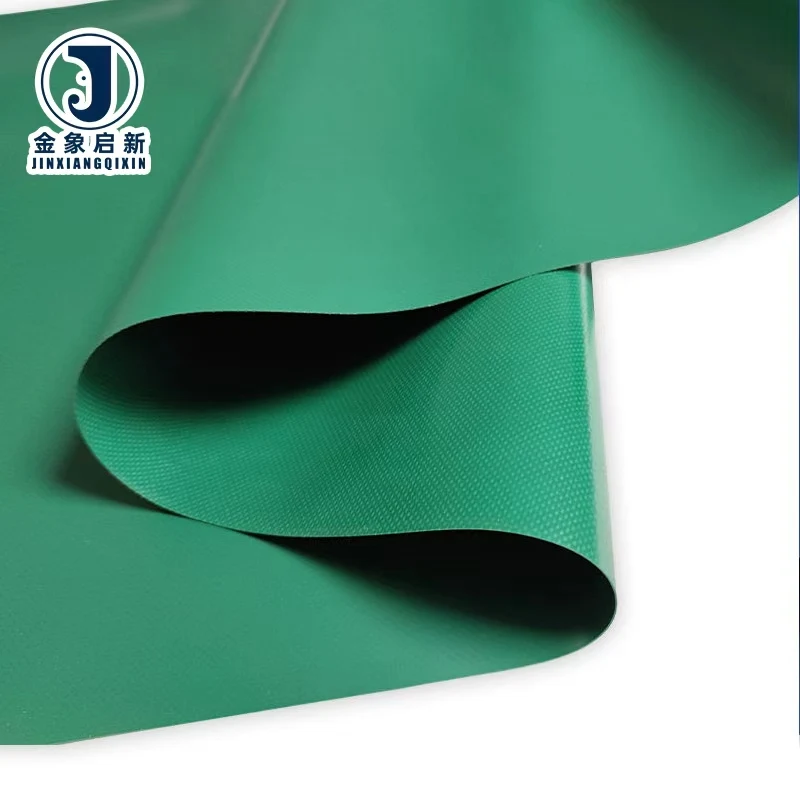
Custom Sizing Capability — Every roll and finished truck cover is fabricated to exact vehicle dimensions, eliminating the gaps and edge exposure that generic-size tarps leave on flatbed and curtain-side trailers.
Technical Specifications
| Parameter | Value |
|---|---|
| Product Type | PVC Coated Tarpaulin Roll |
| Weight | 510Gsm / 15OZ |
| Base Fabric Material | Polyester |
| Coating Material | PVC |
| Edge Finishing | High temperature heat sealed seamless edge wrapping |
| Eyelet | 3cm enlarged aluminum alloy buttonhole |
| Corner Reinforcement | Reinforced corners on all sides |
| Rope | 5mm thick rope without splicing |
| Temperature Range | Brittle ≤ -50~-60°C; Softening ≥ 80°C; Melting point 212°C |
| Material Density | 1.15–2.00 g/cm³ |
| Features | Water Resistant, Waterproof, Anti-UV (test basis not stated), Flame Retardant (grade not stated) |
| Color | Customizable |
| Printing Option | Custom brand printing available |
| Certifications | ISO, CE |
Application Suitability
| Application | Exposure & Requirement |
|---|---|
| Flatbed trailer cover | Road vibration, wind flap, abrasion at tie-down points, multi-directional tension on eyelets |
| Curtain-side truck fabric | Constant flexing at folds, UV exposure on highway routes, weld seam integrity under load shift |
| Container roof cover | Prolonged sun and rain exposure, pooling water resistance, thermal expansion and contraction |
| Machine and equipment cover | Outdoor storage, moisture ingress prevention, UV degradation resistance over extended periods |
| Construction site shelter | Abrasion from scaffolding contact, wind load on eyelets, flame retardant requirements on site |
Why Generic-Size Covers Fail Where Custom-Fit PVC Coated Tarpaulin for Truck and Trailer Succeeds
A cover that does not match the trailer geometry leaves cargo exposed at the most critical edges.
Fleet operators who buy off-the-shelf truck covers frequently find that the width and drop length do not align with their specific trailer model. The result is a cover that rides short on the sides, exposing the load to road spray and crosswind. [NEED_CITE: fitment gap analysis on standard vs. custom-cut transport covers] When the cover is too loose, it flaps under highway speeds, accelerating wear at the hem and eyelet line long before the fabric itself reaches its service limit.
Dimensional Precision for Fleet Fitment
Every transport operator runs a mix of trailer models, each with different deck widths, side heights, and tie-down rail positions. The PVC coated tarpaulin for truck and trailer applications is cut to the exact dimensions of the vehicle it will cover. This eliminates the excess fabric that bunches at corners and the shortfall that leaves the lower rail uncovered. Eyelet spacing is aligned with the trailer’s tie-down points so that tension distributes evenly rather than concentrating on two or three overstressed grommets.
Reinforcement Where the Load Moves Most
The areas around eyelets, corners, and hem lines bear the highest stress during transit. Wind gusts at highway speed exert repeated pull-out force on every grommet. The 3cm enlarged aluminum alloy buttonholes are set into reinforced corner patches on all sides, spreading the load across a wider fabric area. The 5mm thick rope without splicing runs the full perimeter inside the heat-sealed hem, preventing the localized weak points that spliced rope creates. This reinforcement approach addresses the failure pattern where eyelets tear through the fabric under sustained road vibration. [NEED_CITE: eyelet pull-through testing methods for coated transport fabrics]
Seam Integrity Under Repeated Flex
A truck cover that fails at the welded seam before the fabric itself wears out is a design failure, not a material failure. The high temperature heat sealed seamless edge wrapping used on this PVC coated tarpaulin for truck and trailer covers produces a bond where the coating layers fuse rather than relying on adhesive. This means the seam line moves with the fabric during load flex and wind flap, instead of cracking and peeling away as glued hems do. For fleet operators running long-haul routes, seam durability is the single largest factor in cover replacement frequency.
Reading the Specification Sheet Beyond Weight
GSM tells you how much material is in a square meter, but it does not tell you how that material is structured. Two fabrics at 510Gsm can have very different tear performance depending on the base fabric denier and weave density. A tighter weave with finer yarns resists tear propagation differently than a looser weave with heavier yarns, even at the same total weight. The PVC coating method — whether knife-over-roll, dip, or calender — determines the coating-to-fabric adhesion, which directly affects how well the material holds up to heat sealing and how it behaves at the weld line during fabrication. The temperature range from brittle point at -50~-60°C through softening at 80°C defines the operating envelope for cold-climate winter routes and high-heat summer exposure on parked trailers. Understanding these parameters together, rather than weight alone, is how technical buyers specify covers that perform in actual road conditions.
What Specification Misalignment Costs in the Field
When the yarn count and weave density are not matched to the trailer type, the cover may pass initial inspection but fail within months at predictable stress points. A curtain-side application demands high flex endurance at fold lines, while a flatbed cover demands puncture resistance from shifting cargo edges. Ordering a single grade for both applications leads to premature replacement on one or the other. [NEED_CITE: coated fabric specification mismatch and field failure correlation] Batch colour inconsistency across rolls in a large fleet order becomes visible when covers are installed side by side on parked trailers, forcing rework or acceptance of a mismatched fleet appearance. Anti-UV treatment claimed without a test report leaves the buyer unable to verify whether the cover will resist degradation on high-exposure routes, or whether the treatment was omitted to reduce cost.
Why Buyers Source This PVC Tarpaulin Roll Here
Three full production lines and 36 sets of professional equipment support bulk roll orders with consistent output quality and reliable dispatch schedules. The 10-person R&D team handles material selection and custom sizing for specific truck and trailer models, developing samples within days rather than weeks. A dedicated QA/QC process runs at every production stage, with 100% inspection before shipment verifying GSM, colour consistency, and eyelet pull-through strength on every roll. Nearly 30 years of focused production in coated fabric provides the process control depth that keeps coating weight and adhesion consistent from the first roll to the last in a container order. Custom width, colour, and brand printing are handled on-line rather than outsourced, maintaining batch traceability throughout.
Documentation & Verification
- Material specification sheet stating GSM, base fabric denier, and coating weight for each roll
- Pre-shipment inspection record confirming colour consistency and eyelet reinforcement integrity
- UV and flame retardant test reports provided where applicable to the ordered grade
- Roll packing list with batch reference for traceability across multi-roll orders
- Certificate of origin and customs documentation for international shipment clearance
Fabrication, Handling & Storage
- Heat-sealed edge wrapping requires calibrated temperature and dwell time settings matched to the 510Gsm PVC coating thickness
- 3cm aluminum alloy eyelets should be set with dies matched to the buttonhole diameter to avoid crushing or loose fit
- Store rolls horizontally on pallets in shaded, ventilated areas to prevent flat-spot deformation on the bottom wrap
- Avoid dragging the PVC-coated surface across abrasive ground during unloading to protect the coating finish
- Clean with mild detergent and soft brush; solvents may degrade the PVC coating surface and reduce water resistance
- Field repairs on minor tears can be heat-patched using compatible PVC repair tape at temperatures above 10°C
What to Include in Your Inquiry
Specify the trailer make and model, deck dimensions, and side drop length so that the cover can be cut to exact fitment. State your route climate — sustained sub-zero, high UV, or mixed — so that the appropriate treatment grade is recommended. Confirm whether you need finished covers with eyelets and hemming, or roll stock for your own fabrication line. Provide your target colour reference and whether custom brand printing is required on the cover surface.
Frequently Asked Questions
Q: How do I verify that the GSM on delivery matches the quoted specification?
A: Each roll undergoes pre-shipment weight verification against the stated 510Gsm specification. The inspection record documents actual measured GSM per roll and is included with the shipping documentation. Buyers can also conduct their own cut-weight test on arrival using a calibrated scale and a measured sample area to confirm the material received matches the purchase order.
Q: Can the cover be sized to fit a specific trailer model rather than a generic dimension?
A: Yes. Provide the trailer make, model, deck width, length, and side drop height. The cover is then cut and fabricated to those exact dimensions, with eyelet spacing aligned to the trailer’s tie-down rail positions. This eliminates the gaps and excess fabric that generic-size covers produce on specific vehicle configurations.
Q: What happens at the welded seam when the load shifts during transit?
A: The high temperature heat sealed edge wrapping fuses the PVC coating layers rather than bonding them with adhesive. This produces a seam that flexes with the fabric under load movement instead of cracking. The 5mm unspliced rope inside the hem distributes tension continuously along the perimeter, removing the weak points that spliced rope creates.
Q: Are UV and flame retardant treatments supported by test documentation?
A: These treatments are available in specific grades. Request the test report for the grade applicable to your market and compliance requirements. The documentation states the test standard and result, allowing you to verify that the treatment level meets your regional transport or construction site regulations before the order enters production.
Q: How is colour consistency maintained when ordering multiple rolls for a fleet?
A: All rolls in a single order are produced from the same coating batch with in-process colour checks at each production stage. The pre-shipment inspection record confirms colour uniformity across the order, so covers installed side by side on fleet vehicles present a consistent appearance without visible variation between adjacent panels.