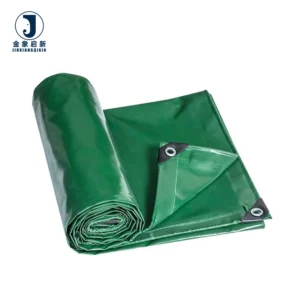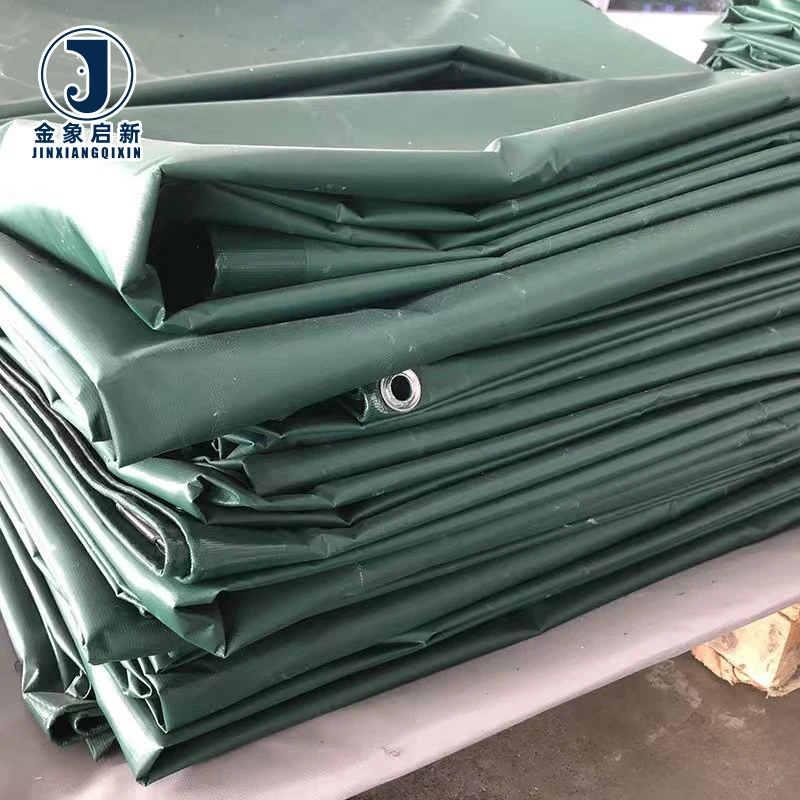
Custom-Cut Precision — Every PVC coated tarpaulin for truck covers is welded and sized to match specific fleet dimensions, eliminating the fitment gaps and edge exposure that generic-sized covers cause on long-haul routes.
Technical Specifications
| Parameter | Value |
|---|---|
| Product Type | PVC Coated Tarpaulin |
| Base Fabric | 100% high toughness polyester yarn |
| Coating Material | PVC |
| Coating Method | Lamination technology and hot melt coating technology |
| Waterproof | Yes |
| Cold Resistant | Yes |
| Mold Proof | Yes |
| Color Fastness | Best color fastness (test basis not stated in source) |
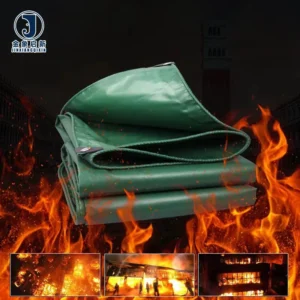
| Flame Retardant | Special treatment available (grade not stated in source — confirm the grade required for your market) |
| UV Treatment | Anti-UV treatment available (test basis not stated in source — confirm the standard required) |
| Anti-Static | Treatment available (standard or surface resistance not stated in source — confirm requirement) |
| Welding Tear Strength | Excellent (test standard not stated in source) |
| Outdoor Weather Resistance | 3-5 years (source value — verify against manufacturer catalog) |
| Certifications | ISO, CE |
Application Suitability
| Application | Exposure & Requirement |
|---|---|
| Long-haul truck and trailer covers | Constant road abrasion, wind flex, UV exposure, and rain ingress at high speed |
| Construction equipment transport | Heavy loads shifting during transit, puncture risk from sharp edges, site dust and debris |
| Agricultural machinery covers | Seasonal outdoor storage, moisture exposure, mold risk during humid storage periods |
| Side curtain systems for fleet vehicles | Repeated opening and closing, fabric flexing at load-bearing stress points, tie-down abrasion |
Why a Generic-Size Cover Fails Before the Fabric Does
A truck cover that does not match your trailer model creates stress concentrations that destroy the material long before its rated lifespan.
When a PVC coated tarpaulin for truck covers is cut to a generic size rather than your specific trailer dimensions, the excess fabric bunches at corners and the short edges leave cargo exposed. More critically, the misaligned hems and tie-down points place abrasive stress on areas the fabric was not designed to bear. The result is predictable: the cover fails at the flex points and seams while the main body of the fabric remains intact. Fleet operators replacing covers multiple times per year often blame the material grade when the real cause is a dimensional mismatch between the cover and the trailer it was meant to protect. [NEED_CITE: PVC coated tarpaulin aftermarket supplier fitment and stress concentration on fleet vehicles]
How Lamination and Hot Melt Coating Hold Up at Weld Lines
The PVC coating is applied using lamination technology and hot melt coating technology, which bonds the PVC layer directly to the 100% high toughness polyester yarn base fabric. This bonding method is significant for truck cover applications because the welded seams are typically the first failure point under load flex. When a side curtain or flatbed cover flexes repeatedly during transit, the seam must carry the same tensile load as the body fabric. Hot melt coating ensures the PVC penetrates the base weave, creating a mechanical bond at the weld zone that resists peeling under cyclic stress.
What Cold Resistance and Mold Proofing Mean for Year-Round Fleet Operation
Truck covers sit outdoors through seasonal temperature swings and humidity cycles. The cold resistant formulation prevents the PVC from becoming brittle and cracking at low temperatures, which is a common cause of early failure in northern-climate fleet operations. Combined with mold proof treatment, the PVC coated tarpaulin for truck covers resists biological degradation when stored folded and damp — a routine condition for covers removed during loading and stacked on the trailer deck.
Reading the Specifications Beyond the GSM Number
A 600GSM weight tells you the total mass per square metre of the coated fabric, but it does not tell you how that mass is distributed between the base fabric and the coating layer. Two covers at the same GSM can behave very differently depending on the knitting density and denier of the polyester yarn. A heavier base yarn with a thinner coating will resist tearing better at puncture points, while a thicker coating with a lighter base will offer superior waterproofing and abrasion resistance at the surface. The knitting density of the polyester yarn determines how the load distributes across the weave when a concentrated force is applied — a critical factor when securing irregularly shaped cargo with tie-down straps. The hot melt coating method further influences peel strength at welded seams, which directly affects how long the cover survives repeated flexing under road conditions. [NEED_CITE: relationship between base fabric denier and coating weight in PVC coated tarpaulin tensile behaviour]
The Hidden Cost of Specifying on Price Per Square Metre Alone
When a PVC coated tarpaulin for truck covers is sourced primarily on unit cost, the common compromise is a lighter coating weight or a lower-density base fabric that meets the quoted GSM on paper but delivers reduced tear strength and weld integrity in practice. Covers that appear identical on the specification sheet can show dramatically different field performance once exposed to the cyclic loading of highway transport. Batch colour variation between rolls is another consequence of cost-driven production — when multiple covers for a single fleet are fabricated from rolls with inconsistent pigment dispersion, the colour difference becomes visible once installed side by side on adjacent trailers. [NEED_CITE: PVC coated tarpaulin aftermarket supplier batch colour consistency standards]
Why Procurement Teams Source This PVC Coated Tarpaulin Here
Deep process control over coating weight and adhesion means the GSM stated on the quotation is the GSM that arrives on the truck bed — verified through dedicated QA/QC at every production stage. Three full production lines and 36 sets of professional equipment support bulk orders with reliable on-time delivery for fleet-scale cover replacements. A 10-person R&D team handles custom sizing, pattern printing, and sample development, producing fitment samples within days so you can confirm dimensional accuracy before committing to full production. The 100% pre-shipment inspection covers seam integrity, dimensional accuracy, and surface quality — not just a visual check but a documented verification against the material specification sheet. Every order ships with a complete documentation package including test reports for UV and flame-retardant grades where applicable, so your site compliance team has the paperwork before the container arrives.
Documentation & Verification
- Material specification sheet stating base fabric denier, PVC coating weight, and treatment details for each roll
- Pre-shipment inspection record confirming dimensions, seam weld integrity, and surface quality before dispatch
- Test reports for anti-UV and flame-retardant treatments supplied where specified in the purchase order
- Roll packing list with individual roll identification for traceability across multi-cover fleet orders
- Certificate of origin and customs documentation to support import clearance at destination
Fabrication, Handling & Storage
- Heat-weld seams using temperature and dwell settings matched to the hot melt PVC coating layer for full peel strength
- Reinforce eyelet and hem zones with additional PVC patches to distribute tie-down strap loads across the base fabric
- Store rolls upright on pallets in a dry, shaded area to prevent permanent creasing of the coated surface
- Allow cold-stored rolls to reach ambient temperature before unrolling to avoid cracking the PVC coating
- Clean with mild detergent and soft brush — avoid solvents that may degrade the PVC surface treatment
- Cut panels with overlap allowance for welded seams rather than stitched joints to maintain waterproof integrity
What We Need to Quote Your Fleet Cover Requirement
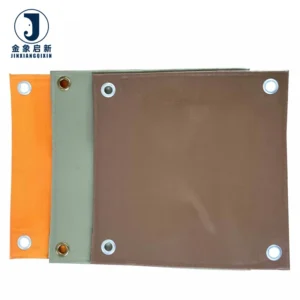
To provide an accurate specification and sample for your PVC coated tarpaulin for truck covers, share the exact trailer model dimensions including length, width, and drop height for flatbed applications or side curtain track profiles. Specify whether your fleet requires flame-retardant or anti-static treatment and the compliance standard your destination market requires. Confirm the quantity per colour and whether you need finished covers with hems and eyelets or roll stock for your own fabrication facility.
Frequently Asked Questions
Q: How do I provide my trailer model dimensions for a custom-fit truck cover?
A: Send the trailer make, model, and year along with measured length, width, and side height. For side curtain systems, include the track profile and roller mechanism clearance. Our R&D team will develop a dimensional sample within days so you can verify fitment on the actual trailer before we proceed to bulk production of the PVC coated tarpaulin for truck covers.
Q: What reinforcement options are available at eyelet and hem stress points?
A: Hems are folded and heat-welded with additional PVC strip reinforcement to distribute tie-down loads. Eyelet zones receive extra PVC patches bonded to the base fabric. The reinforcement specification depends on the tie-down system your fleet uses — share your strap and buckle details so we can match the reinforcement to the actual point load.
Q: How is GSM verified on arrival to match the quotation specification?
A: Every roll undergoes GSM verification during the pre-shipment inspection, and the result is recorded on the inspection report that accompanies your shipment. On arrival, you can cross-check by cutting a measured sample from the roll edge and weighing it. The material specification sheet supplied with your order states the target GSM and acceptable tolerance range.
Q: What is the recommended welding vs. sewing method for seam durability at load flex points?
A: Heat welding is the standard method for PVC coated tarpaulin seams on truck covers because it fuses the coating layers into a continuous bond that flexes with the fabric. Sewn seams create needle holes that compromise waterproofing and concentrate stress at each stitch point. We recommend welding for all structural seams and reserve sewing only for non-load-bearing attachments.
Q: How are batch colour variations controlled across multiple covers in a single fleet order?
A: All rolls for a single fleet order are produced from the same coating batch to ensure pigment consistency. Each roll is visually inspected against the approved colour reference during pre-shipment QC. If your order spans multiple production batches, we flag this during quotation and can provide roll samples from each batch for your approval before fabrication begins.