Coating Control Expertise — Nearly three decades of PE tarpaulin production with strict GSM and weave density control at every stage, delivering roll-to-roll consistency for fleet-wide truck cover fitment.
Technical Specifications
| Parameter | Value |
|---|---|
| Product Type | PE Tarpaulin Roll / Finished PE Tarpaulin |
| Coating Material | HDPE weaving with LDPE lamination on both sides |
| Weight Range | 50 g/m² ~ 220 g/m² (range covers product family — confirm the grade for this item) |
| Total Thickness | 0.2-0.4 mm / 8 mil-16 mil |
| Mesh Count / Density | 6×6, 6×7, 7×7, 7×8, 8×8, 9×9, 8×10, 10×10, 12×12, 14×14, 14×16 weave options |
| Roll Width | 6 ft, 8 ft, 10 ft, 12 ft or 2 m, 4 m, 6 m |
| Roll Length | 100 yards, 100 meters, or custom |
| Finished Tarpaulin Regular Sizes | 2×2 m, 3×3 m, 3×5 m, 4×4 m, 4×5 m, 4×6 m, 4×8 m, 4×10 m, 5×5 m, 5×6 m, 5×8 m, 5×10 m, 6×6 m, 6×8 m, 6×10 m, 8×10 m (imperial equivalents provided) |
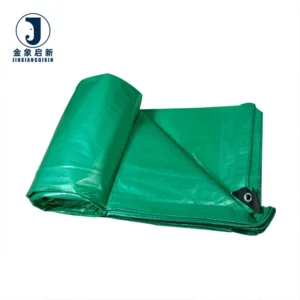
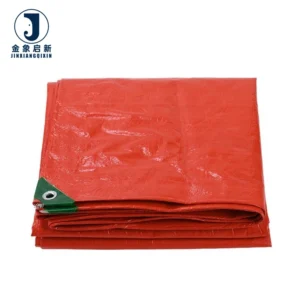
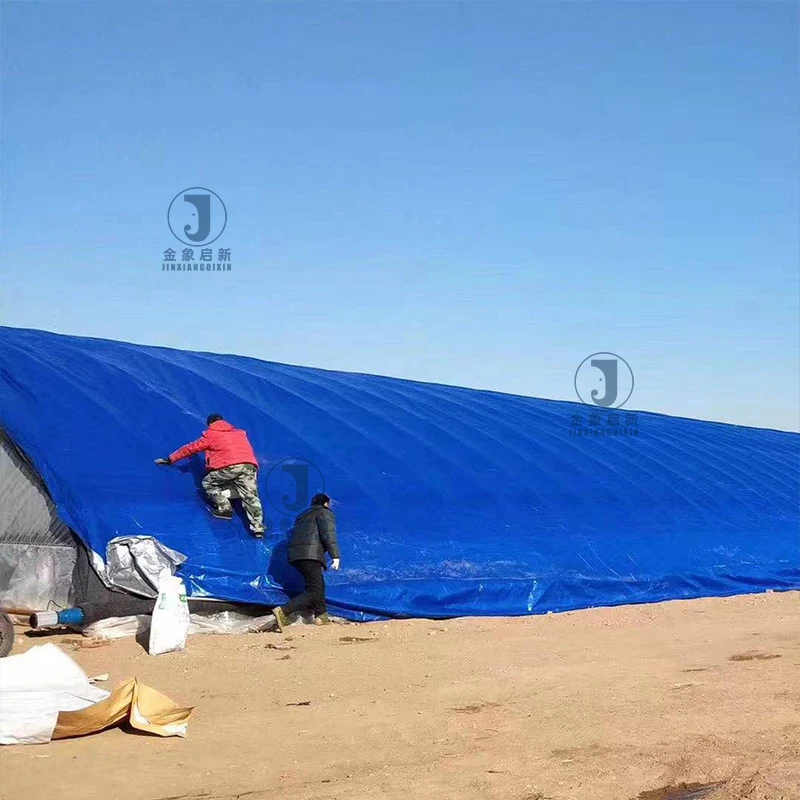
| Color Options | Blue, Blue/Orange, Green, Grey, Black, Clear, Grey/Green, Orange, or custom |
| Edge & Hem | All four edges reinforced with PP rope in hem |
| Eyelet Options | Galvanized eyelets every 3 ft or 1 m interval |
| Corner Reinforcement | Reinforced plastic corners |
| UV Treatment | Available (test basis not stated in source — confirm the grade required for your market) |
| Waterproof | Yes |
| Anti-Mildew | Mildew proof claimed (grade not stated in source) |
| Anti-Aging | Claimed (test basis not stated in source) |
| Tear Resistant | Claimed (grade not stated in source) |
| Standards | ISO, CE |
Application Suitability
| Application | Exposure & Requirement |
|---|---|
| Truck and trailer load covers | Constant road vibration, wind flapping, rain, UV exposure, tie-down stress at eyelet points |
| Side curtain fabric for flatbed trailers | Repeated flexing at load corners, abrasion against cargo edges, weather sealing during transit |
| Container and intermodal covers | Salt-laden air during port handling, stacking abrasion, long-duration outdoor staging |
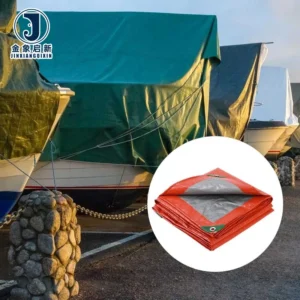
| Boat and marine transport covers | Water spray, UV degradation on open decks, tie-down strain during road transport |
| Pallet and equipment covers for transit | Dust ingress, forklift contact abrasion, short-term weather exposure during loading |
Why Generic-Size PE Tarpaulin for Truck and Trailer Covers Costs More Than It Saves
A cover that does not match your trailer dimensions flaps loose, tears at the eyelets, and exposes cargo within the first hundred kilometres.
Fleet operators who order off-the-shelf PE tarpaulin for truck and trailer covers often discover that a standard size leaves slack at one end and pulls too tight at the other. The loose section catches wind at highway speed, creating a sail effect that rips the fabric away from the grommets. The over-tightened section transfers all tie-down load to two or three eyelets instead of distributing it across the hem. Over multiple trips, this mismatch wears through the reinforcement at the corners long before the fabric body shows any sign of fatigue [NEED_CITE: tensile and tear test methods for coated fabrics per ISO 1421].
Cut-to-Size Fitment for Mixed Fleet Operations
A transport fleet rarely runs a single trailer model. Specifying PE Tarpaulin for Truck and Trailer Covers across a mixed fleet means each cover must account for the exact deck length, side-rail height and tie-down point spacing of its assigned trailer. Ordering finished tarpaulins cut to regular and custom dimensions ensures the hem falls at the right position relative to the cargo bed edge, and the eyelets align with the anchor points already welded to the trailer chassis. This eliminates the need for drivers to improvise with extra ropes or bungee cords at the roadside.
Hem and Eyelet Reinforcement Under Road Load
The hem of a truck cover experiences the highest stress concentration during transit. The PP rope reinforcement sewn into all four edges spreads tie-down load across a wider fabric band rather than a single stitch line. Galvanized eyelets spaced at 3 ft or 1 m intervals match the typical side-rail anchor spacing on most commercial trailers, so every strap finds a reinforced attachment point. Reinforced plastic corners add an extra layer of protection where two hems meet, which is the location most prone to tearing under dynamic load [NEED_CITE: eyelet pull-out resistance testing for transport covers].
Reading Weave Density and GSM Together
GSM alone does not define how a PE tarpaulin will perform on a truck. The base fabric weave density — whether 6×6, 10×10 or 14×14 — determines how the yarns share load when a corner catches wind. A lower GSM with a tighter weave can outperform a heavier GSM with a loose weave in tear propagation resistance, because more yarn intersections per square inch arrest a tear before it runs. The LDPE lamination on both sides then locks the weave in place and adds waterproof coverage, but it is the HDPE woven base that carries the structural load during tie-down and flexing.
The Hidden Cost of Specifying the Wrong Grade
When a buyer selects a PE tarpaulin grade based on price per roll rather than matching GSM and weave to the actual trailer exposure, the failure pattern is predictable. A lighter-grade cover on a long-haul route degrades at the hem within the first season of highway-speed wind flapping. Eyelets pull through the laminate because the base fabric does not have enough yarn density to hold them under repeated tie-down cycles. Colour inconsistency across rolls in the same shipment becomes visible once covers are installed side by side on a fleet, forcing the operator to replace matching sets [NEED_CITE: roll-to-roll colour consistency standards for fleet tarpaulins]. These are not fabric defects — they are specification mismatches that a pre-order GSM verification and weave density confirmation would have prevented.
What This Supply Chain Delivers for Transport Buyers
Three full production lines and 36 sets of professional equipment support bulk roll output with reliable on-time dispatch, which matters when a fleet needs covers replaced before the next scheduled run. A 10-person R&D team handles custom sizing, pattern printing and sample development so you can approve a cut-to-size prototype before committing to a production run. Dedicated QA/QC runs at every production stage with 100% inspection before shipment, catching GSM deviations and hem defects before they reach the container. Samples are developed within days for custom width, colour or print requirements, shortening the approval cycle for new trailer models entering service.
Documentation & Verification
- GSM weight verification per roll against the quoted grade before dispatch
- UV test report provided where treatment is specified for outdoor transport exposure
- Pre-shipment inspection record covering hem reinforcement, eyelet spacing and corner patches
- Roll packing list with batch reference for colour traceability across the order
- Certificate of origin and customs documentation for cross-border shipment
Fabrication, Handling & Storage
- Cut with a hot knife to seal the HDPE weave and prevent fraying at raw edges
- Space galvanized eyelets to match the specific trailer side-rail anchor intervals
- Store rolls upright on hard paper tubes to avoid flat-spotting the LDPE laminate surface
- Unfold finished covers flat before installing to avoid crease marks at the lamination layer
- Use mild detergent for cleaning — solvents can attack the LDPE coating bond
- Repair minor punctures with HDPE-compatible adhesive patches matching the tarpaulin GSM
What to Include in Your Inquiry
Provide the trailer model list with deck dimensions and side-rail tie-down point spacing so the finished cover size can be matched precisely. Confirm whether you need roll stock for in-house fabrication or finished tarpaulins with hem, eyelets and corner reinforcement already installed. Specify the GSM grade and weave density you have used on previous covers, or describe the route exposure — long-haul highway, port staging, or short-distance urban delivery — so the correct weight band can be recommended. Note any colour or branding requirements across the fleet for batch consistency planning.
Frequently Asked Questions
Q: How do I match eyelet spacing to my trailer tie-down points?
A: Measure the distance between anchor points on your trailer side rail. Standard galvanized eyelets are placed every 3 ft or 1 m, which fits most commercial trailer configurations. If your tie-down points fall on a non-standard interval, the eyelet spacing can be adjusted during fabrication so every strap connects to a reinforced grommet without intermediate stretching.
Q: What GSM range suits long-haul road exposure for PE Tarpaulin for Truck and Trailer Covers?
A: Long-haul routes subject covers to sustained wind flapping and UV exposure. Higher GSM grades with tighter weave density — such as 12×12 or 14×14 — provide greater tear resistance at hem and eyelet points. Confirm the exact GSM and weave for your route conditions before placing a bulk order, and request the weight verification record per roll.
Q: Can I order cut sizes for mixed trailer models in one shipment?
A: Yes. Finished tarpaulins can be produced in multiple cut sizes within a single order to cover different trailer models in your fleet. Each size is hemmed with PP rope reinforcement and fitted with galvanized eyelets to specification. Provide the dimension list with quantities per size for production planning.
Q: How is UV treatment verified on arrival?
A: Where UV treatment is specified, a test report is provided to document the treatment level. Request this report with your order confirmation so you can verify that the UV protection matches the expected outdoor service duration for your transport routes before the covers enter fleet rotation.
Q: What is the lead time for custom width or colour on PE tarpaulin rolls?
A: Custom widths and colours require dedicated production runs and are subject to minimum order quantities. Typical lead times span multiple weeks depending on the specification and order volume. Request a quotation with your target width, colour reference and roll count to receive a confirmed production schedule.