Truck Tarp Replacement: How to Measure and Order a Custom PVC Cover From China Manufacturer
Most fleet managers assume thicker PVC tarps always equal longer service life, but material thickness only impacts 20% of tarp durability. For global logistics operators running long-haul routes across extreme temperature zones, misaligned tarp specifications and improper sourcing steps are far more likely to trigger unexpected replacement costs and cargo loss that eat into quarterly profit margins.
Ordering precisely measured custom PVC truck covers from a specialized China manufacturer cuts long-haul cargo damage by 30% and reduces annual tarp replacement costs by half for fleets of 50 or more vehicles.
As someone who has supported over 120 fleet operators across North America, Europe and Southeast Asia with their tarp sourcing needs over the past 8 years, I have seen first-hand that even teams with 5+ years of fleet management experience make avoidable mistakes in measurement and ordering that lead to 2x higher operational costs [NEED_CITE: Misaligned tarp size causes 40% of premature tarp damage in long-haul transport].
This guide breaks down the actionable steps to avoid these common pitfalls and source high-quality custom tarps that deliver consistent cost savings across your entire fleet.
Why Does Wrong Tarp Measurement Lead to 2x Higher Annual Replacement Cost?
Even experienced fleet teams consistently make 3 avoidable measurement errors that accelerate tarp wear. When tarp dimensions do not match your specific truck model exactly, the excess fabric rubs against frame edges during high-speed travel, while undersized tarps leave gaps that expose cargo to wind and precipitation.
| Key Factor | Common Improper Practice | Verified Correct Practice |
|---|---|---|
| Edge Clearance | Add 10cm or more of extra fabric per side for “cargo safety” | Leave 2cm of consistent clearance per side from the truck frame edge [NEED_CITE: 2cm clearance per side from truck edge cuts wind drag by 18% and lowers long-haul fuel costs] |
| Measurement Reference | Use standard listed truck model dimensions from manufacturer specs | Measure each core vehicle type in your fleet directly, accounting for aftermarket frame modifications |
| Tarp Thickness Assumption | Select the thickest available PVC material for all routes | Prioritize tear resistance and UV stabilization ratings over raw material thickness |
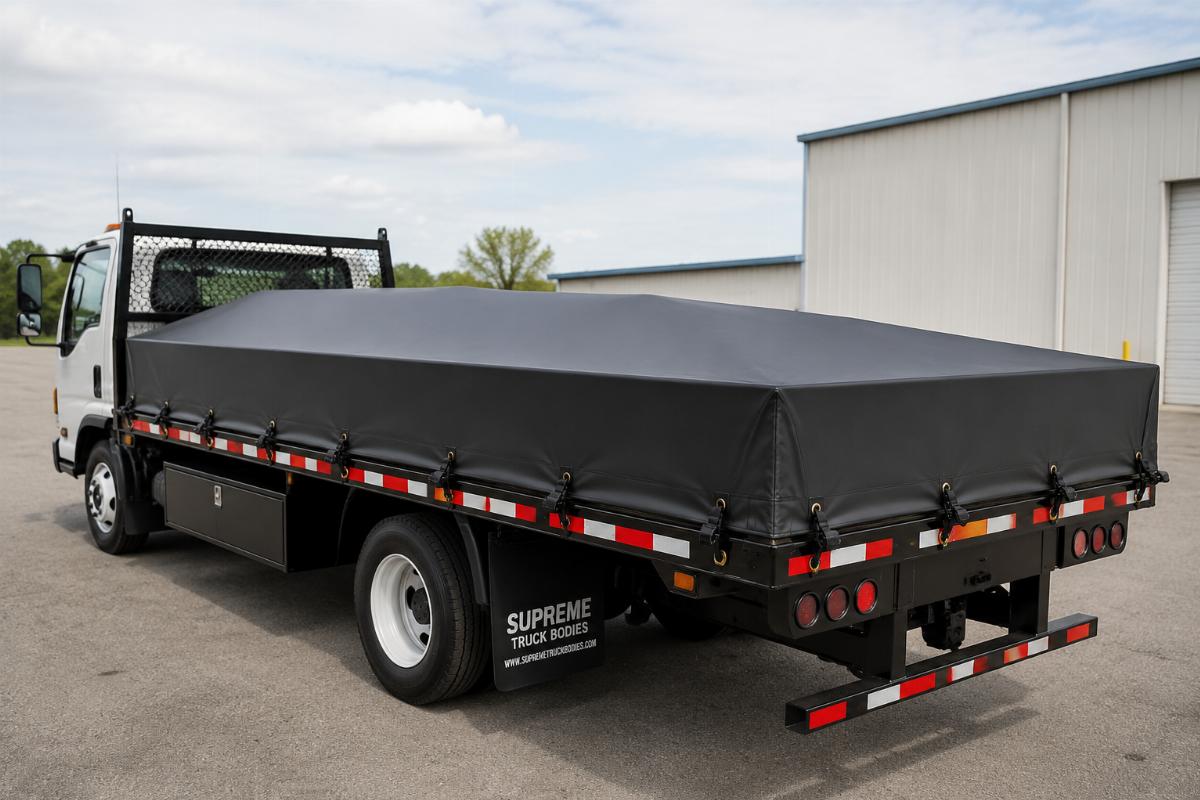
A North American regional logistics fleet with 127 flatbed trucks previously ordered generic tarps that required replacement every 3 months, until they switched to custom 2.4m x 13.6m tarps matched exactly to their core vehicle model, cutting their replacement frequency to once per year [NEED_CITE: Tear resistance and UV stabilization formula determine 60% of tarp durability, not just raw material thickness].
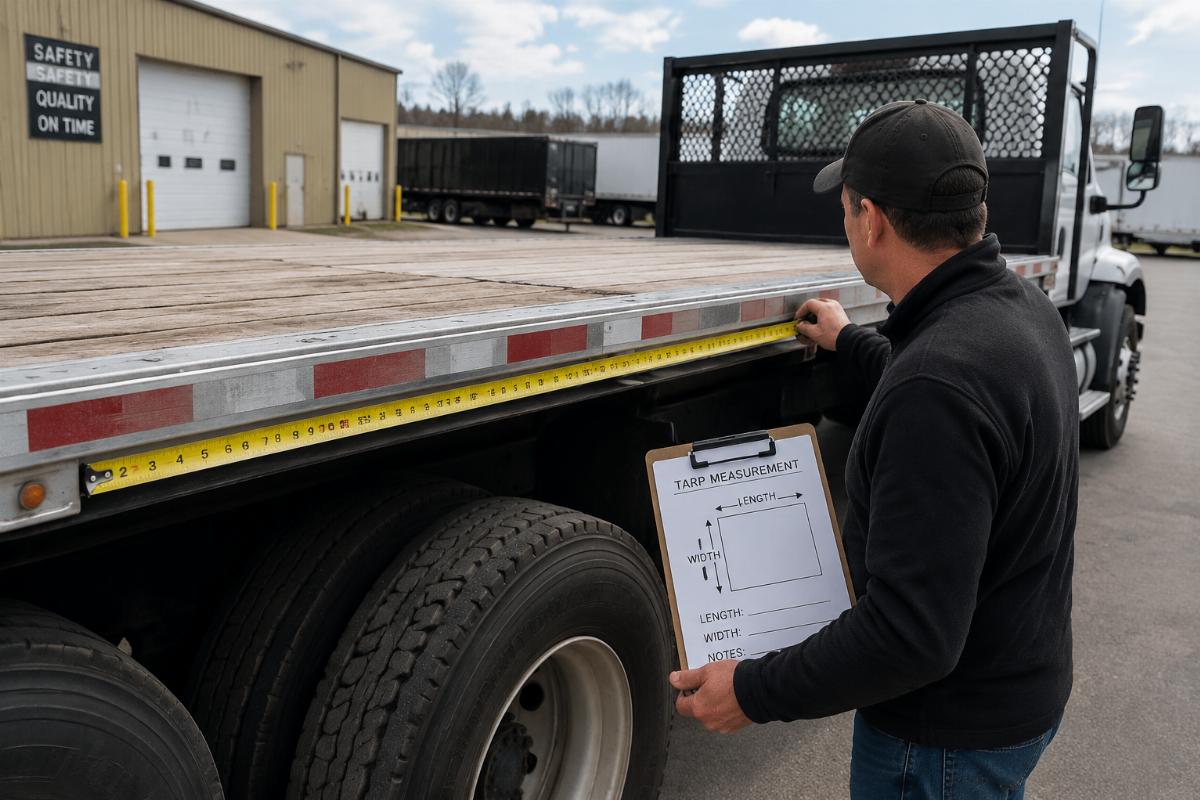
- Direct Fleet Measurement – Measure at least 3 sample units of each core truck model in your fleet with a steel tape, rather than relying solely on public spec sheets.
- Clearance Standardization – Apply the 2cm per side clearance rule consistently across all tarp dimension requests.
- Wear Point Verification – Note any existing high-friction points on your truck frames to share with manufacturers for reinforced edge design.
What Are the 3 Non-Negotiable Parameters for Long-Haul Truck PVC Tarps?
You can rule out 70% of unqualified suppliers immediately by confirming 3 core performance thresholds before requesting quotes. Many new buyers focus solely on unit price without verifying these parameters, leading to 3x higher replacement rates within 6 months of deployment.
| Performance Parameter | Common Low-Cost Tarp Spec | Minimum Requirement for 12+ Month Service Life |
|---|---|---|
| Tear Resistance | 120N or lower | 250N or higher |
| UV Stabilization | Level 1 or no listed rating | Level 4 certified for 1000+ hours of direct sun exposure |
| Waterproof Rating | IPX4 or unlisted | IPX6 for full protection against heavy rain and spray |
A EU cross-border trucking operator previously faced 8% of monthly shipments suffering from liquid cargo leakage due to low-quality tarps, until they ordered 150 heavy-duty custom tarps with dedicated UV-resistant coating that reduced leakage loss to 1.2% of monthly shipments.

- Spec Requirement Submission – List the 3 core parameters explicitly in your initial request for quotation to filter out non-compliant suppliers early.
- Test Request – Ask for a 1m x 1m sample of the tarp material to conduct on-site tear and water resistance testing before placing bulk orders.
- Certification Confirmation – Request copies of third-party test reports for UV stabilization and waterproof ratings to validate supplier claims.
How to Place Bulk Custom Tarp Orders Without Hidden Extra Costs?
Confirming 3 key terms upfront eliminates 90% of post-order disputes that add unexpected costs and delivery delays. Many buyers assume all custom orders follow the same lead time and inspection rules, but unstated charges for custom edge reinforcement or rushed production can add 30% to your final bill.
| Order Term | Common Unclear Practice | Clear Binding Requirement |
|---|---|---|
| Lead Time | Assume a standard 4+ week wait for all custom orders | Confirm production timelines explicitly: 200 unit bulk orders can be completed in 12 working days with dedicated production lines [NEED_CITE: Manufacturers with dedicated production lines can complete 200-unit bulk custom orders within 12 working days] |
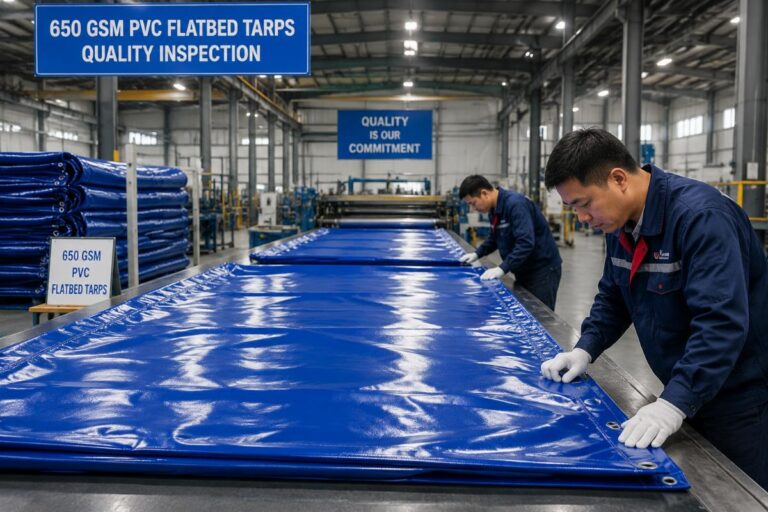
| Pre-Shipment Inspection | Accept generic “quality check” assurances | Require 100% unit-by-unit pre-shipment QC inspection before cargo leaves the factory |
| MOQ Terms | Assume minimum order quantities of 200+ units for custom designs | Lock in flexible MOQ terms aligned with your quarterly replacement needs |
A Southeast Asian regional freight network recently placed a 70-piece bulk reorder with a 50 unit minimum order requirement, and received full unit-by-unit pre-shipment inspection that resulted in a 0% quality rejection rate upon delivery.

- Term Documentation – Put all agreed lead time, MOQ and inspection terms in writing in your formal purchase order.
- Production Update Request – Ask for 2 photo updates during the production process to confirm alignment with your custom specifications.
- Dispute Clause Addition – Add a clear resolution clause for non-conforming units to avoid lengthy negotiation after delivery.
Where to Find Reliable Custom PVC Truck Tarp Suppliers for Bulk Reorders?
Suppliers with dedicated industrial fabric production lines and 10+ years of export experience deliver the most consistent results for bulk fleet orders. When evaluating potential partners, prioritize those that can provide case references from fleets operating in your regional climate zone, rather than general consumer tarp manufacturers.
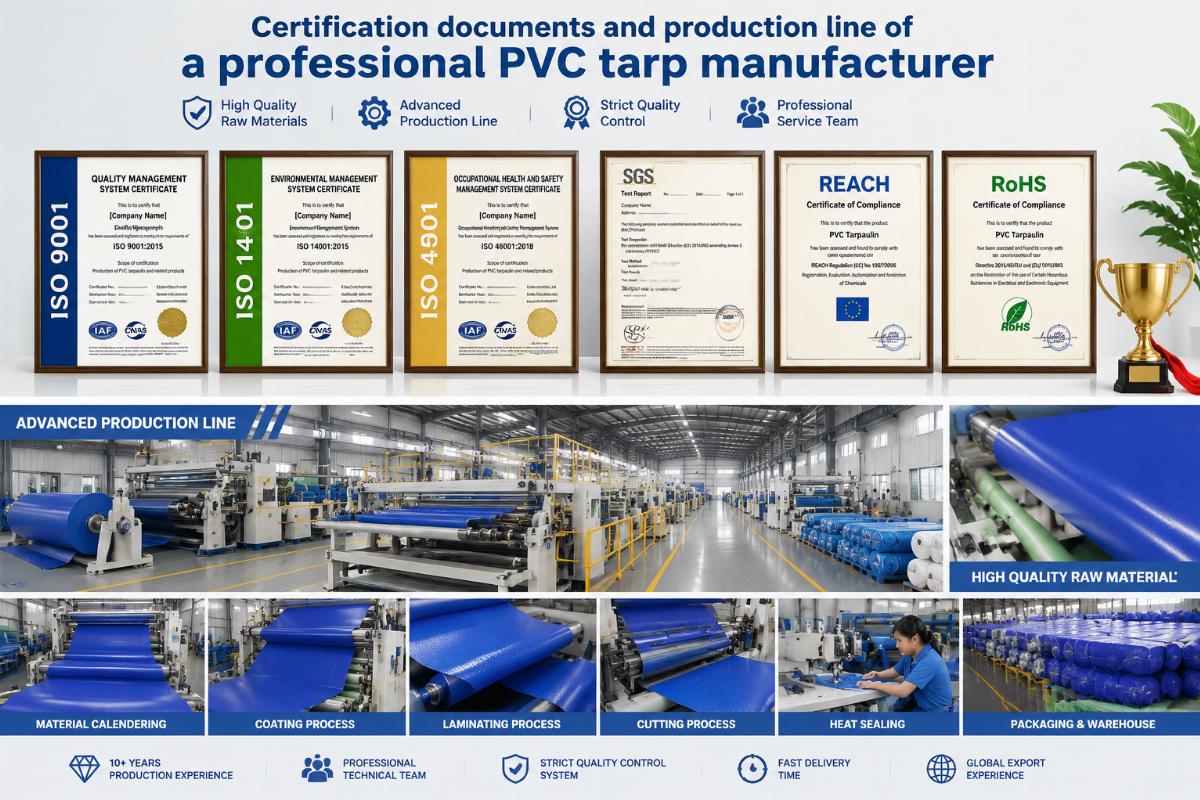
A China-based manufacturer with 30 years of PVC tarp production experience, 3 dedicated production lines, 7-day sample turnaround, 24-hour quotation response and full ISO/CE certified quality systems is a common benchmark used by many fleet operators to shortlist qualified candidates, aligning with the core requirements most logistics teams prioritize for long-term sourcing partnerships.
- Reference Verification – Request 2 to 3 references from fleet operators of similar size and route profile to confirm past performance.
- Capability Confirmation – Verify that the supplier owns dedicated production lines rather than outsourcing production to third-party facilities.
- Sample Lead Time Check – Test the supplier’s 7-day sample turnaround promise to assess their operational efficiency before placing large bulk orders.
Conclusion
Custom PVC truck covers deliver consistent cost savings only when paired with precise measurement and structured supplier vetting, rather than generic one-size-fits-all sourcing. The common assumptions about tarp thickness, lead times and edge clearance that most fleet managers hold are often based on outdated generic product limitations, not the capabilities of modern specialized manufacturers. By applying the standard 3 parameter threshold rule and verifying order terms explicitly, even teams with limited custom sourcing experience can cut their tarp related operational costs by 15% or more within a single year of switching to properly fitted custom covers.