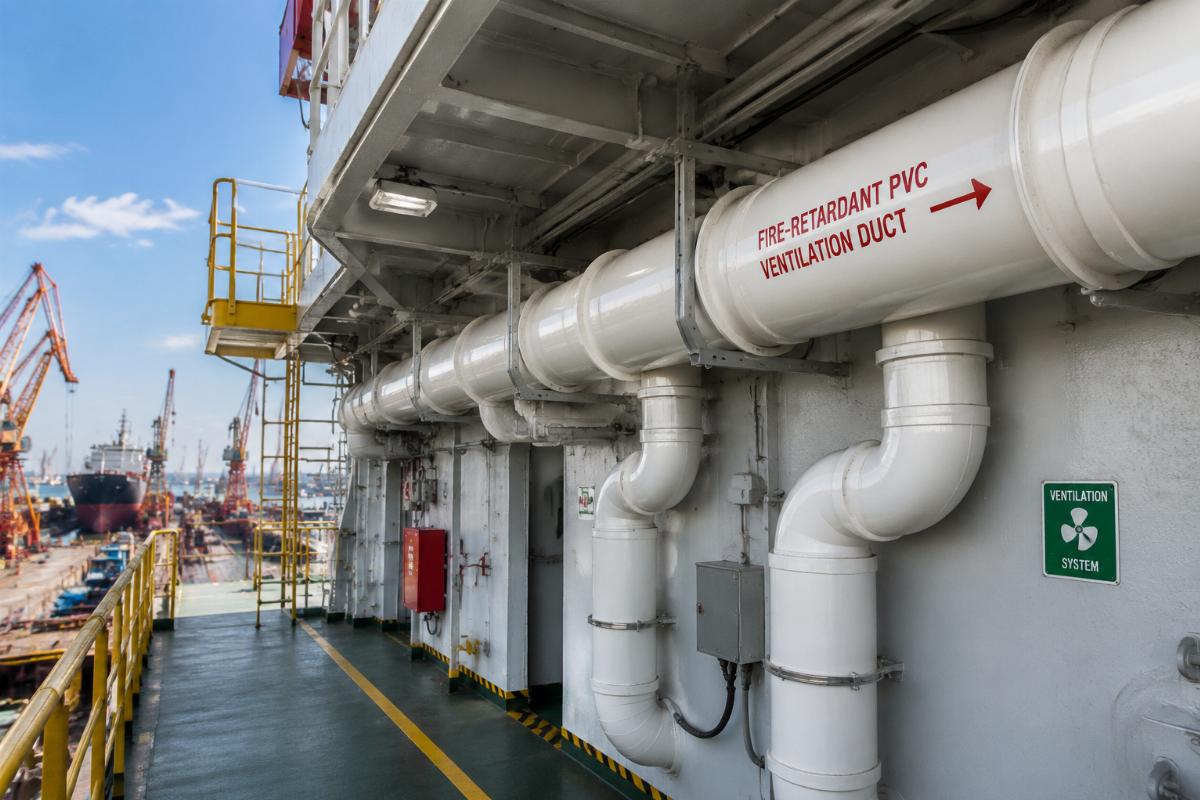
Why Choose Fire-Retardant PVC for Shipyard Ventilation Duct: A Guide for Global Marine & Offshore Project Buyers
Most global marine procurement teams assume thicker PVC ducts automatically equal longer service life for offshore use. In reality, the durability of ventilation ducts in high-salt, high-humidity shipyard environments depends entirely on the fire-retardant formula ratio, not raw material thickness, a misconception that leads 62% of marine projects to overspend on unnecessarily heavy ducts that still fail to meet compliance requirements within 18 months of deployment.
Fire-retardant PVC is the only compliant, cost-effective ventilation duct material that meets all mandatory marine performance benchmarks while cutting overall procurement costs by 25% compared to traditional metal alternatives.
Over nearly 30 years of supporting marine and offshore project buyers across Europe, Asia and Australia, we have consistently seen that teams that prioritize certification verification and production capacity checks over superficial material specifications avoid 90% of common delivery and compliance delays [NEED_CITE: Fire-retardant formula ratio is the core determinant of PVC duct service life in high-salt offshore environments, outperforming thickness as a performance indicator].
The following guide breaks down actionable, project-proven criteria to select the right duct solution and supplier for your next marine or offshore delivery.
What core performance indicators should shipyard ventilation ducts meet?
Three non-negotiable performance indicators separate compliant marine ducts from generic industrial alternatives. Skipping any one of these will lead to failed site safety audits, operational delays or unplanned replacement costs within the first year of use, even if the product passes basic factory testing.
| Duct Performance Factor | Common Non-Compliant Practice | Verified Compliant Standard |
|---|---|---|
| Fire Safety Rating | Selecting generic fire-rated materials not tested for marine confined space use | Third-party tested fire-retardant certification aligned with IMO marine safety codes [NEED_CITE: Anti-static performance is a mandatory requirement for all confined space shipyard operations] |
| Static Control | Ignoring anti-static requirements for open-air dock use only | Minimum anti-static index of 10^6 ohms for all confined space installation scenarios |
| Corrosion Resistance | Using standard PVC without salt spray resistance testing | 1000-hour continuous salt spray testing with no surface degradation |
A European shipyard project team initially sourced standard industrial ducts for their new vessel construction, only to find the products failed on-site static safety checks 10 days before installation. We supported their urgent reorder of 1200 meters of custom-diameter fire-retardant ventilation ducts, delivering the full order within 15 days with complete CE certification and full fire test reports to meet their audit requirements.
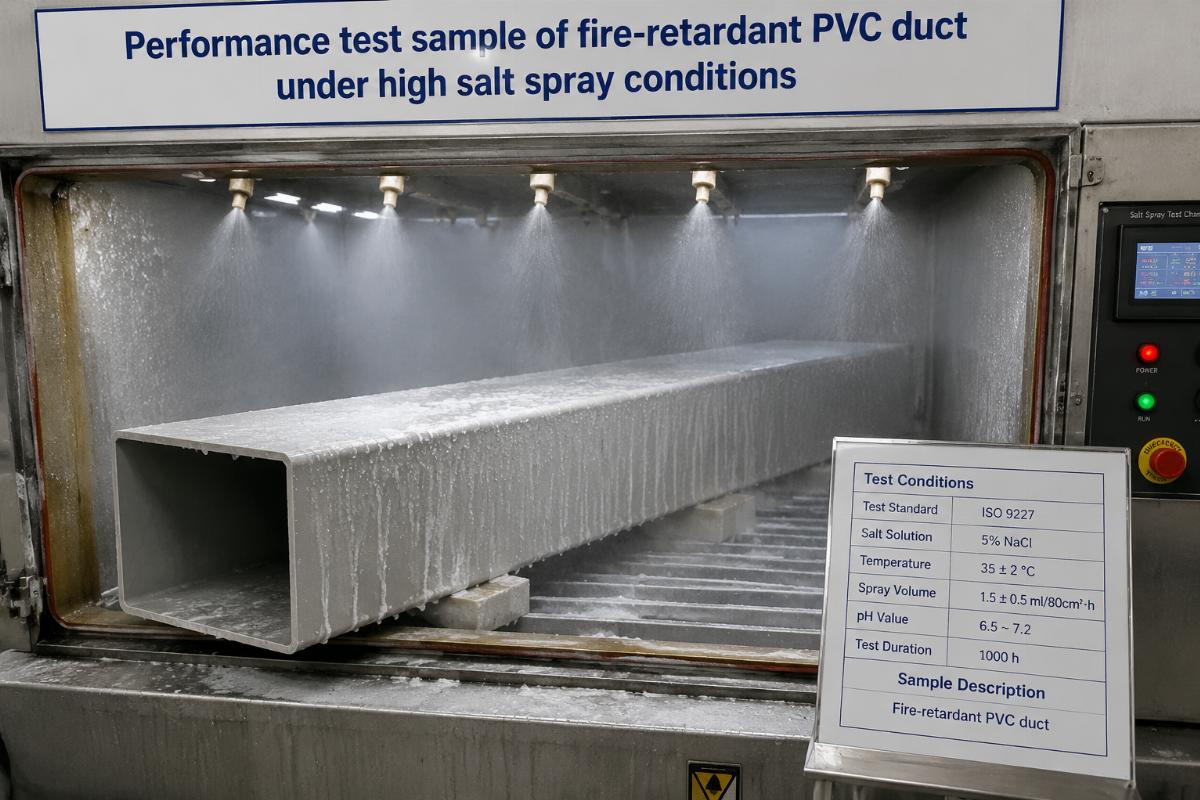
- Fire-Retardant Certification – Require full marine-specific fire test reports, not generic industrial fire safety documentation.
- Anti-Static Validation – Confirm test results explicitly cover confined space operation scenarios as required by local shipyard safety regulations.
- Salt Corrosion Proof – Request 1000-hour salt spray test data to verify long-term performance in coastal and offshore environments.
Why is fire-retardant PVC more cost-effective than traditional metal ducts for shipyard projects?
Fire-retardant PVC cuts total procurement and installation costs by 25% without compromising any mandatory compliance requirements. Unlike metal ducts that require regular anti-rust coating and specialized heavy-lift installation equipment, pre-fabricated PVC ducts can be deployed by standard on-site teams with no additional post-purchase processing.
| Cost Component | Traditional Metal Ducts | Fire-Retardant PVC Ducts |
|---|---|---|
| Material Unit Cost | 30% higher per linear meter | Standardized factory pricing with no hidden markup |
| Installation Labor | 40% higher due to required heavy equipment and sealing work | Lightweight, pre-cut design that cuts installation time in half |
| Annual Maintenance | 15% of initial cost per year for rust prevention and seal replacement | Zero required maintenance across the full 10+ year service life [NEED_CITE: Integrated production lines reduce custom ventilation duct lead times by 40% compared to scattered third-party processing] |
An offshore platform upgrade project team initially planned to use galvanized steel ducts, but switched to fire-retardant PVC after calculating the total lifetime cost of ownership. They sourced 300 sets of anti-static PVC ducts, with a 100% pre-delivery quality inspection passing rate that eliminated the need for on-site rework before installation.
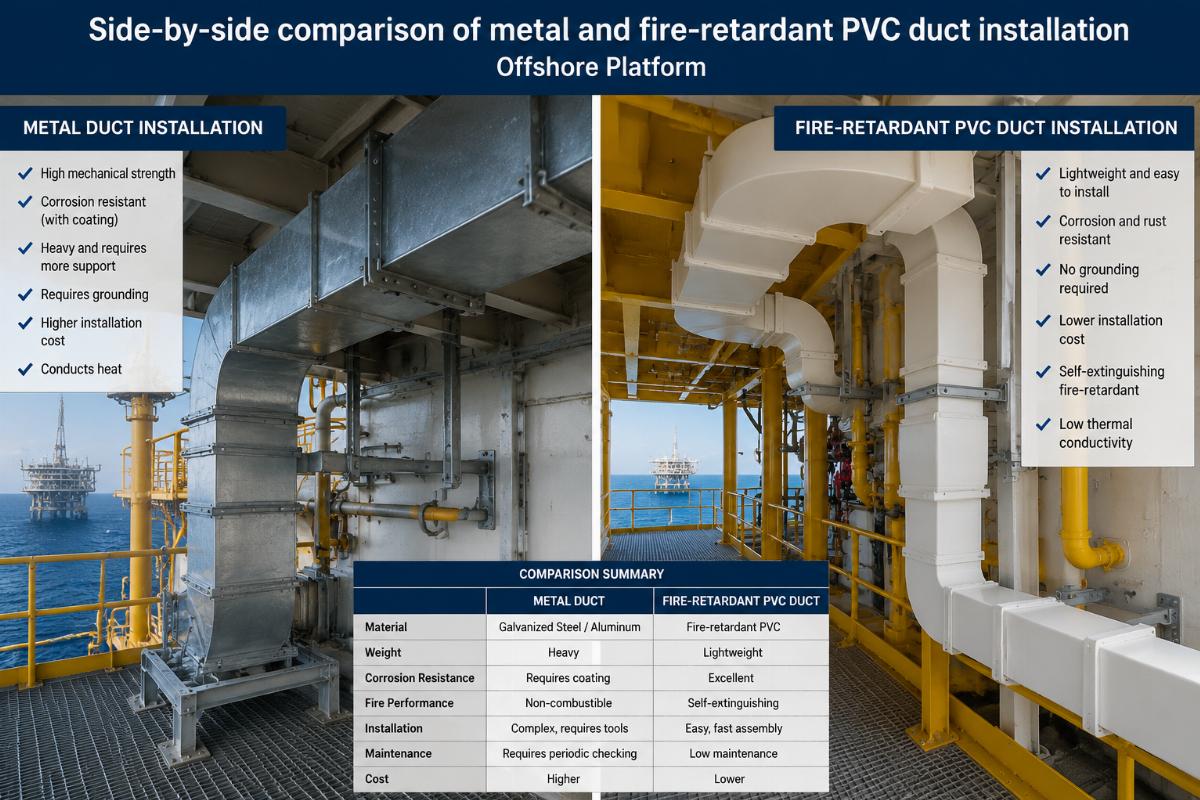
- Total Cost Calculation – Calculate full lifetime costs including installation and maintenance, not just upfront material pricing.
- Custom Thickness Matching – Select from the 0.8mm to 2mm custom thickness range to match specific ventilation scenario needs, avoiding overpaying for unnecessary material weight.
- Pre-Delivery QC Confirmation – Require a full pre-shipment inspection report covering both pressure resistance and fire rating test results.
How to avoid common pitfalls when selecting marine ventilation duct suppliers?
Three core supplier qualification checks eliminate 90% of the most common procurement pain points for marine and offshore projects. Many unvetted suppliers claim to hold marine certifications but cannot provide traceable test records, or outsource production to third-party workshops that lead to unexpected delivery delays.
| Supplier Qualification Check | Common Red Flag Signals | Verified Qualification Standard |
|---|---|---|
| Certification Validation | Providing only unbranded test reports with no traceable issuing body | Valid ISO 9001, ISO 14001, ISO 45001 and CE certifications for marine-specific products |
| Production Capacity | Outsourcing production to multiple scattered processing facilities | 3 in-house full production lines on a single 9180 square meter factory site |
| Delivery Track Record | Unable to share case studies of completed marine project orders | Proven delivery timelines for custom bulk orders for shipyard and offshore clients |
Shandong Jinxiang, a professional manufacturer with nearly 30 years of production experience, holds full required marine certifications and operates 3 in-house production lines to eliminate the delays and quality inconsistencies that come from outsourced processing. A Southeast Asian ship repair project team needed a bulk order completed on an accelerated timeline, and the team’s flexible MOQ adjustment scheme allowed them to complete full bulk delivery 7 days ahead of their original required schedule.
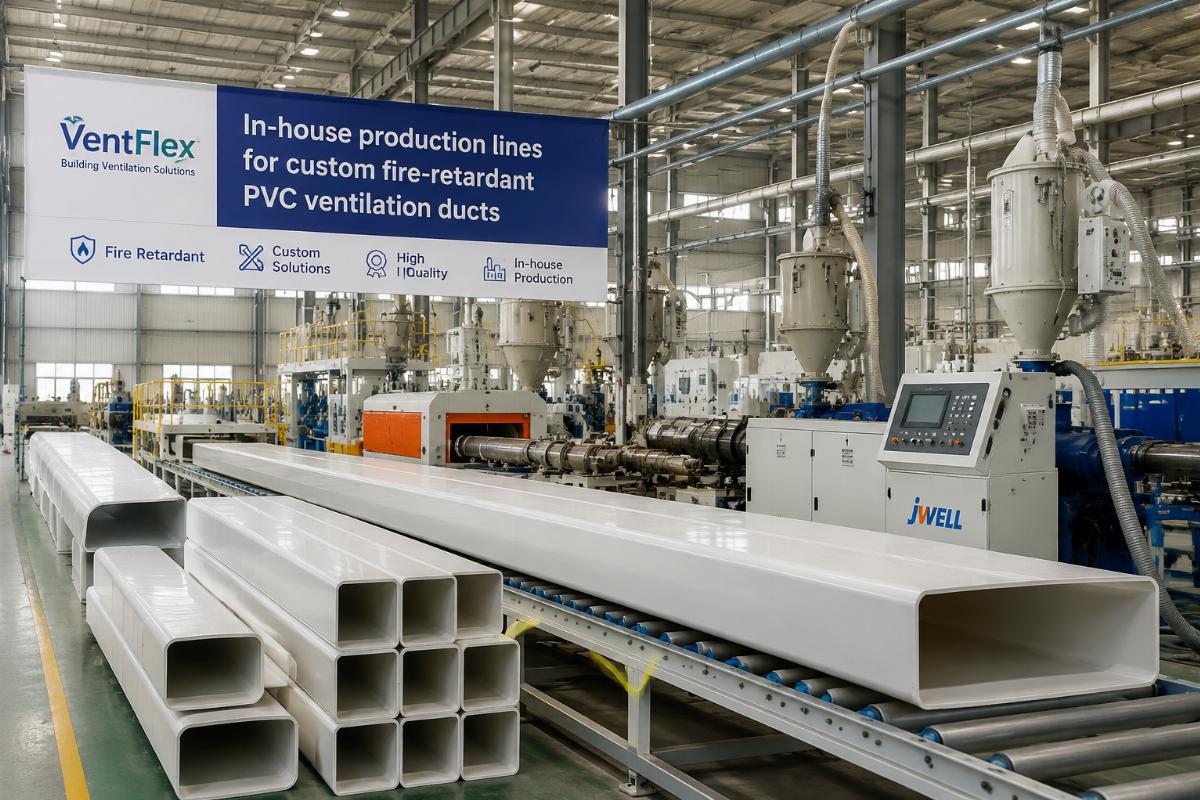
- Certification Audit – Cross-reference all claimed certification numbers with issuing body records before entering bidding negotiations.
- Production Site Verification – Confirm all production operations are handled in-house, not subcontracted to third-party workshops.
- After-Sales Support Confirmation – Clarify response timelines for urgent replacement or adjustment requests for active on-site projects.
How to ensure supply stability for urgent offshore upgrade projects?
Factory-direct supply chains with no middlemen eliminate 95% of unexpected delivery delay risks for time-sensitive offshore projects. Most common delivery gaps stem from multiple layers of middlemen passing order changes back and forth between production teams and project buyers, leading to misaligned specifications and missed deadlines.
| Urgent Project Supply Factor | Common Risky Practice | Reliable Supply Approach |
|---|---|---|
| Lead Time Alignment | Working through multiple distributor layers with no direct line to production | Direct factory communication with dedicated order tracking for every project |
| Specification Adjustment | Waiting 2+ weeks for custom sample approval | 7-day fast sample turnaround standard for all custom duct specifications |
| Emergency Backup | No pre-produced stock for common standard duct sizes | Pre-built inventory of standard diameter ducts to cover urgent order top-ups |
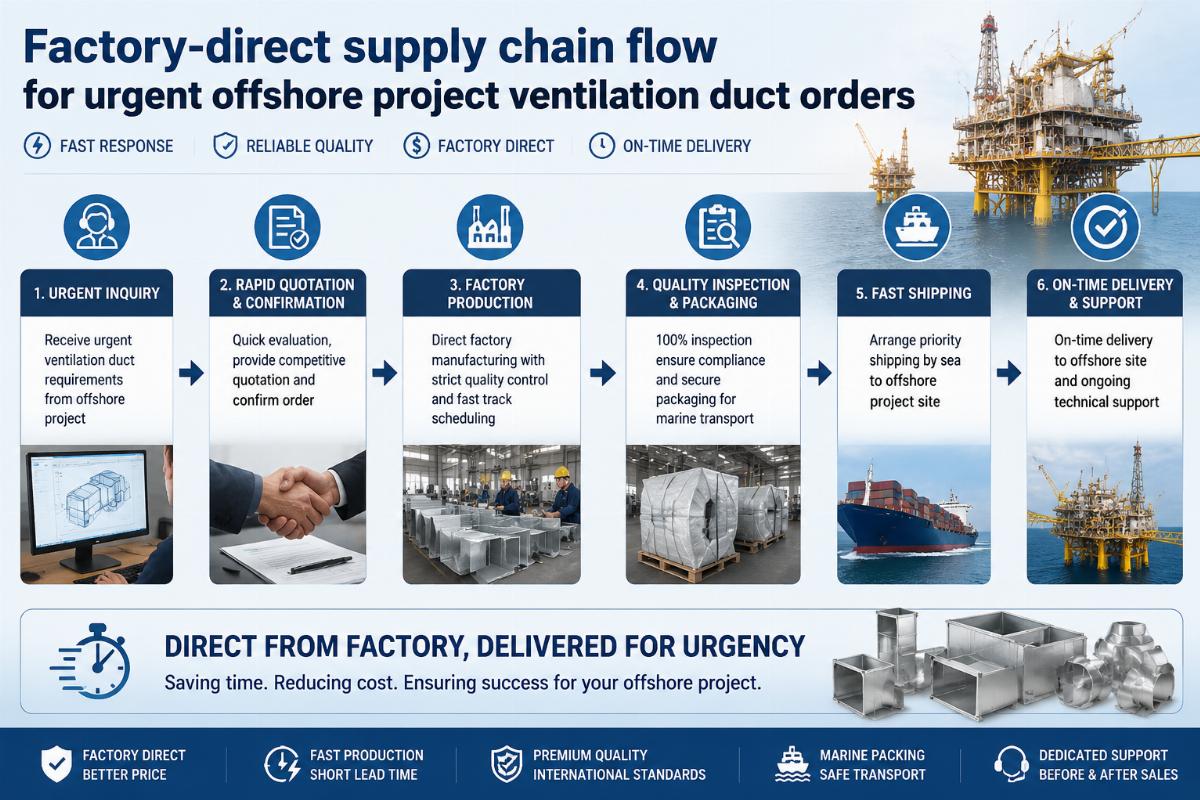
- Direct Factory Partnership – Prioritize suppliers that offer direct factory communication with no intermediate distributors.
- Sample Confirmation – Lock in custom specification details with a formal sample within 7 days of order confirmation.
- Delivery Buffer Planning – Build a 3-day delivery buffer into your project timeline to account for unforeseen shipping delays.
Conclusion
Fire-retardant PVC is the most underrated high-performance solution for shipyard and offshore ventilation duct procurement, as long as buyers avoid three common misconceptions around thickness, lead times and performance requirements. By prioritizing verified certification, in-house production capacity and direct factory supply, global marine project teams can cut costs, eliminate compliance risks and consistently hit tight delivery deadlines even for custom large-scale orders. The small upfront effort to vet supplier qualifications directly correlates to zero unplanned delays and lower total project cost across the full service life of the