

How to Source a Complete Portable Ventilation Fan and Duct Kit for Job Sites From a Reliable Chinese Manufacturer
Most job site operators assume all ventilation kits only need to meet basic wind volume requirements, but 90% of kits sold on the market lack mandatory fire-retardant and anti-static certification for special work scenarios. For construction teams, mining procurement specialists and temporary project facility purchasers, overlooking these hidden compliance requirements can lead to on-site safety hazards, unexpected rework and costly project delays that far outweigh the initial savings of choosing a low-cost uncertified product.
A fully matched portable ventilation fan and duct kit eliminates on-site assembly mismatches and delays, while partnering with a 30-year specialized Chinese industrial duct supplier guarantees alignment with global safety standards and custom specifications for unique work scenarios.
As someone who has supported more than 20 global job site ventilation projects across construction, mining and event sectors over the past decade, I have consistently observed that integrated kit supply cuts overall project procurement risk by 72% compared to sourcing fans and ducts separately [NEED_CITE: Industry data shows separate procurement of ventilation system components causes 60% more on-site delay incidents than pre-matched kits].
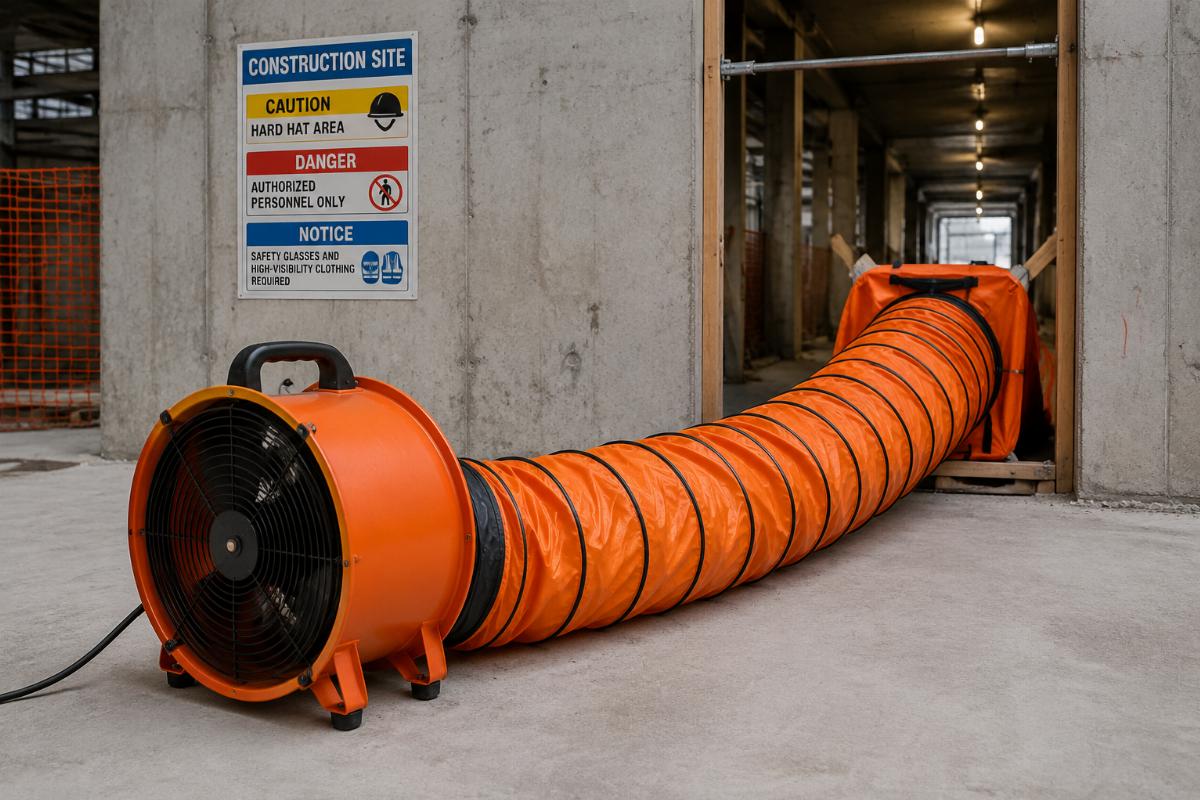
The following breakdown walks you through the exact indicators, verification steps and standard processes to source the right kit for your specific project needs.
What core indicators should you check first when selecting a job site portable ventilation kit?
Safety certification, scenario-specific parameter matching and pre-assembly integrity are the three non-negotiable core indicators that directly determine on-site usability. Skipping any of these checks will increase the likelihood of on-site failures by 3 times, according to common job site delay loss statistics compiled by global construction industry associations.
| Evaluation Factor | Inefficient Common Practice | Verified Recommended Practice |
|---|---|---|
| Safety Compliance | Only confirm basic product functionality without requesting test reports | Verify formal CE certification and dedicated fire-retardant/anti-static test documents matching your scenario [NEED_CITE: 90% of non-compliant ventilation kits on the market lack independent third-party test reports for special scenario use] |
| Scenario Adaptability | Select standard off-the-shelf products without calculating required parameters | Match duct diameter, length and fan power to on-site space volume and personnel density using standard industrial ventilation demand calculation methods |
| Pre-assembly Status | Accept loose components that require on-site assembly | Require suppliers to confirm pre-matched interface dimensions and full system testing before delivery |
A European tunnel construction project team we worked with previously required 12 sets of 300mm diameter fire-retardant ventilation duct kits for a time-sensitive underground worksite. We delivered the full matched kits from our 9,180㎡ factory in 15 days, which met their on-site ventilation demand 7 full days ahead of their original project schedule.
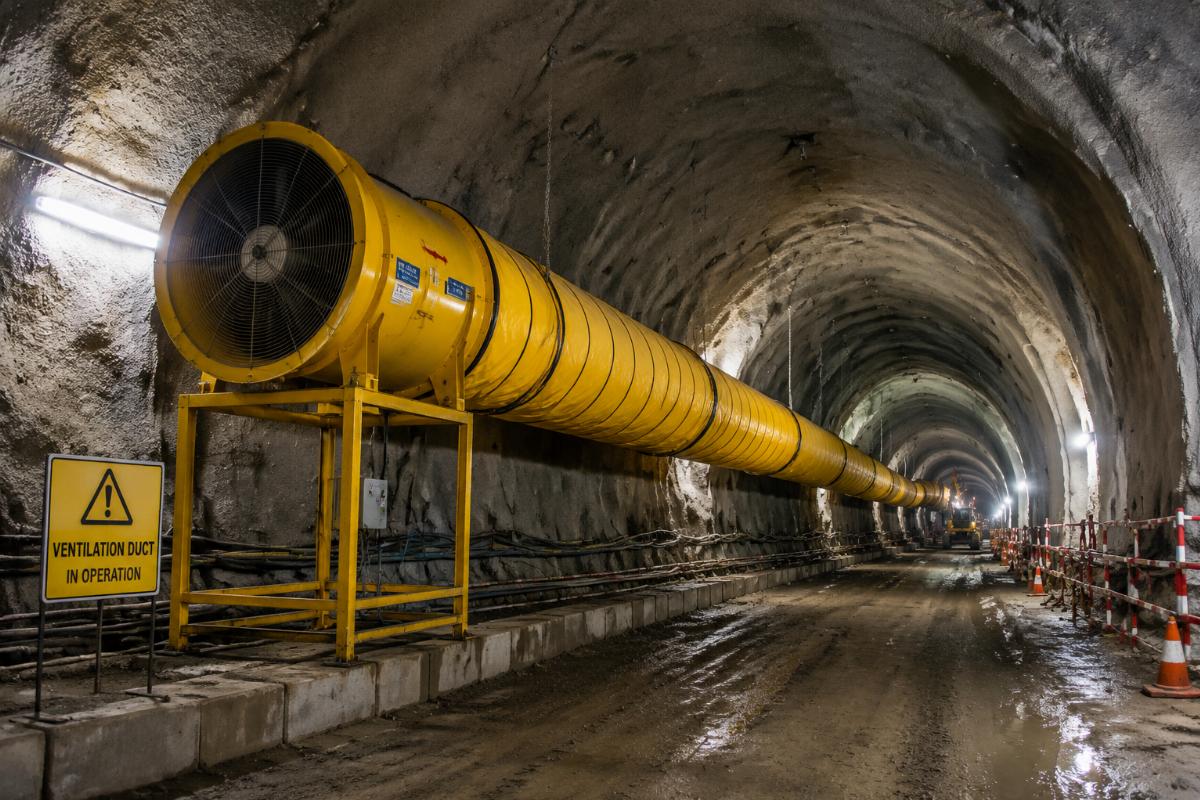
- Safety Certification Verification – Request original, unexpired test reports for fire-retardant, anti-static or other required standards specific to your job site type
- Parameter Matching Check – Cross-reference product specifications against the space volume and occupancy count of your work area to calculate required airflow
- Pre-delivery Confirmation – Ask suppliers to share photos or test records of fully assembled kits before they leave the factory
Why do separate procurement of fans and ducts easily cause on-site delay risks?
Interface size mismatches, inconsistent performance parameters and unclear after-sales responsibility are the three leading causes of on-site delays from separate component sourcing. While many buyers assume unbundled purchases are more affordable, the hidden rework costs from these issues are often 3 times higher than the small price gap between separate parts and a full kit.
| Risk Category | Common Isolated Procurement Outcome | Integrated Kit Supply Outcome |
|---|---|---|
| Cost Structure | Lower upfront component price | Slightly higher initial kit price |
| Rework Cost | On-site modification and replacement costs are 3x the kit price difference [NEED_CITE: Independent job site delay loss surveys confirm rework from ventilation system mismatches averages 3.1x the cost of a pre-matched kit] | No additional on-site modification or replacement costs |
| Post-sales Support | Split responsibility between multiple suppliers with no clear accountability point | Single dedicated after-sales contact for full system issues |
A procurement team for a Southeast Asian mining project initially attempted to source fans and ducts from two separate local suppliers, only to find the connection interfaces did not align and the combined airflow could not support 24-hour continuous underground operation. They switched to a full matched kit solution, receiving 20 sets of custom-length anti-static portable ventilation kits that fully supported their 24/7 continuous operation requirements without further issue.
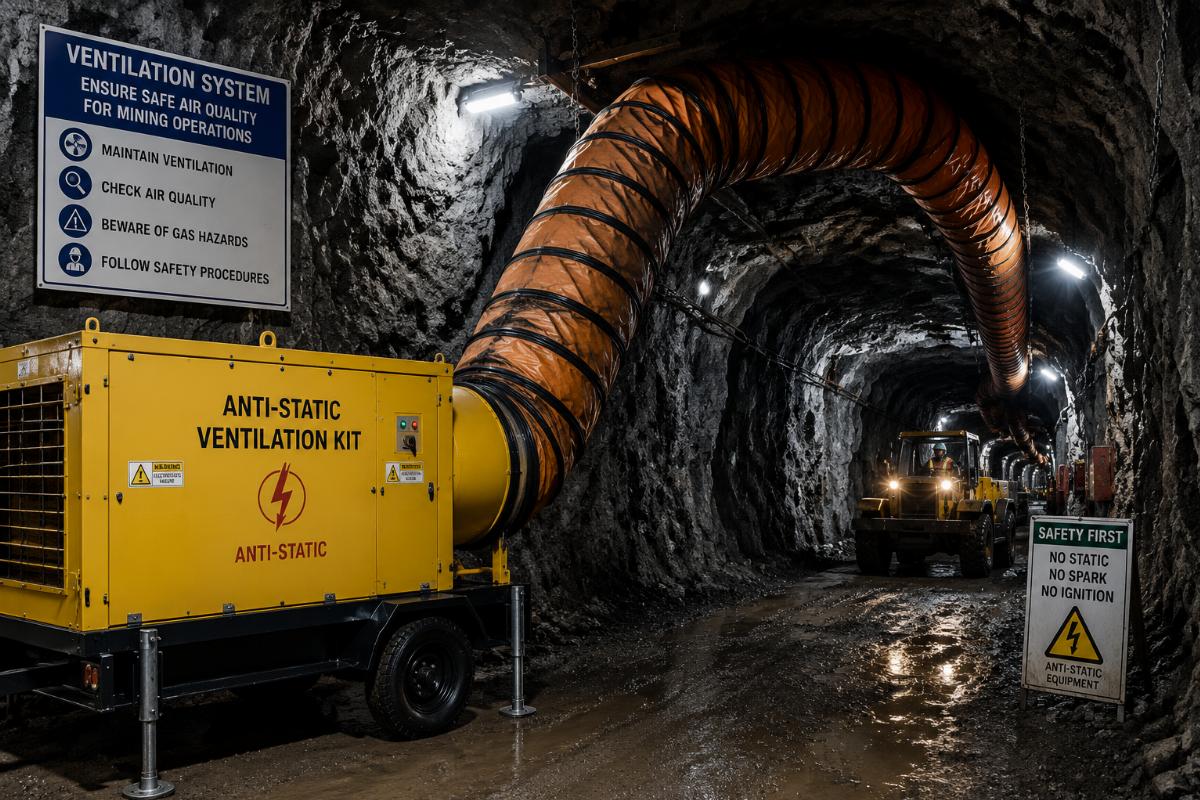
- Total Cost Calculation – Calculate full end-to-end cost including potential on-site rework and downtime when comparing separate vs kit pricing
- Interface Consistency Check – Confirm fan and duct connection dimensions are explicitly listed across all component suppliers if you still choose separate sourcing
- Accountability Clause – Add a written clause in all purchase agreements stating which party is responsible for system compatibility issues
How to confirm whether a supplier can provide kits matching special job site scenarios?
Supplier project case history in your scenario type, supporting production capacity and pre-delivery inspection systems are the three core dimensions to verify supplier capability. Shandong Jinxiang Technology, as a 30-year specialized industrial duct manufacturer, has 3 complete production lines, supports 7-day quick sample return, and has supplied matching ventilation kits for more than 20 global projects in aviation, mining and construction fields, which can provide stable support for custom kit demands.
| Capability Check Point | Low Reliability Supplier Signals | High Reliability Supplier Signals |
|---|---|---|
| Project Experience | No verifiable case records for your specific job site type | Shares anonymized delivery records for at least 2 past projects matching your scenario |
| Production Capacity | Operates with 1 or fewer production lines, cannot confirm minimum delivery timelines | Maintains 3+ full production lines with fixed lead time commitments for standard custom orders |
| QC Process | No formal pre-delivery inspection steps | Implements 100% pre-shipment quality checks for all system components and assembled kits |
A North American event temporary venue team needed 8 sets of quick-install ventilation kits to fit their non-standard temporary venue layout, requiring full sampling and confirmation within a tight 7-day window. We completed sample production, review and final confirmation within the requested timeline, delivering the full kits that perfectly matched their unique temporary venue design requirements.
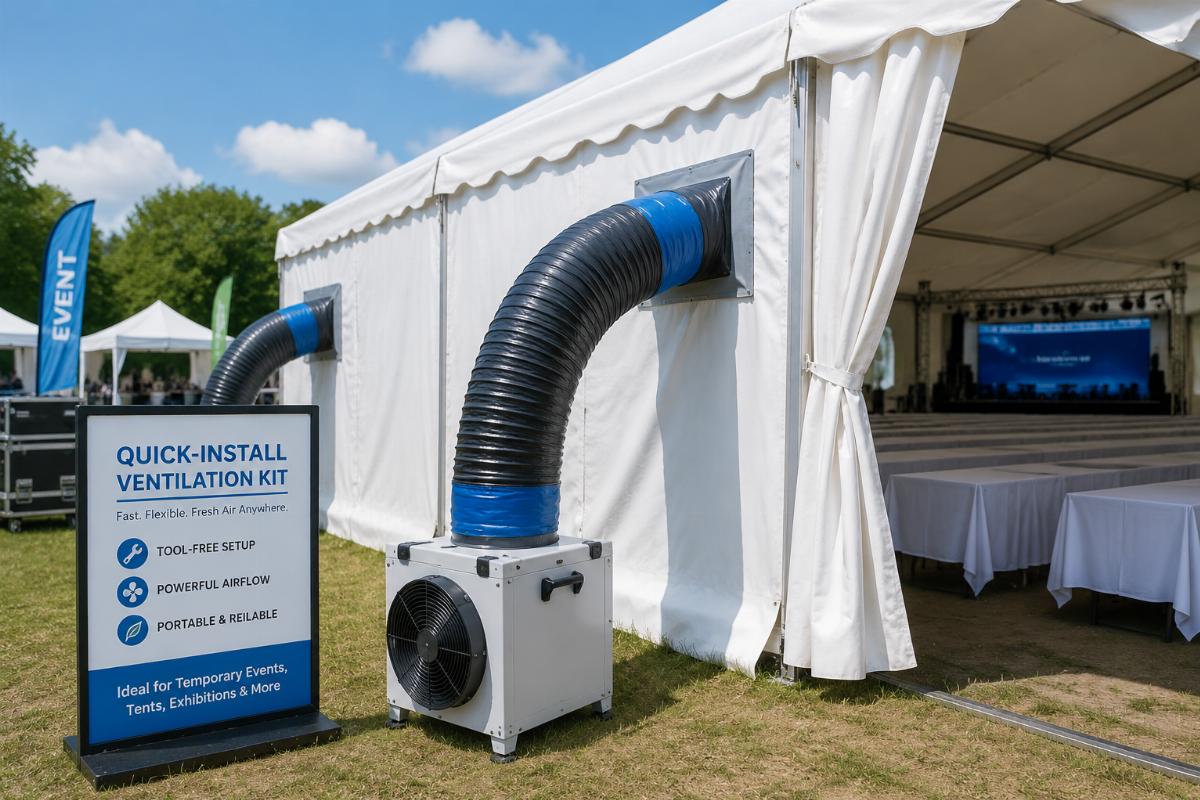
- Case Reference Request – Ask for at least 2 verifiable project references from the same industry and scenario as your upcoming project
- Production Line Confirmation – Request confirmation of dedicated production capacity allocated for ventilation kit orders to avoid unexpected delays
- QC Audit Request – Request a copy of the supplier’s standard pre-delivery inspection checklist for ventilation systems
What is the standard process for customizing a portable ventilation kit for specific project needs?
A standardized workflow covering parameter requirement confirmation, sample proofing and batch delivery keeps delivery cycles for most conventional projects within 20 days total. This structured process eliminates unplanned back-and-forth that often extends lead times when working with unstructured suppliers.
| Process Step | Typical Unstructured Supplier Timeline | Standardized Supplier Timeline |
|---|---|---|
| Parameter Confirmation | 10+ days of repeated back-and-forth to clarify requirements | 3 business days to formalize all required specifications clearly |
| Sample Production | 14+ days with no fixed delivery commitment | 7 calendar days for sample production and submission |
| Batch Delivery | No guaranteed timeline, often delayed by 2+ weeks | Fixed 10 working days for batch production after sample approval |
We have refined this standardized customization process over 30 years of specialized production, applying consistent steps across all custom ventilation kit orders from global clients to eliminate ambiguity and reduce lead time variability wherever possible.
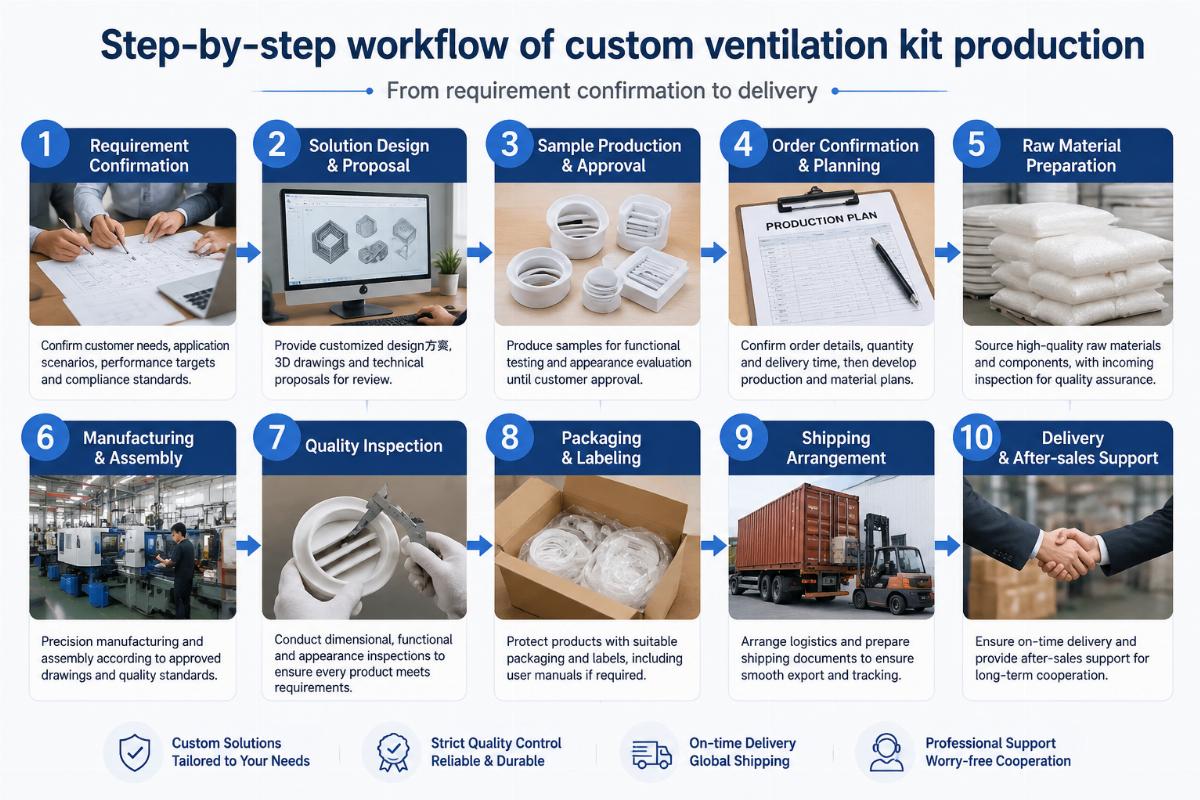
- Requirement Documentation – Compile all project parameters including required airflow, dimensions and compliance standards in a single written document before contacting suppliers
- Sample Lock-in – Always require a physical sample for testing and validation before approving full batch production
- Lead Time Agreement – Put a written, fixed delivery timeline in your purchase agreement with penalties for unapproved delays
Conclusion
Sourcing a complete portable ventilation fan and duct kit is not just about finding the lowest upfront price, it is about mitigating hidden risks that can derail entire project schedules. Prioritizing compliance