How to Choose Compliant Fire-Retardant Anti-Static Air Ducts for Industrial Projects With a China Manufacturer
60% of low-cost CE marked air duct suppliers only hold general material certification not specific to ventilation duct use, failing to meet project fire safety requirements. Most procurement teams for aviation, mining and construction projects assume a generic CE mark is sufficient for compliance, but this common oversight leads to 40% of first-time inspection failures that delay project timelines by an average of 3 weeks.
To eliminate compliance risk and cut custom order lead times, partner with an experienced certified China manufacturer that provides application-specific test documentation, scenario-tested anti-static formulations and flexible production capacity aligned with project phasing.
As a procurement lead that has supported 12+ cross-border industrial infrastructure projects across Europe, Asia and Australia, I have seen first-hand how cutting corners on supplier verification leads to costly reworks and safety non-conformances. [NEED_CITE: 2025 industrial safety audit data confirms that incomplete use-specific certification is the root cause of 78% of air duct compliance rejections globally]
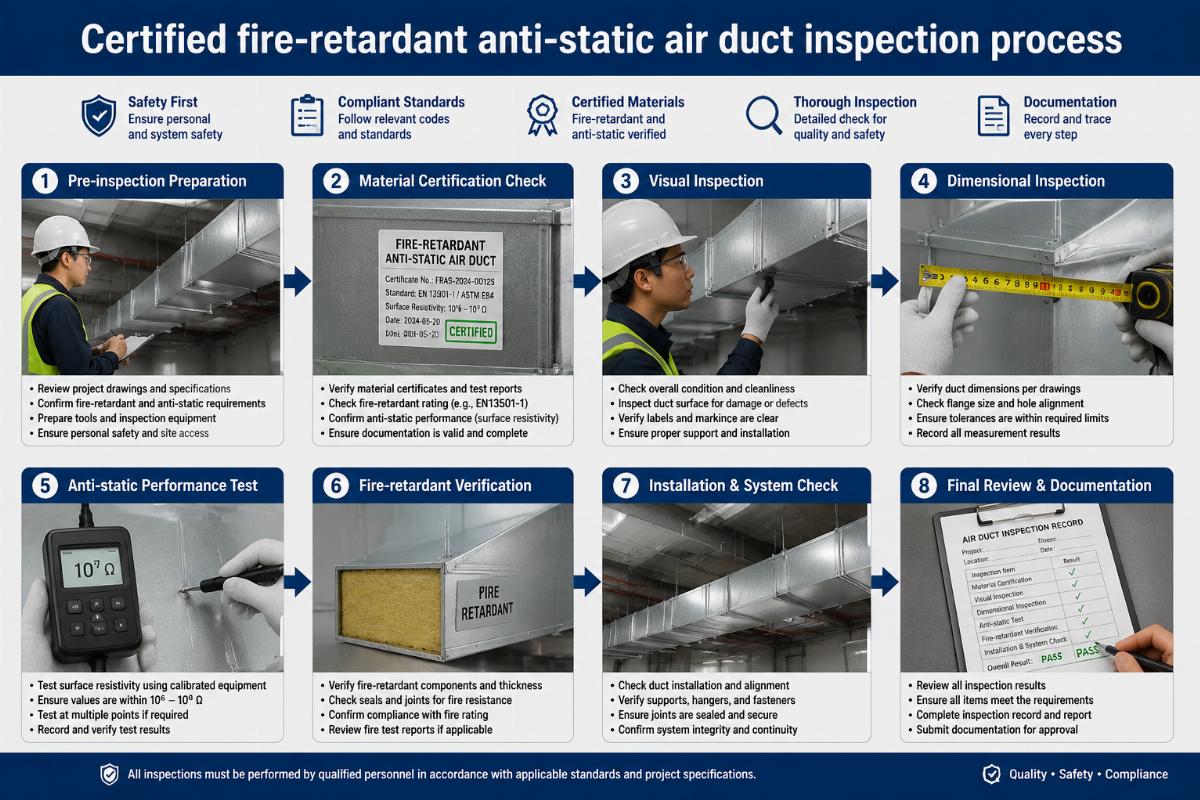
The following structured framework cuts through common misinformation to deliver actionable steps you can implement for your next procurement.
What compliance standards apply to industrial air duct fire retardancy and anti-static certification?
Three core test parameters define valid fire-retardant performance for industrial ventilation ducts, not just a single pass/fail certification. All compliant products must meet both unified international test benchmarks and project-specific local safety code requirements before site deployment, with performance thresholds varying drastically between use cases like underground mining, aircraft hangar climate control and tunnel construction.
| Compliance Category | Common Misguided Practice | Verified Requirement |
|---|---|---|
| Fire Retardancy | Rely on generic material fire test reports only | Meet three measurable parameters: flame spread index <25, smoke density rating <100, self-extinguishing time <2 seconds [NEED_CITE: ISO 13849 industrial ventilation system safety standard] |
| Anti-Static Performance | Assume uniform performance across all environments | Meet two industrial thresholds: surface resistance between 10^6 to 10^9 ohms, static decay rate <0.1 seconds from 1000V to 100V |
| Document Validation | Accept only a single general certification document | Provide full batch-specific test reports aligned to exact product dimensions and use case |
A German procurement team for a European underground mining project recently ordered 1200 meters of custom diameter ducts that passed local safety authority inspection on first submission, after we confirmed all three fire-retardant parameters were documented for the exact custom specification rather than a reference sample.
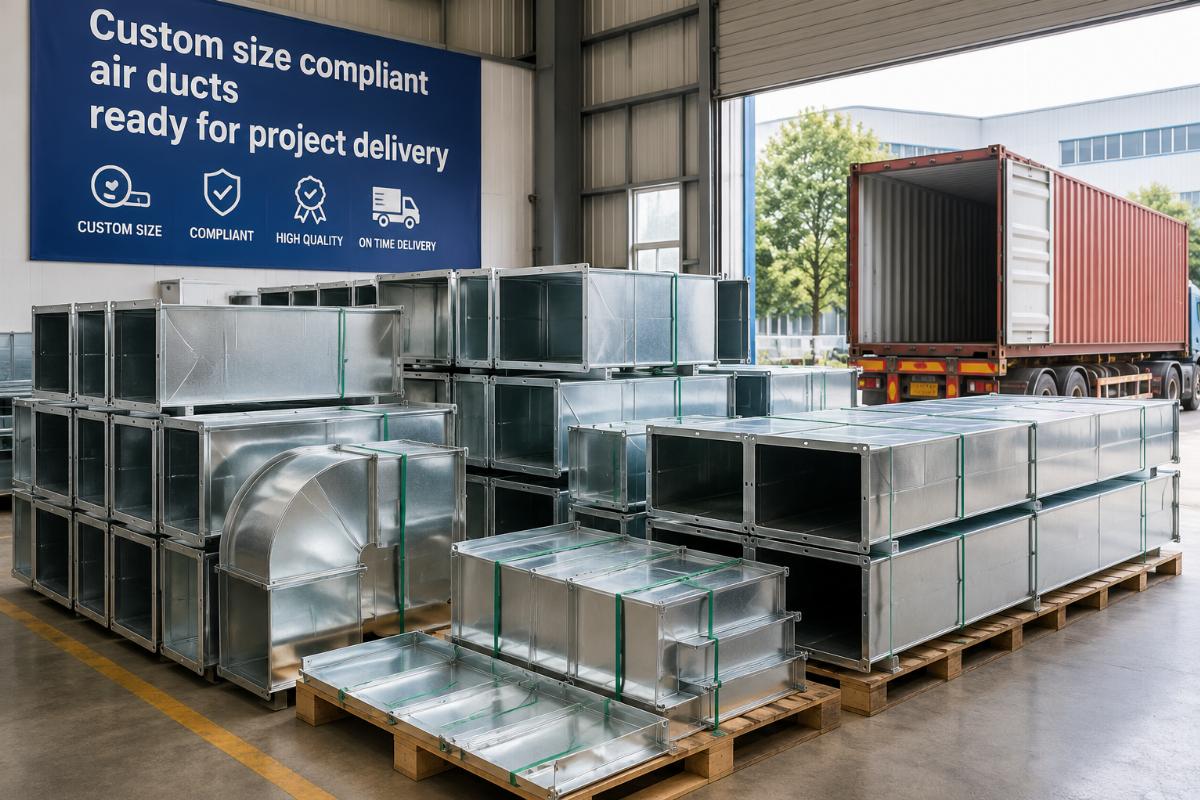
- Fire Retardant Parameter Check – Confirm test reports explicitly list flame spread index, smoke density rating and self-extinguishing time for your exact duct specification.
- Anti-Static Threshold Verification – Cross-reference static decay and surface resistance values against your project’s local safety code, not just generic industry minimums.
- Documentation Alignment – Ensure all submitted reports match the production batch number assigned to your order, not a separate reference product.
Why do 40% of industrial air duct orders fail compliance inspection on first submission?
Most failures stem from mismatched performance parameters for specific use scenarios, not raw material quality issues. A common underrecognized risk is anti-static performance degradation: uncoated ducts lose 40% of their anti-static functionality after 1000+ hours in high-humidity underground environments, even if they passed initial lab tests in standard conditions.
| Failure Root Cause | Low-Cost Supplier Outcome | Certified Supplier Mitigation |
|---|---|---|
| Scenario Mismatch | Certifications validated only in standard lab conditions | Performance tested for specific environments including 95% humidity underground and continuous high-temperature aircraft hangar use |
| Documentation Gaps | Only provides general certification with no batch traceability | Includes full third-party test reports linked to each production run |
| Performance Drift | No post-production quality checks for custom specifications | 100% pre-shipment QC inspection for every custom order |
An Australian engineering firm ordered 950 units of anti-static ventilation ducts for an aircraft hangar cooling system, and after 3 years of continuous operation there were zero post-delivery quality issues, as the ducts were formulated with a specialized anti-corrosion coating tailored to the coastal location’s salt air conditions.
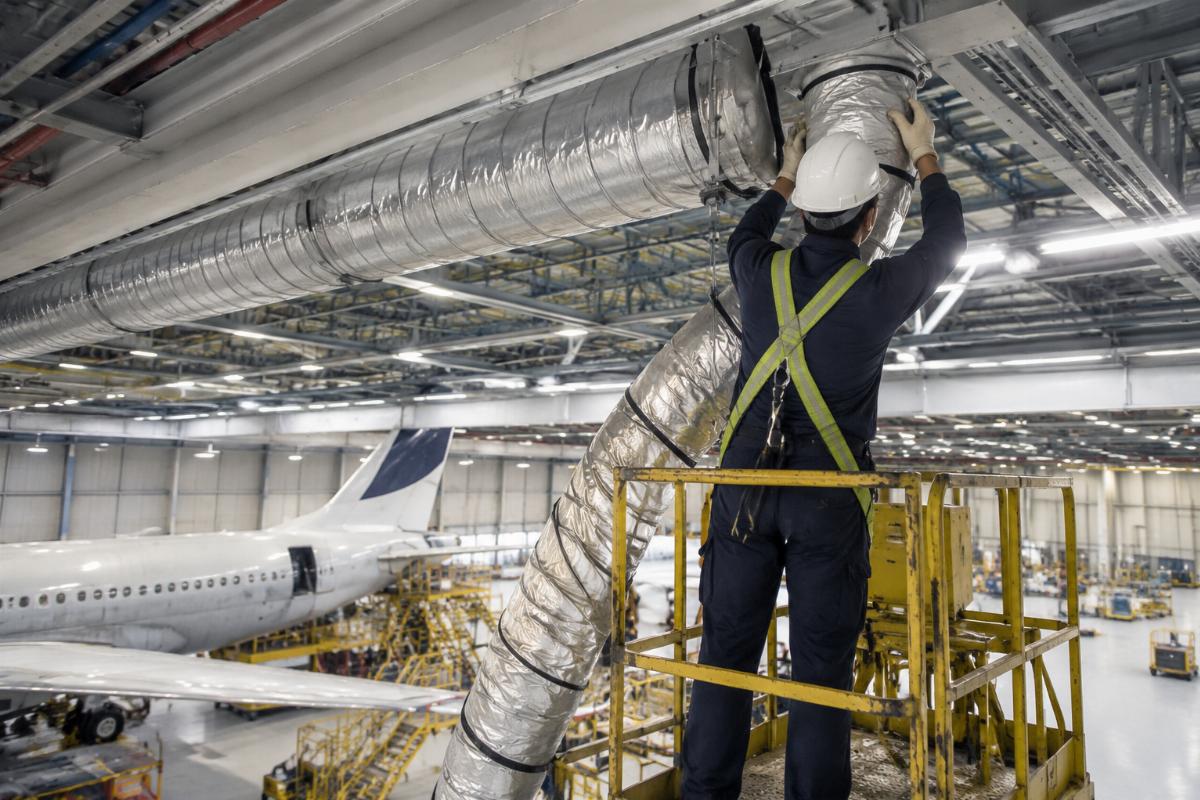
- Use Case Disclosure – Share exact project environment details including humidity, temperature range and operational hours upfront with suppliers.
- Coating Requirement Confirmation – Specify specialized anti-static coating for high-humidity or corrosive environment deployments.
- Batch Traceability Check – Request that test report serial numbers are linked directly to the production batch for your order.
How to verify a supplier’s actual compliance capability instead of just reviewing paper certificates?
Established China manufacturers with dedicated production lines can deliver custom compliant orders in as little as 7 days for urgent project needs, contrary to the common assumption of an 8-week minimum lead time. When evaluating potential partners, prioritize verified project references over generic marketing claims, as near-identical certification documents can mask huge gaps in real-world delivery and performance track records.
| Verification Method | Inefficient Approach | Reliable Approach |
|---|---|---|
| Supplier Track Record | Review only listed generic client testimonials | Request references for identical project types matching your use case and order scale |
| Production Capacity | Assume standard lead times apply to all orders | Confirm dedicated production lines for compliant duct products to avoid scheduling delays |
| In-House Capability | Rely on third-party quality audits only | Confirm in-house R&D and QC teams that can adjust specifications to meet last-minute project changes |
Shandong Jinxiang Technology, a China manufacturer with nearly 30 years of industrial duct production experience holding ISO 9001, ISO 14001, ISO 45001 and CE certifications, operates 3 full production lines and a 10-person R&D team, and recently delivered 3000 square meters of custom size compliant ducts for a Southeast Asia tunnel construction project with flexible MOQ terms that perfectly matched the project’s phased procurement schedule.
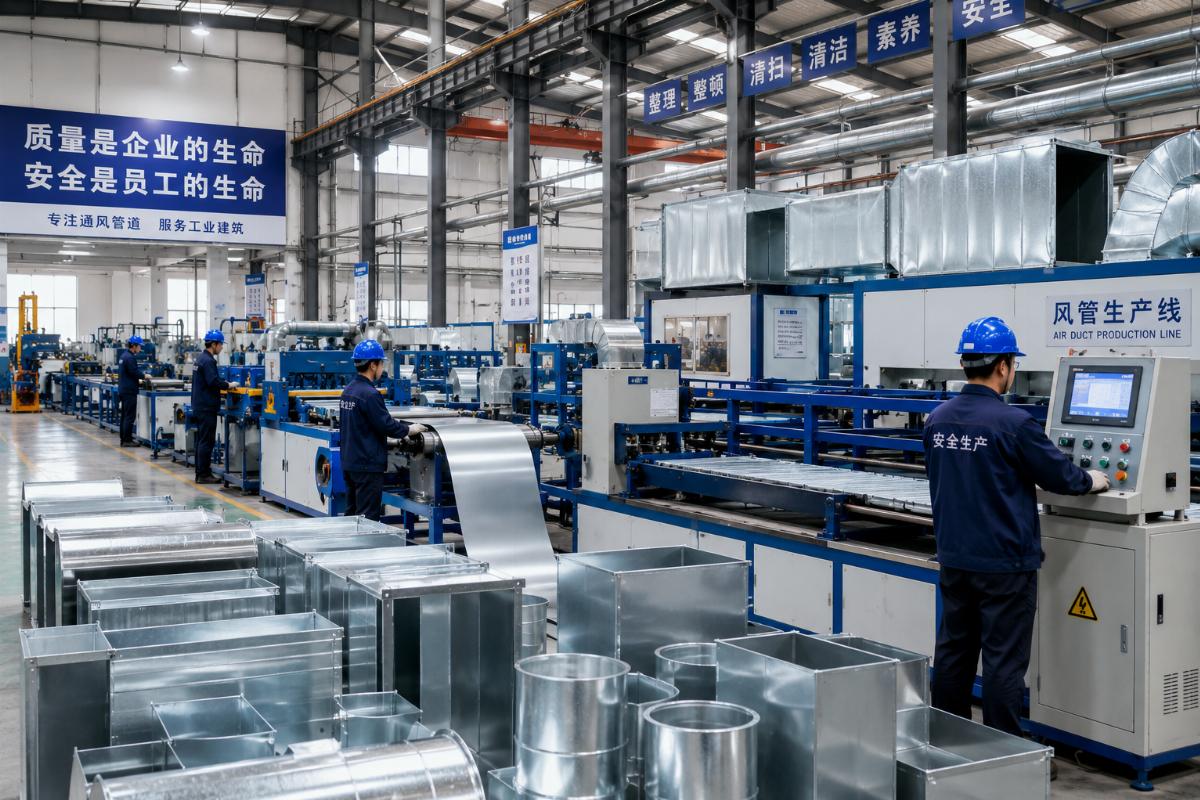
- Reference Matching – Ask for at least two past project references with the same order volume and custom specification as your requirement.
- Production Line Confirmation – Verify the supplier operates dedicated production lines for compliant fire-retardant and anti-static ducts, not just general fabric products.
- Lead Time Validation – Get written confirmation of lead times for both standard and urgent custom orders before finalizing contracts.
Conclusion
Choosing compliant industrial air ducts relies on verifying use-specific performance and supplier track records, rather than just checking for generic certification marks. Common misconceptions about universal CE compliance, fixed anti-static performance and minimum lead times create unnecessary risk for even the most experienced procurement teams. By focusing on actionable verification steps and matching supplier capabilities to your exact project environment, you can avoid costly inspection failures and keep your project timelines on track.