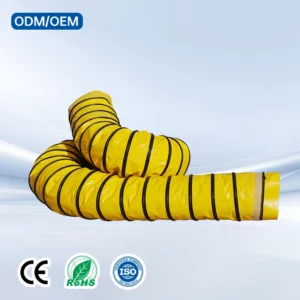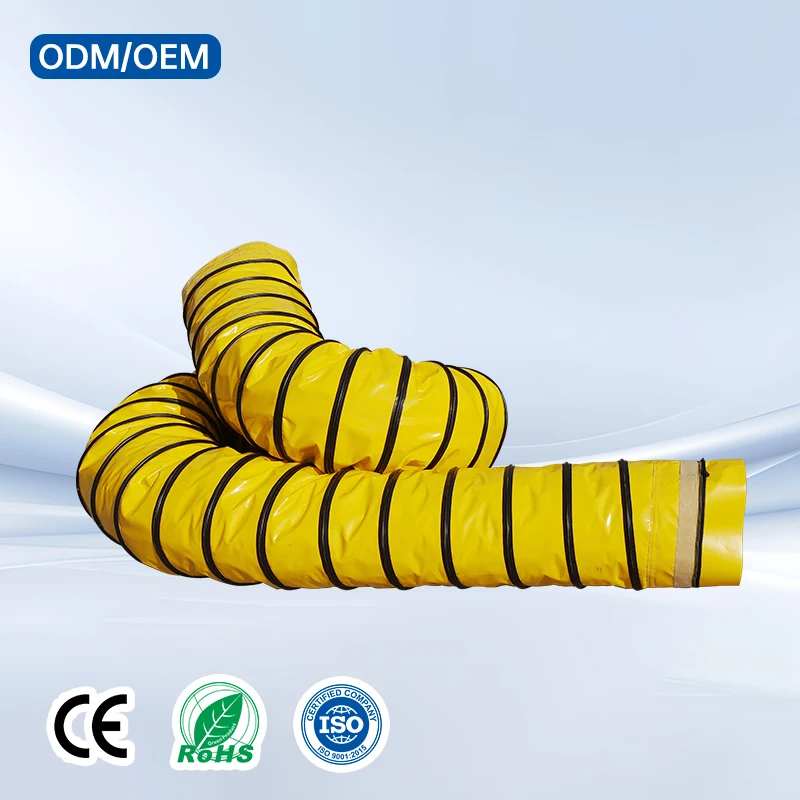
Coated Fabric Process Control — Deep expertise in PVC coating weight and adhesion ensures every aviation air duct maintains consistent insulation performance across varying apron temperatures, from ground-level heat to high-altitude cold air delivery.
Technical Specifications
| Parameter | Value |
|---|---|
| Product Type | Aviation Air Duct |
| Material | PVC coated cloth with aluminum foil bubble film insulation |
| Temperature Range | -30°C to 150°C |
| Characteristics | Mildew resistance, water resistance, high strength, strong tension |
| Insulation Layer | Built-in aluminum foil bubble film for heat resistance |
| Connection Method | Zipper and Velcro for convenient disassembly |
| Folding Design | Convenient folding and storage |
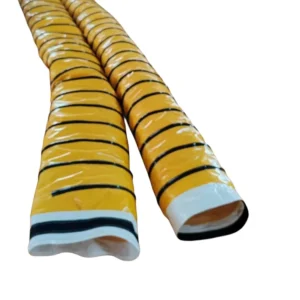
| Outer Layer Coloring | Yellow-black alternating protective coloring for high visibility |
| Customization Options | Style, logo, pattern, and outer packaging customizable (MOQ 100) |
| Certifications | ISO, CE |
Application Suitability
| Application | Exposure & Requirement |
|---|---|
| Airport apron ground air supply equipment | Constant outdoor exposure, fuel and hydraulic fluid contact, heavy vehicle traffic abrasion, extreme temperature cycling |
| Aircraft cabin air conditioning interface connection | Repeated attachment and detachment cycles, tight dimensional tolerance for cabin door fitment, ground crew handling stress |
| Pre-conditioned cold air transmission from PCA Unit to aircraft cabin | Sustained low-temperature airflow, pressure resistance during high-volume delivery, condensation and moisture management |
| Pre-conditioned warm air transmission to aircraft cabin | High-temperature air delivery in cold climate operations, thermal retention over extended duct runs, rapid deployment between flights |
Why Aviation Air Ducts Fail Without Proper Material Traceability
You need documented proof that every material layer meets aviation ground support compliance, not just a supplier’s verbal assurance.
Ground support equipment operates under strict airport authority oversight. When an aviation air duct lacks verifiable fire-retardant certification or anti-static test documentation, the entire PCA system faces rejection during safety audits. I have seen airport operators replace entire duct inventories after discovering certification gaps during routine inspections [NEED_CITE: aviation ground support equipment fire safety standards].
The yellow-black high-visibility coloring on these aviation air ducts signals safety compliance to ground crews, but visual identification means nothing without supporting documentation. Operators managing multiple aircraft types need assurance that replacement ducts match existing connector specifications and temperature ratings across their entire fleet.
Material Construction for Apron Durability
The PVC coated cloth exterior provides the structural backbone that aviation air duct systems require when dragged across concrete aprons and exposed to jet fuel spills. This coated fabric construction resists mildew growth during humid ground operations and maintains water resistance when rain pools around ground support equipment. The high strength and strong tension characteristics prevent tearing when ground crews rapidly deploy and retract ducts between aircraft servicing cycles.
Every aviation air duct for aircraft ground cooling must withstand the mechanical abuse of airport operations. Forklifts, baggage carts, and fuel trucks create constant traffic around PCA units, and duct materials that lack proper coating adhesion delaminate under this stress.
Insulation Performance Across Temperature Extremes
The built-in aluminum foil bubble film insulation layer creates a thermal barrier that maintains air temperature from -30°C to 150°C throughout the duct run. This insulation system prevents cold air from PCA units warming up before reaching the aircraft cabin during hot summer operations, and keeps warm air from losing heat during winter ground support [NEED_CITE: thermal insulation performance testing for aviation duct materials].
Ground support equipment operates in climates ranging from arctic conditions to desert heat. The aluminum foil layer reflects radiant heat while the bubble film structure traps air to reduce conductive heat transfer. This dual-action insulation approach ensures that aviation air duct aftermarket replacements maintain the same thermal efficiency as original equipment.
Connection Systems and Rapid Deployment
Zipper and Velcro connection methods enable ground crews to attach and detach aviation air duct systems within minutes between flights. This rapid deployment capability reduces aircraft turnaround time while ensuring secure connections that prevent air leakage during high-pressure PCA delivery. The convenient folding and storage design allows ground support teams to stow ducts compactly when not in use.
The yellow-black alternating protective coloring provides high visibility that meets airport safety standards for ground equipment identification. This color pattern helps ground crews locate aviation air duct systems quickly during low-light operations and alerts vehicle operators to their presence on busy aprons.
Temperature Range and Material Behavior at Operational Limits
The -30°C to 150°C operating range defines the boundaries where this aviation air duct maintains structural integrity and insulation performance. At the low end, PVC coating formulations must resist becoming brittle and cracking when cold air flows through the duct during winter operations. The aluminum foil insulation layer must maintain flexibility without delaminating from the bubble film structure during repeated thermal cycling.
At the high end, the PVC coated cloth must resist softening and losing tensile strength when warm air flows through during cold climate ground support. The zipper and Velcro connections must maintain their grip without deformation when exposed to sustained elevated temperatures. Material selection for aviation air duct systems requires balancing these temperature extremes while maintaining the mechanical properties needed for apron handling [NEED_CITE: PVC coated fabric temperature performance specifications].
The aluminum foil bubble film insulation performs differently across this range. Cold air delivery relies on the foil’s reflective properties to block external heat gain, while warm air delivery depends on the bubble film’s trapped air pockets to reduce heat loss through the duct wall.
The Hidden Costs of Undocumented Material Specifications
When aviation air duct suppliers provide materials without verified temperature range testing, operators discover failures during extreme weather operations. Ducts that perform adequately in moderate conditions crack during cold winter deployment or soften during summer heat waves, forcing emergency replacements that delay flights.
Airport authorities increasingly require documented fire-retardant and anti-static certifications for all ground support equipment materials. Aviation air duct systems lacking proper documentation face rejection during safety inspections, requiring operators to source compliant replacements under time pressure [NEED_CITE: airport authority ground support equipment material certification requirements].
Connection systems that fail prematurely create air leakage that reduces PCA system efficiency. Ground crews spend valuable turnaround time troubleshooting poor connections instead of focusing on aircraft servicing, and the energy wasted through leaks increases operating costs for ground support operations.
Sourcing Advantages for Aviation Ground Support
Nearly 30 years focused on coated fabric production provides deep process control over the PVC coating weight and adhesion that aviation air duct durability depends on. This experience translates into consistent material quality across production batches, ensuring that replacement ducts match the performance of previous orders.
Three full production lines and 36 sets of professional equipment support the bulk capacity needed when airports standardize ground support equipment across multiple terminals or when GSE manufacturers require consistent supply for integration into mobile air units. This production capability ensures reliable on-time delivery for both stock orders and custom specifications.
The 10-person R&D team handles material selection, custom sizing, and sample development for aviation air duct applications. This technical capability supports operators who need ducts configured for specific aircraft models or PCA unit connection interfaces, with samples developed within days for custom requirements.
Dedicated QA/QC at every production stage with 100% inspection before shipment catches dimensional variations and visual defects that could compromise aviation air duct performance. This inspection discipline prevents non-conforming materials from reaching airport operations where failures create safety risks and operational delays.
Documentation & Verification
- Material specification sheet detailing PVC coated cloth base fabric, aluminum foil bubble film insulation layer, and temperature range performance data
- Fire-retardant and anti-static test reports applicable to aviation apron safety requirements where specified by airport authority
- Pre-shipment inspection record verifying dimensional accuracy, zipper and Velcro connection integrity, and yellow-black coloring consistency
- Certificate of origin and customs documentation supporting cross-border ground support equipment procurement
- ISO and CE certificates confirming manufacturing system compliance for aviation sector supply chain requirements
Fabrication, Handling & Storage
- Heat-seal zipper connections using temperature settings matched to PVC coated cloth thickness to prevent delamination at joint points
- Store folded aviation air duct systems in dry conditions to prevent mildew growth despite the material’s mildew resistance treatment
- Avoid placing heavy objects on folded ducts during storage to prevent permanent creasing of the aluminum foil bubble film insulation layer
- Clean PVC coated cloth exterior with mild detergent solutions that will not degrade the protective coating or yellow-black coloring
- Inspect Velcro connection points before each deployment to ensure hook and loop engagement maintains air-tight seals during PCA operation
- Transport folded ducts in protective packaging that prevents puncture damage to the aluminum foil insulation during shipping and handling
Requesting a Quotation for Your Application
Provide your PCA unit model specifications including connection interface dimensions and required duct diameter to ensure proper fitment. Specify the aircraft types you service so we can recommend appropriate length configurations for narrow-body versus wide-body cabin door positions.
Indicate whether your airport authority requires specific fire-retardant or anti-static certifications, and provide the applicable standards. For custom branding or packaging requirements, confirm your order quantity relative to the MOQ 100 threshold and specify logo placement preferences on the yellow-black outer layer.
Frequently Asked Questions
Q: What fire-retardant and anti-static certifications are available for aviation PCA ducts?
A: We provide fire-retardant and anti-static test reports based on the specific standards required by your airport authority. Certification availability depends on your market requirements, so specify which standards apply to your operation. We recommend confirming the exact certification requirements with your airport safety department before placing orders, as different authorities mandate different testing protocols for ground support equipment materials.
Q: How is the temperature range verified under continuous apron operation?
A: The -30°C to 150°C range reflects material testing under controlled conditions. Actual performance during continuous apron operation depends on airflow volume, ambient conditions, and duty cycles. We recommend testing aviation air duct samples under your specific operating conditions to verify performance. Our technical team can provide material test data and support field trials to confirm the temperature range meets your climate and operational requirements.
Q: Can the duct diameter, length and connection interface be customized to specific aircraft models?
A: Yes, we support customization of style, length, and connection configurations with MOQ 100. Provide your aircraft type specifications and PCA unit connection details so we can develop samples that match your requirements. The zipper and Velcro connection system allows flexibility in interface design. Sample development typically occurs within days once specifications are confirmed, allowing you to verify fitment before committing to full production quantities.
Q: What is the MOQ for OEM branding, custom packaging and pattern printing?
A: Logo customization, outer packaging customization, and pattern customization all require MOQ 100 units. This applies to branding on the yellow-black outer layer as well as custom packaging configurations. Specify your branding requirements including logo placement, size, and color specifications. We can develop samples showing your custom branding before production begins, ensuring the final aviation air duct products meet your corporate identity standards.
Q: How are seams and joints tested to prevent air leakage under high-pressure PCA delivery?
A: The zipper and Velcro connection system undergoes inspection for engagement integrity during our 100% pre-shipment inspection process. Seam construction is verified for proper heat-sealing parameters matched to the PVC coated cloth material. We recommend pressure testing aviation air duct assemblies under your actual PCA unit operating conditions to verify air-tight performance. Our QA team can provide inspection documentation showing connection point verification for your quality records.