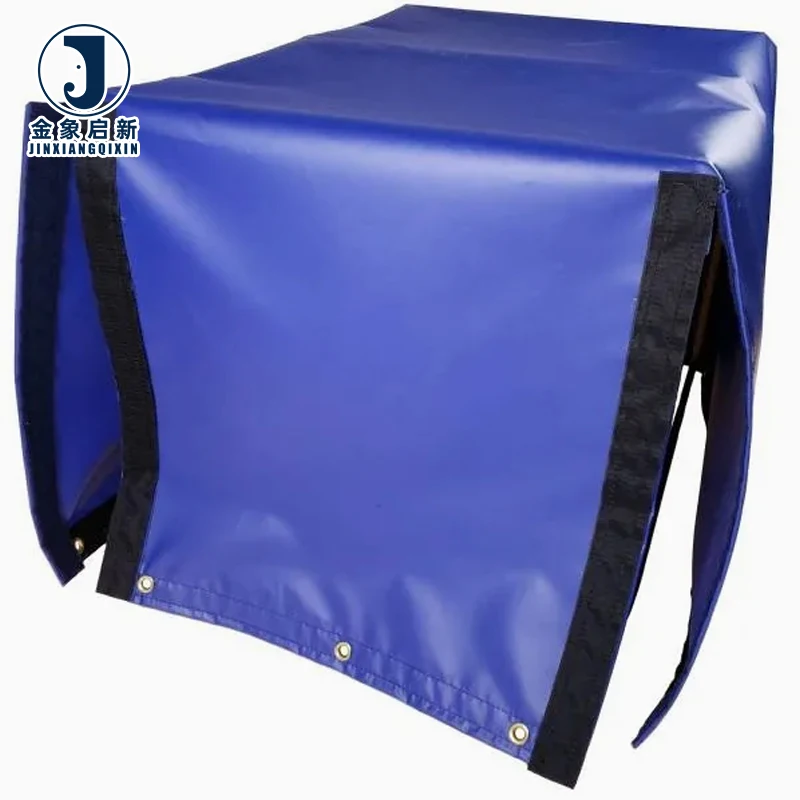
Precision Coating Control — nearly 30 years of PVC coated fabric production with dedicated QA at every stage ensures GSM and coating weight match the quotation when the roll arrives.
Technical Specifications
| Parameter | Value |
|---|---|
| Product Type | PVC Coated Tarpaulin Truck Cover |
| Weight Range | 250gsm–1500gsm |
| Base Fabric Denier | 200D×300D, 500D×500D, 840D×840D, 1000D×1000D |
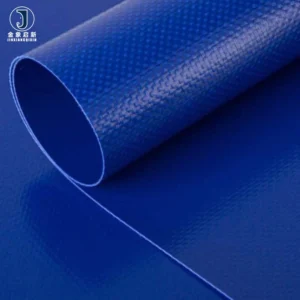
| Coating Material | PVC |
| Surface Finish | Available in glossy or matte finish |
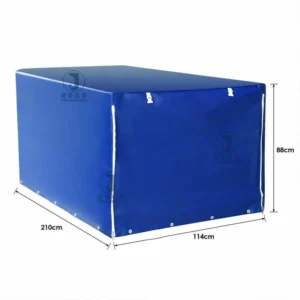
| Standard Sizes | 3x4m, 6x8m, 8x10m, 10x12m or custom made |
| Color Options | Blue, yellow, black, green, white, or custom |
| Treatment | Waterproof, UV, flame retardant (grade not stated — confirm required grade), anti-fungal |
| Temperature Range | -15°C to 70°C |
| Environment | Eco-friendly |
| Working Life | 3–10 years depending on usage environment |
| Printing Option | Custom logo available |
| OEM/ODM | Accepted |
| Standards | ISO, CE certified production |
Application Suitability
| Application | Exposure & Requirement |
|---|---|
| Long-haul truck fleet load covering | Highway abrasion, wind uplift at speed, constant flexing at tie-down points, rain and UV exposure |
| Trailer side curtain systems | Repeated curtain draw cycles, crease fatigue, road debris impact, colour matching across fleet vehicles |
| Intermodal palletized cargo protection | Stacking abrasion, condensation inside containers, handling by crane and forklift |
| Construction equipment transport | Heavy point loads from machinery edges, dust ingress, site mud and chemical splash |
Why Generic-Sized PVC Truck Covers Fail Where It Hurts
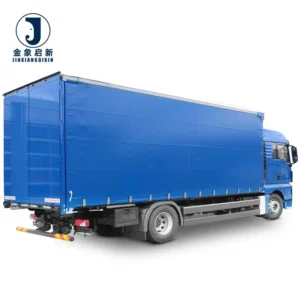
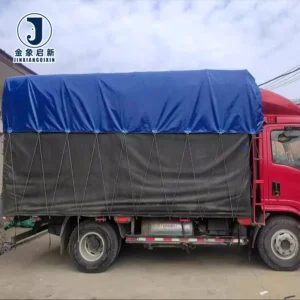
A PVC Truck Cover for fleet and trailer operations must match the exact dimensions of the load and the vehicle bed, yet most off-the-shelf covers are cut to generic rectangles that leave the most vulnerable areas exposed.
When a cover is too loose, wind gets underneath and the fabric flaps against sharp cargo edges, wearing through the coating in weeks rather than years. When it is too tight, the stress concentrates at the eyelets and welded seams — precisely where the load flexes during braking and cornering. The result is a seam that splits before the fabric itself shows meaningful wear [NEED_CITE: tensile and tear test methods for coated fabrics per ISO 1421]. Fleet operators end up replacing covers on a cycle dictated by poor fit rather than material fatigue. Sizing a cover to the specific trailer model, with reinforcement placed at known stress points, changes that replacement cycle substantially.
Fitment That Follows the Trailer, Not the Other Way Around
Every trailer model has a different deck height, side rail profile and load geometry. A PVC Truck Cover for fleet and trailer use must account for these variables — the drape over a curtain-side trailer behaves differently from a flatbed with a loaded pallet stack. Custom sizing options from 3x4m through 10x12m, or cut to a specific model pattern, eliminate the slack and tension zones that cause premature failure.
Welded Seams at the Points That Actually Flex
The weakest point on most truck covers is the welded seam where panels join or where hems are folded back. During transit, the load shifts and the cover flexes at exactly these junctions. Weld parameters must match the PVC coating weight — too hot and the base fabric weakens; too cool and the bond peels under load. Consistent weld quality across every seam is what separates a cover that lasts the journey from one that fails at the first rest stop [NEED_CITE: weld seam integrity testing for PVC coated fabrics].
How Denier and Coating Weight Work Together
The base fabric denier — from 200D×300D for lighter loads up to 1000D×1000D for heavy equipment — determines how the fabric resists tearing once a puncture starts. Higher denier yarns absorb more energy before a tear propagates across the panel. The PVC coating weight (expressed as GSM from 250gsm to 1500gsm) adds abrasion resistance and waterproofing but also stiffness. A heavy coating on a low-denier base creates a stiff cover that cracks at fold lines in cold weather; a light coating on a heavy base leaves the yarns exposed to abrasion. The correct pairing depends on the cargo type and the climate zones the fleet operates in. Surface finish — available in glossy or matte — affects how dirt adheres and how easily the cover can be cleaned between loads.
What Happens When Colour Consistency Is Ignored
Fleet operators ordering multiple covers for a uniform vehicle appearance face a specific problem: colour variation between rolls produced in different batches. When two covers hang side by side on adjacent trailers, even a slight shade difference is visible to the customer receiving the delivery. This is not a cosmetic issue alone — it signals inconsistent coating formulation between batches, which may also affect UV treatment concentration and flame retardant loading. Colour matching must be controlled at the compounding stage, not adjusted at the coating head [NEED_CITE: batch colour consistency standards for coated textiles].
Why Procurement Verification Matters Here
Every PVC Truck Cover for fleet and trailer operations ships with a pre-shipment inspection record confirming GSM, denier, and coating weight against the original quotation. Material specification sheets document the exact base fabric and coating construction so there is no ambiguity when the cover arrives at the depot. For fleets requiring flame retardant compliance, test reports confirm the grade achieved — buyers should specify the grade their market or insurance requires before production begins. This documentation chain prevents the common dispute where a cover arrives lighter or thinner than what was quoted.
Documentation & Verification
- Material specification sheet stating exact GSM, base fabric denier, and PVC coating weight per item
- Test report for flame retardant grade where fleet safety standards require certification
- Pre-shipment inspection record with 100% quality check before dispatch from the facility
- Colour reference sample retained per batch for future fleet reorders
- ISO and CE certificates confirming production management system compliance
- Roll packing list with dimensions and weight for customs clearance
Fabrication, Handling & Storage
- Weld temperature and dwell time must match the specific GSM grade to avoid coating burn-through or weak bonds
- Eyelet spacing should be confirmed against tie-down strap positions for the target trailer model
- Store rolls upright on a clean pallet to prevent permanent crease marks in the PVC coating
- Unfold covers at ambient temperature — the -15°C lower limit means cold-stored fabric may crack if handled roughly
- Clean with mild detergent; solvent-based cleaners may soften the PVC coating surface
- Repair minor punctures with PVC-compatible adhesive patches matched to glossy or matte finish
What to Include in Your Enquiry
Specify the exact trailer model or deck dimensions so the cover can be patterned to fit without excess material. Confirm the flame retardant grade required by your operating region or insurance provider. Indicate whether you need finished covers with eyelets and reinforced hems, or roll stock for your own fabrication line. If colour matching across a fleet order is critical, request a batch sample before full production proceeds.
Frequently Asked Questions
Q: How do I specify truck cover dimensions for different trailer models?
A: Provide the trailer make, model, deck length, width and side rail height. We develop a cutting pattern that accounts for drape and tie-down clearance. For curtain-side trailers, the cover must allow for the curtain rail profile. A sample is produced for fitment confirmation before the full order runs.
Q: Can you supply test certificates for flame retardant treatment?
A: Yes. We supply a test report documenting the flame retardant grade achieved on the specific batch. Because different markets and insurance providers require different grades, specify the standard applicable to your operation — such as a regional building material classification or transport safety code — so we match the correct formulation.
Q: What if the GSM weight does not match the quotation on arrival?
A: Every shipment includes a pre-shipment inspection record that documents the measured GSM per roll. If any discrepancy is found during your receiving inspection, the material specification sheet and inspection record provide the baseline for resolution. Our 100% inspection process is designed to prevent this from happening.
Q: How are welded seams reinforced at high-stress flex points?
A: Weld parameters are calibrated to the PVC coating weight so the bond strength matches the fabric strength. At known high-flex zones — corners, eyelet rows, and hem folds — additional coating or fabric reinforcement layers are applied. This prevents the common failure mode where seams split before the main panel shows wear.
Q: What is the typical lead time for custom-sized truck covers?
A: Lead time depends on whether the order is standard sizes from current production or a fully custom pattern with specific colour and treatment requirements. Custom patterns and colours require compounding and sample approval first, which adds to the schedule. Confirm the required delivery date at enquiry stage so production can be sequenced accordingly.