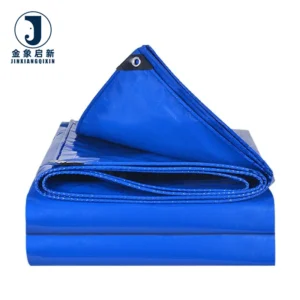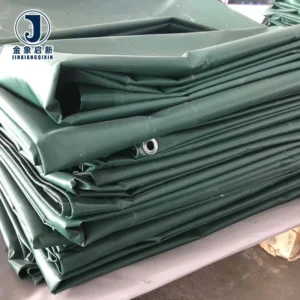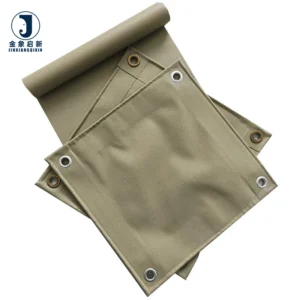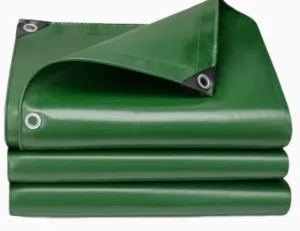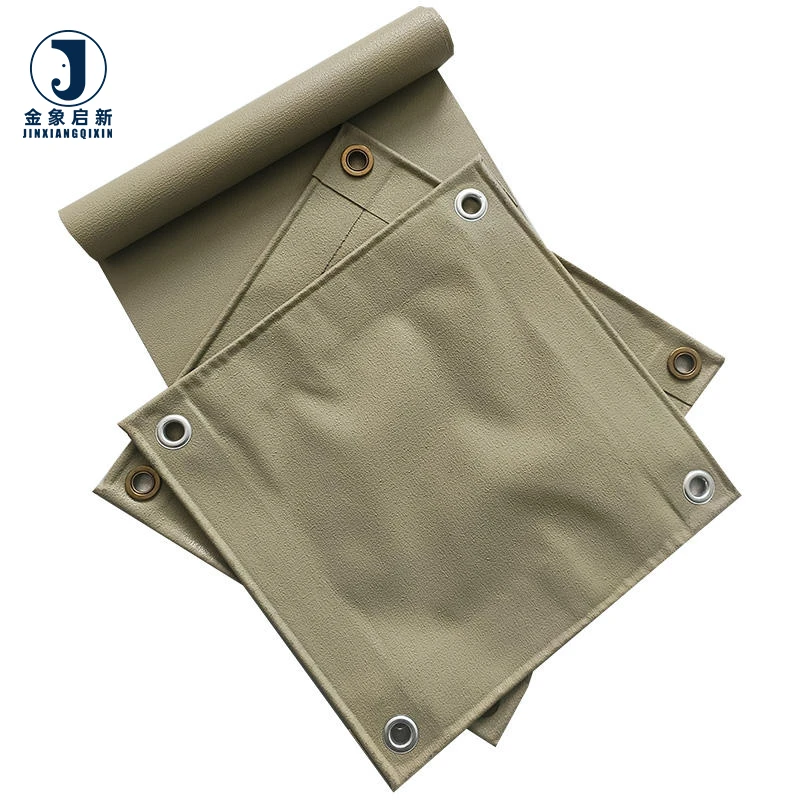
Coating Process Control — Deep control over coating weight and adhesion ensures consistent performance across every roll of PVC coated tarpaulin for truck and transport applications.
Technical Specifications
| Parameter | Value |
|---|---|
| Product Type | PVC Coated Tarpaulin Fabric |
| Coating Material | PVC |
| Coating Method | Knife Coated |
| Base Fabric Type | Woven Fabric |
| Base Fabric Denier | 1000×1000 |
| Weight | At least 450 GSM |
| Waterproof | Yes |
| Finish | Banner coated / black back coated |
| UV Treatment | Anti-UV coated (test basis not stated) |
| Flame Retardant | Available in flame retardant grades — confirm the grade required for your market |
| Custom Size | Available |
Application Suitability
| Application | Exposure & Requirement |
|---|---|
| Truck and trailer side curtains | Constant flexing, road vibration, UV and weather exposure, abrasion at contact points |
| Custom-fit truck covers | Sustained outdoor weather, tie-down stress at hems, repeated removal and refitting |
| Flatbed and container load covers | Rain, snow, road spray, wind uplift, load shift abrasion |
| Transport fleet tarpaulin replacement | High-frequency use, depot handling wear, seasonal temperature swings |
Why Welded Seams Fail Before the Fabric Does on the Road
Weld strength depends on coating adhesion to the base fabric, not fabric weight alone.
Fleet operators replacing side curtains or truck covers often find that seams split at the exact point where the load flexes most — not because the fabric tore, but because the coating delaminated under repeated stress. The PVC coated tarpaulin for truck and transport use must endure thousands of flex cycles per journey, and a poorly bonded coating layer will separate at the weld line long before the woven base fabric reaches its tensile limit. This is where knife coating makes a measurable difference: the coating is forced into the weave structure under pressure, creating a mechanical bond that stitched or laminated alternatives struggle to match over sustained road vibration [NEED_CITE: tensile and peel test methods for coated fabrics per ISO 1421].
Knife Coated Construction for Road-Grade Adhesion
Knife coating drives PVC compound directly into the woven base fabric under controlled pressure, filling the interstices between yarns rather than sitting on the surface as a separate layer. For transport applications where the material flexes continuously over load shifts and road vibration, this bonding method keeps the coating anchored at the weld zone. The result is a PVC coated tarpaulin for truck and transport use where heat-welded seams hold their integrity through the same stress cycles that cause laminated fabrics to peel apart at the join.
Woven Base Fabric at Tie-Down and Eyelet Stress Points
The 1000×1000 denier woven base fabric provides a dense yarn structure that distributes point loads from tie-down straps, eyelets, and rope hems across a wider area. When a truck cover is pulled tight over a load, the highest stress concentrates at the hem edges and fastening points. A lower-denier base would allow tears to propagate from a single cut or puncture, while this weave density resists tear extension and keeps the PVC coated tarpaulin for truck and transport applications intact even when individual yarns are damaged [NEED_CITE: tear propagation behaviour in woven coated fabrics per DIN 53354].
Reading GSM, Denier and Coating Method Together
Weight in GSM tells you how much material is present per square metre, but it does not tell you how that weight is distributed between base fabric and coating. A 450 GSM fabric with a heavy coating and light base will have poor tear strength; the same weight with a dense 1000×1000 weave and controlled knife coating delivers both tensile and tear performance. Knife coating also produces a smoother, more uniform surface than dip coating, which matters when the fabric must slide against load edges without catching. The banner coated and black back finish options serve different visual and functional needs: the banner side accepts printing for fleet branding, while the black back reduces show-through and UV degradation from the reverse side. For buyers specifying PVC coated tarpaulin for truck and transport, understanding this balance between base fabric density, coating method, and total weight prevents selecting a material that looks right on paper but fails at the weld line or tie-down point in actual fleet service.
What Happens When the Specification Does Not Match the Route
A truck cover that performs well on short urban delivery runs may fail within months on long-haul routes where the material endures sustained high-speed wind loading, temperature extremes, and continuous flexing. Selecting a lighter-grade PVC without the woven base density to support it leads to tears radiating from eyelet holes, while a coating that is too thick relative to the base fabric makes heat welding unpredictable — the coating melts before the base stabilises, producing weak joins. Batch-to-batch colour variation becomes visible when replacement panels are fitted alongside original curtains on the same trailer, forcing a full re-cover rather than a sectional repair [NEED_CITE: coating adhesion and delamination failures in transport tarpaulins].
Why Fleet Operators Source This Fabric Here
Three full production lines with 36 sets of professional equipment support consistent output of knife coated PVC tarpaulin at volumes that match fleet replacement schedules. A dedicated 10-person R&D team handles custom sizing to specific truck and trailer model dimensions, eliminating the generic-size problem that leaves excess material flapping or hems sitting in the wrong position. QA and QC checks run at every production stage, with 100% inspection before shipment ensuring that GSM, colour, and coating adhesion meet the specification agreed at quotation. Nearly 30 years of focused coated fabric production means the process parameters for knife coating are well established, reducing the variability that causes weld failures and delamination in the field.
Documentation & Verification
- Material specification sheet stating GSM, 1000×1000 base fabric denier and knife coating method per roll
- Pre-shipment inspection record with full QC check on coating adhesion and weight before dispatch
- UV treatment test report available upon request to verify outdoor exposure claims
- ISO and CE certificates on file for export documentation and customs clearance
- Roll packing list with batch reference for traceability across multiple rolls in one order
Fabrication, Handling & Storage
- Heat-weld at temperatures matched to knife coated PVC thickness to avoid coating scorch at the join line
- Reinforce hem edges before eyelet insertion to distribute tie-down load across the 1000×1000 woven base
- Store rolls upright on cores to prevent flat-spot creasing that shows through the banner coated finish
- Allow cold-stored rolls to reach ambient temperature before unrolling to avoid cracking the PVC coating
- Use mild detergent for cleaning; avoid solvent-based products that degrade the anti-UV coating layer
What to Include in Your Enquiry
Provide the specific truck or trailer models the covers must fit, along with the operating environment — long-haul motorway exposure differs significantly from depot-based load protection. State whether you need rolls in stock widths or finished covers cut to vehicle dimensions, and confirm any colour or fleet branding requirements so that print compatibility with the banner coated surface can be assessed. If your market requires flame retardant certification, specify the grade and standard so the correct formulation can be quoted.
Frequently Asked Questions
Q: How is the GSM verified before the PVC coated tarpaulin ships?
A: Every roll is checked against the material specification sheet during the 100% pre-shipment inspection. The coating weight and base fabric contribution are measured separately to confirm the total GSM matches the quotation. A weight verification record accompanies the dispatch documentation so buyers can cross-check on arrival without needing their own testing equipment.
Q: How are truck covers cut to fit specific trailer models?
A: Covers are sized to the vehicle model dimensions rather than cut to a generic rectangle. The R&D team uses the trailer model data to position hems, eyelets, and tie-down points where the actual fastening hardware sits, preventing excess fabric from flapping in the slipstream or hems landing on sharp bodywork edges that accelerate wear.
Q: What is the difference between welded and stitched seams at load flex points?
A: Stitched seams create needle holes that puncture the waterproof coating, allowing water ingress along the thread path. Welded seams fuse the PVC coating layers together, maintaining a continuous waterproof barrier. On truck covers that flex repeatedly over moving loads, welded joins also distribute stress more evenly than stitch lines, which concentrate load at each needle point.
Q: How is the anti-UV treatment verified for transport use?
A: Anti-UV coating is applied during the knife coating process. A test report can be provided upon request to confirm the treatment basis. Fleet operators should specify their expected outdoor exposure conditions and regional UV intensity so that the appropriate formulation is selected and the test parameters match the actual service environment.