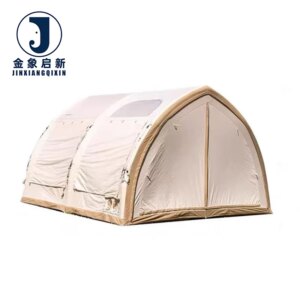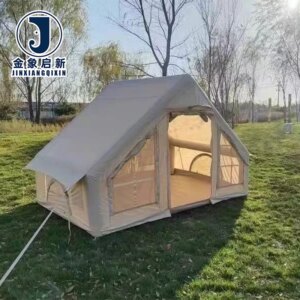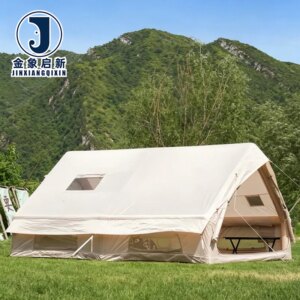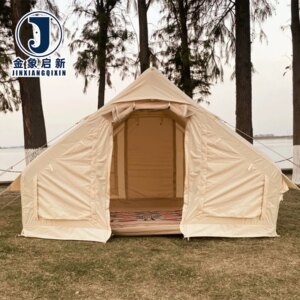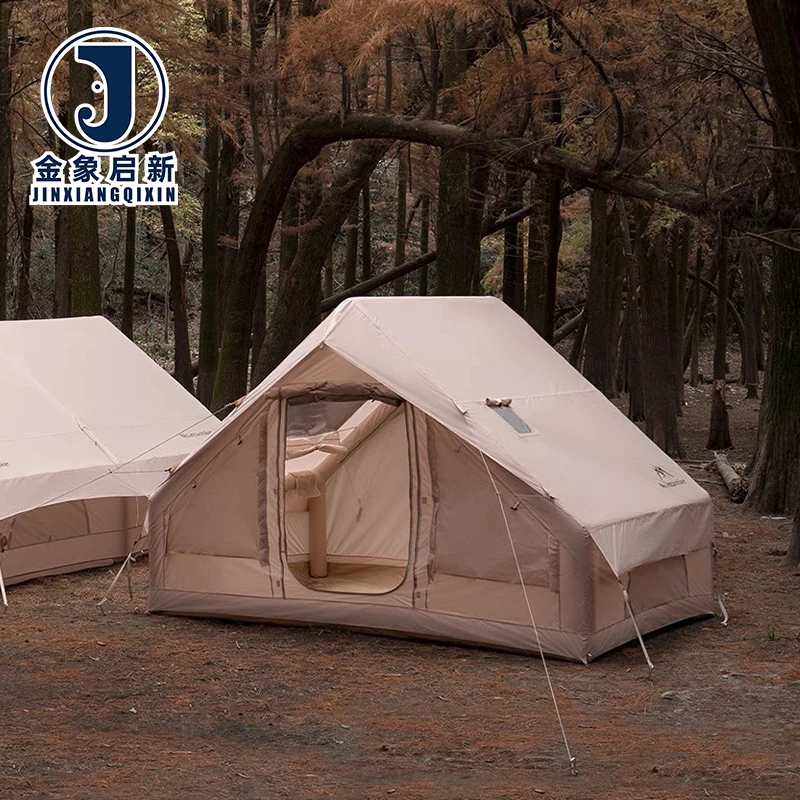
Automated Opening Mechanism — Our inflatable tent for transport-adjacent deployments uses PVC knife-coated fabric with 24-hour pressure retention testing to ensure structural integrity during remote project accommodations and fleet crew staging.
Technical Specifications
| Parameter | Value |
|---|---|
| Product Type | Inflatable Tent |
| Core Material | PVC tarpaulin |
| Coating Method | PVC knife-coated fabric |
| Capacity | 4-6 Person |
| Product Form | Inflatable structure with automatic opening mechanism |
| Construction | Single layer |
| Key Performance | Waterproof, UV-resistant, tear-resistant (test basis not stated — confirm required grades for your application) |
| Flame Retardant Grade | Not stated — available in flame retardant grades, confirm the grade required for your market |
| Anti-Static | Not stated — confirm requirements for your deployment environment |
| Weight (GSM) | Not stated — request batch-specific specification sheet |
| Base Fabric Denier | Not stated — available on request per order |
| Customization | OEM & ODM, sample customization, pattern printing |
| Certifications | ISO 9001, ISO 14001, ISO 45001, CE |
| Quality Testing | 24-hour pressure retention test before packaging |
Application Suitability
| Application | Exposure & Requirement |
|---|---|
| Remote project site accommodations for transport fleet crews | Extended weather exposure, repeated inflation-deflation cycles, rapid deployment needs |
| Mobile exhibition and pop-up event shelters for transport equipment | High visibility requirements, frequent transport and reassembly, UV and abrasion exposure |
| Temporary equipment storage at construction-adjacent transport hubs | Wind loading, ground moisture, puncture risk from sharp tools and materials |
| Industrial camping during remote logistics operations | Temperature fluctuation, dust ingress prevention, multi-day continuous inflation |
Why Specifying "Waterproof" Without a Test Standard Creates Field Failures
PVC inflatable tent structures demand verified waterproof and UV-resistant performance, not just marketing claims.
When procurement teams accept "waterproof" without requesting the hydrostatic head test result, inflatable structures deployed at remote sites often show weeping at seams within the first season. The same pattern applies to UV resistance — without a stated test basis, coating degradation accelerates unpredictably under direct sunlight. [NEED_CITE: ISO 1421 tensile and tear test methods for coated fabrics]. Fleet operators and transport equipment builders need documented proof before committing to bulk orders.
Coating Consistency Across Repeated Inflation Cycles
PVC knife-coated fabric ensures uniform coating thickness distribution across the entire surface. This eliminates thin spots that become failure points when the Inflatable Tent for truck and transport crews undergoes repeated pressurization and deflation. Unlike laminated or calendared alternatives, knife coating penetrates the base fabric weave, creating mechanical adhesion that resists delamination under flex stress.
Structural Integrity Verification Before Dispatch
Every unit undergoes 24-hour pressure retention testing before packaging. This protocol catches seam leaks, valve defects, and coating pinholes that would otherwise surface only after deployment at a remote job site. For transport fleet operators managing multiple concurrent projects, receiving a field-ready Inflatable Tent for commercial outdoor use eliminates costly return logistics and project delays. [NEED_CITE: pressure testing standards for inflatable structures].
Understanding What the Specification Sheet Actually Tells You
Knife-coated PVC fabric performance depends on the interaction between base fabric denier, weave density, and coating weight — not on any single parameter alone. The coating method directly affects peel strength at welded seams, which determines whether the seam or the fabric body fails first under load. Surface finish selection influences both cleanability in dusty transport hub environments and the adhesion quality of pattern printing for fleet branding. Without stated GSM and denier values on your specification sheet, comparing batches becomes impossible. Request complete material documentation before approving samples.
The Cost of Unverified Material Claims in Remote Deployments
When an inflatable structure fails at a remote transport staging area, the consequences extend far beyond the tent itself. Crew accommodation disruptions cascade into project timeline delays. Equipment left exposed to weather suffers corrosion or contamination. Transport fleet operators who accepted material claims without verification documentation face these compounding losses. [NEED_CITE: coated fabric failure modes at welded seams under cyclic loading]. Batch-to-batch inconsistency in coating weight means the second order may not perform like the approved sample.
Why This Manufacturer Supports Transport Sector Requirements
Three full production lines with 36 sets of professional processing equipment enable consistent output for fleet operators ordering multiple units. The 10-person R&D team handles custom sizing and pattern printing specific to transport company branding requirements. Strict full-process quality inspection with dedicated QA and QC staff catches defects before they reach your job site. ISO 9001, ISO 14001, ISO 45001, and CE certifications support customs clearance and compliance documentation. Sample development within days allows verification before committing to production quantities.
Documentation & Verification
- Material specification sheet stating PVC knife-coating method, base fabric details, and stated performance parameters per batch
- Pre-shipment inspection record including 24-hour pressure retention test results for each unit
- ISO 9001, ISO 14001, ISO 45001, and CE certificates supporting compliance and customs documentation
- Batch inspection report with waterproof and tear resistance data referenced to test methods
- Roll packing list with unit identification matching quality records
Fabrication, Handling & Storage
- Heat welding parameters must match PVC knife-coated fabric thickness to prevent seam failure at stress zones
- Store deflated units flat or loosely rolled to avoid permanent crease marks in the single-layer construction
- Clean with mild detergent only — aggressive solvents degrade PVC coating adhesion on the tarpaulin surface
- Inspect valve connections and seam welds before each redeployment at transport staging sites
- Repair minor punctures with compatible PVC adhesive patches matching the knife-coated material specification
Requesting the Right Information for Your Deployment
Specify your deployment environment conditions including wind exposure, temperature range, and continuous inflation duration. State whether you require OEM branding with pattern printing or standard units. Confirm the fire safety classification required by your local jurisdiction for temporary structures at transport hubs. Indicate order volume and whether sample approval is needed before full production.
Frequently Asked Questions
Q: How do I verify material specifications when the inflatable tent arrives?
A: Request the batch-specific material specification sheet before shipment, showing PVC coating method, base fabric details, and performance test results. Upon delivery, compare the documentation against your purchase order requirements. Our pre-shipment inspection records include 24-hour pressure retention test results for each unit.
Q: What UV-resistance test basis applies to these inflatable structures?
A: UV-resistance performance is available but the specific test basis is not stated in standard specifications. Confirm the UV test standard required for your deployment region and request corresponding test documentation. Sample units can be submitted to your preferred laboratory for independent verification before bulk production.
Q: Can I get custom sizing and fleet branding on inflatable tent orders?
A: Yes, OEM and ODM customization includes size adjustments for specific transport fleet deployment needs and pattern printing for company branding. Our 10-person R&D team develops samples within days for approval before production. Specify your branding requirements and dimensional needs during the inquiry stage.
Q: How do you maintain batch-to-batch consistency across multiple orders?
A: Three full production lines with 36 sets of professional equipment and strict full-process quality inspection ensure consistency. Each batch undergoes dedicated QA/QC review with documented inspection records. Request batch comparison data if you are placing repeat orders and need to verify material consistency with previous deliveries.