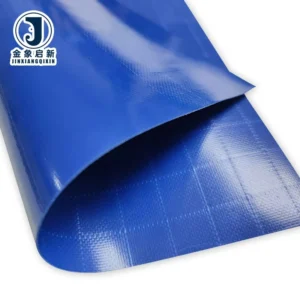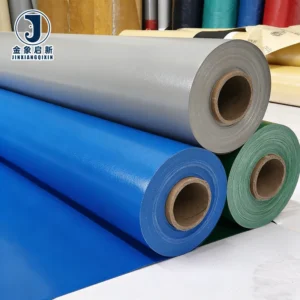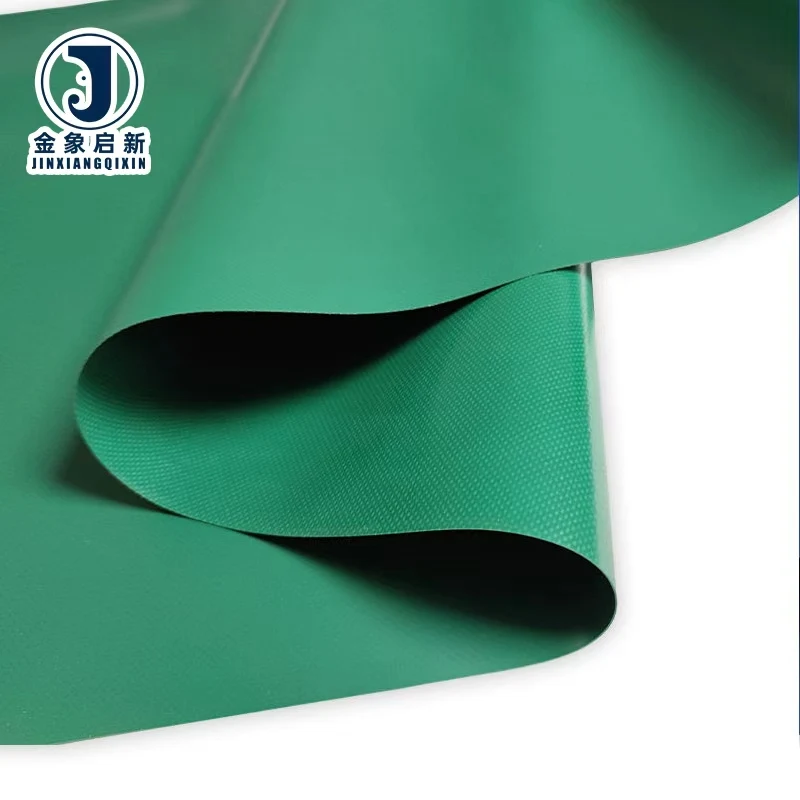
Roll-to-Roll Consistency — Every PVC coated tarpaulin roll for truck and transport is inspected for GSM, colour match, and coating adhesion before dispatch, ensuring batch uniformity across your fleet order.
Technical Specifications
| Parameter | Value |
|---|---|
| Product Type | PVC Coated Tarpaulin |
| Material | PVC + High-strength polyester mesh fabric |
| Coating Technology | Laminated & Hot-melt Coating |
| Weight Options | 350gsm / 420gsm / 500gsm / 550gsm / 600gsm / 750gsm |
| Thickness Options | 0.32mm / 0.35mm / 0.4mm / 0.45mm / 0.5mm / 0.65mm |
| Roll Width | 2m / 2.1m |
| Roll Length | 75m (2m width) / 50m (2.1m width) |
| Colour Options | Blue / Red / Yellow / Light blue / Grey (Customized) |
| Cold Crack Resistance | Yes |
| Waterproof | Yes |
| Anti-Mildew | Yes |
| Flame Retardant | Available — confirm the grade required for your market |
| Anti-Static | Available — confirm surface resistance or standard required |
| UV Treatment | Sunproof treatment available — confirm test basis for your specification |
| Service Life | 3-7 years under normal conditions |
| Certification | ISO, CE |
Application Suitability
| Application | Exposure & Requirement |
|---|---|
| Truck side curtains | Constant flexing at load points, road debris abrasion, UV exposure, weather sealing |
| Flatbed top covers | Tensile stress from tie-downs, pooling water, wind uplift during transit |
| Trailer end curtains | Repeated folding and unfolding, forklift contact, temperature swings |
| Fleet tarp replacement | Match existing fleet colour, model-specific dimensions, abrasion at buckles and straps |
| Transport equipment OEM | Consistent roll-to-roll colour, repeatable welding behaviour, dimensional stability |
Why Generic-Size Covers Fail on the Road
Truck covers cut to generic dimensions waste material at the edges and leave gaps at high-stress points where the load shifts most.
When a PVC coated tarpaulin roll for truck and transport is slit to a standard width without accounting for the specific trailer profile, fabricators end up trimming excess or — worse — stretching the material to cover areas it was never sized for. The result shows up as premature tearing at welded seams and eyelet pull-through within the first season of fleet use [NEED_CITE: tensile and tear test methods for coated fabrics per ISO 1421].
Side Curtain Fabric Selection Matched to Route Exposure
Fleet operators running long-haul routes face different demands than urban delivery fleets. Highway-speed wind load creates sustained tension across the curtain face, while frequent loading dock contact abrades the lower hem area. Selecting the right GSM from the available range — from lighter grades for enclosed urban distribution to heavier grades for open-road exposure — directly determines how the PVC coated tarpaulin roll for truck and transport performs over repeated load cycles.
Reinforcement Strategy at Tie-Down and Flex Points
The places where a truck cover fails first are almost always the points that move the most: the buckle contact zones, the lower hem where straps pull tight, and the welded joints that flex every time the trailer articulates. Hot-melt coating technology creates a strong bond between the PVC layer and the polyester base, which matters most at these high-flex zones where the coating and fabric must move as one unit rather than delaminating under load [NEED_CITE: coating adhesion and peel strength testing for laminated fabrics].
Understanding GSM in Context of Base Fabric Construction
A stated GSM figure alone tells only part of the story. The relationship between PVC coating weight and the underlying polyester mesh density is what actually governs tensile and tear behaviour. Two rolls at the same 550gsm can perform very differently if one uses a denser base weave with thinner coating while the other loads most of its weight into the PVC layer. Laminated and hot-melt coating processes each distribute that weight differently — laminated construction tends to deliver higher peel strength at welded seams, while hot-melt coating can provide better flexibility at lower temperature ranges. For truck and trailer covers, the cold crack resistance specification matters as much as the GSM, since a heavier roll that becomes brittle at sub-zero temperatures will crack before a lighter roll that retains its flexibility. The total thickness options from 0.32mm through 0.65mm correlate with the weight grades, but it is the combination of base denier, weave count, and coating adhesion that determines real-world tear propagation resistance [NEED_CITE: relationship between base fabric denier and tear strength in coated textiles].
The Cost of Batch Colour Variation Across a Fleet Order
When multiple rolls in a single shipment arrive with visible colour differences, the problem only becomes apparent once they are installed side by side on adjacent trailers. By that point, the fabrication labour and hardware are already spent. Colour variation between rolls typically stems from inconsistent pigment dosing during the coating run or from blending batches from different production dates. For fleet operators who need every trailer to match, verifying colour consistency across all rolls in an order before fabrication begins avoids costly rework and fleet downtime [NEED_CITE: colour fastness and batch consistency standards for coated fabrics].
Why Procurement Verification Matters at This Stage
The gap between a quotation claim and what arrives on the loading dock creates the most expensive problems in fleet covering. GSM figures stated in the offer but not verified on receipt mean the material may be lighter than specified — thinner coating, less protection, shorter service intervals. Flame retardant and UV treatment claims without supporting test documentation leave the buyer exposed when a site auditor or insurance inspector asks for proof. Welded seam integrity is not just a material property; it depends on the fabricator matching heat and pressure settings to the specific coating technology used, which is why pre-shipment inspection records and coating technology disclosure are not optional extras.
What This Supply Chain Delivers for Transport Fabricators
Nearly 30 years of focused coated fabric production translates into process control over coating weight and adhesion that you can verify on arrival. Three full production lines and 36 sets of professional equipment mean your fleet order runs on dedicated capacity rather than being squeezed between unrelated product runs. The 10-person R&D team handles custom width slitting, colour matching, and sample development so you can confirm material behaviour before committing to a full container load. Dedicated QA/QC at every production stage with 100% inspection before shipment ensures that GSM, colour, and coating integrity are documented — not assumed.
Documentation & Verification
- Material specification sheet stating confirmed GSM, base fabric construction, and coating method per roll
- Pre-shipment inspection record with actual measured coating weight against the quoted value
- Colour reference matched to fleet standard with batch-to-batch consistency check documented
- Test report for flame retardant and UV treatment grades where specified in the purchase order
- ISO and CE certificates accompanying each shipment for customs and compliance purposes
- Roll packing list with individual roll dimensions, net weight, and production batch traceability
Fabrication, Handling & Storage
- Hot-melt coated rolls require matched heat settings at weld zones to prevent delamination under flex load
- Store 2m and 2.1m rolls horizontally on racking to avoid permanent creasing in the polyester mesh
- Cold crack resistant grades still require gradual unrolling in low temperatures before fabrication
- Cut reinforcement patches from the same GSM grade to maintain uniform flex behaviour at hem zones
- Use compatible PVC welding tape for seam repair to preserve coating adhesion across the joint
- Allow rolls to acclimatise to workshop temperature before slitting to ensure dimensional stability
Specifying Your Fleet Cover Order
To get an accurate material recommendation, provide your trailer model dimensions, the route exposure conditions your fleet operates in, and the specific colour or colour match you require across the order. If your site or market demands a particular flame retardant or anti-static grade, state the standard upfront so the correct treatment can be confirmed with supporting documentation. Let us know whether you need rolls in standard 2m or 2.1m widths, or whether custom slitting to a specific trailer curtain width would improve your fabrication yield.
Frequently Asked Questions
Q: How is GSM verified on arrival and what documentation accompanies the shipment?
A: Each PVC coated tarpaulin roll for truck and transport ships with a pre-shipment inspection record that documents the actual measured coating weight. This is matched against your purchase order specification. The material spec sheet, roll packing list, and certificate of origin are included as standard, with test reports provided where flame retardant or UV grades were specified.
Q: How do you ensure colour consistency across multiple rolls in a fleet order?
A: All rolls within a single order are produced from the same coating batch where possible, and every roll is checked against the approved colour reference before packing. This prevents the visible variation that appears when adjacent trailers are fitted with rolls from different production runs. Batch traceability is documented on the packing list.
Q: What eyelet spacing and hem reinforcement options work best for side curtain applications?
A: Eyelet spacing and reinforcement depend on your tie-down system and trailer profile. Heavier GSM grades from the available range handle closer eyelet spacing and higher strap tension. The hot-melt coated construction provides strong adhesion for welded hem reinforcement patches, which distribute load away from the eyelet point itself.
Q: Can rolls be supplied in custom widths to match specific trailer dimensions?
A: Standard roll widths are 2m and 2.1m, but custom slitting to narrower widths is available to match your trailer model and reduce fabrication waste. Custom widths are subject to minimum order quantities and lead time confirmation. Providing your trailer profile drawing allows us to recommend the most efficient roll width for your cutting layout.
Q: How does the coating construction perform at welded seams under repeated flex load?
A: The laminated and hot-melt coating technology bonds the PVC layer to the polyester base fabric with high peel strength, which is critical at welded seams where load flex concentrates stress. This construction approach ensures that the weld line performs in line with the base fabric rather than becoming the first failure point under repeated articulation.