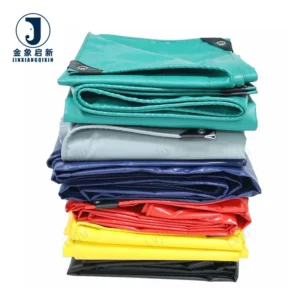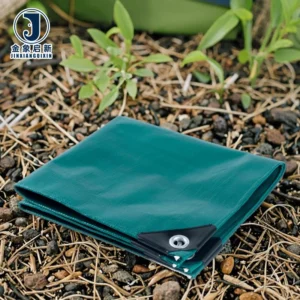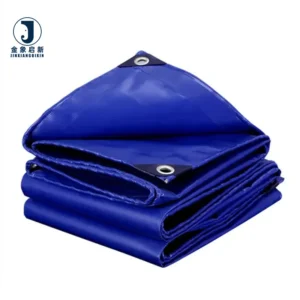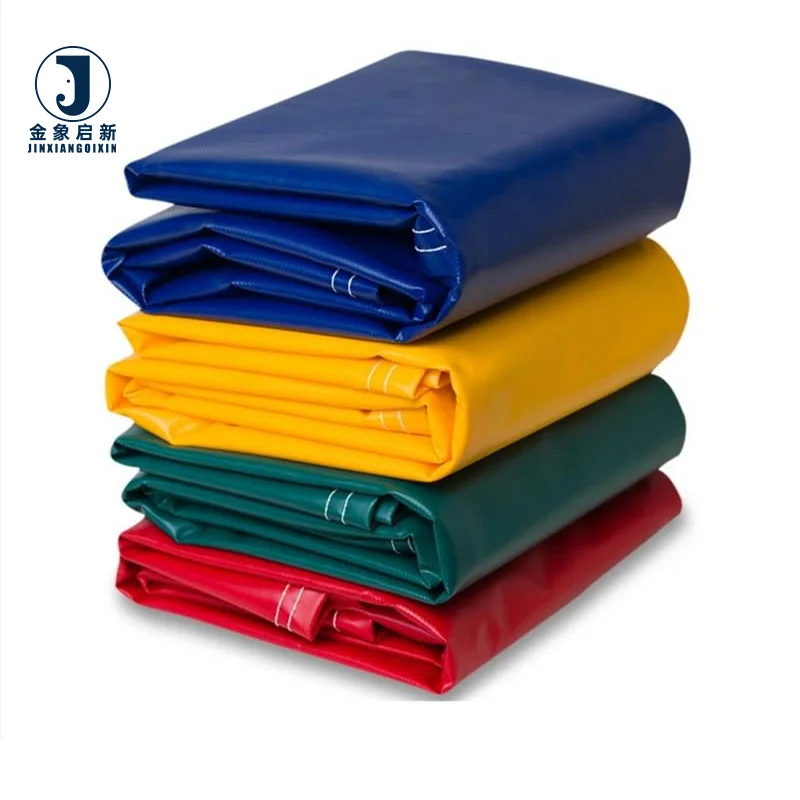
Coating Weight Control — every roll of PVC coated truck tarpaulin undergoes stage-by-stage QA to confirm GSM matches the material specification sheet before it leaves the line.
Technical Specifications
| Parameter | Value |
|---|---|
| Product Type | PVC Coated Tarpaulin |
| Material | PVC + High-strength polyester mesh fabric |
| Weight Options | 350gsm / 420gsm / 500gsm / 550gsm / 600gsm / 750gsm |
| Total Thickness | 0.32mm / 0.35mm / 0.4mm / 0.45mm / 0.5mm / 0.65mm |
| Coating Method | Laminated technology & Hot-melt Coating technology |
| Roll Width | 2m / 2.1m |
| Roll Length | 50m / 75m |
| Colour Options | Blue / Red / Yellow / Light Blue / Grey (custom colours available) |
| Key Features | Cold crack resistance, anti-mildew, anti-static treatment (grade not stated), waterproof, sunproof (test basis not stated), high tenacity polyester yarns, best colour fastness |
| Flame Retardant | Available in flame retardant grades — confirm the grade required for your market |
| Standards | ISO and CE certified facility |
| Service Life | 3-7 years under normal circumstances |
Application Suitability
| Application | Exposure & Requirement |
|---|---|
| Truck and trailer side curtains | Constant flexing at load points, highway wind flap, road spray and abrasion at tie-down zones |
| Open-bed cargo covers | Full weather exposure, UV and rain ingress, wind lift on high-speed routes |
| Lorry tarpaulin for regional fleets | Daily deployment and retraction, mechanical stress at hems and eyelet rows |
| Transport equipment OEM fitment | Model-specific cut dimensions, consistent colour across production batches |
Why Generic Sizing Destroys PVC Truck Tarpaulin Covers Before the Fabric Does
A PVC coated truck tarpaulin cover cut to a generic size will fail at the seams and hems long before the coated fabric itself wears out.
Fleet operators routinely order covers based on standard width drops, then discover on the loading dock that the drape is wrong for their specific trailer body. Excess material flaps in highway slipstream, creating fatigue at the weld lines. Short covers leave gaps at the tail gate, letting in road spray that damages the load. Both problems trace back to one decision: buying a stock size instead of a model-specific cut [NEED_CITE: fitment tolerance for truck tarpaulin and trailer body dimensions].
When a PVC truck tarpaulin cover aftermarket supplier ships a cover that does not account for your trailer’s bolster spacing, header rail profile, or tie-down rail position, every tension point shifts off-centre. The result is a cover that looks right in the yard but tears within months on the road.
Model-Specific Cut Dimensions Over Stock Drops
The difference between a cover that lasts and one that fails early is rarely the fabric grade — it is the cut pattern. Each trailer model has distinct header widths, side post spacing, and corner radii. A PVC coated truck tarpaulin for fleet and trailer cover applications must be dimensioned against those measurements so that tension distributes evenly across the full panel. When the cover matches the vehicle geometry, the welded seams carry load uniformly instead of concentrating stress at a single misaligned eyelet row.
Reinforcement Where Flex and Tie-Down Loads Concentrate
Highway driving subjects a truck cover to repeated flex cycles at every point where the load shifts or the trailer articulates. Hot-melt coating technology bonds the PVC layer to the high-strength polyester mesh base fabric with sufficient adhesion strength to resist delamination under these cycles. At the hem rows and tie-down zones, additional reinforcement layers can be specified to distribute point loads from ratchet straps and bungee cords, reducing the chance of the eyelet tearing through the coated fabric.
Cold Crack Resistance for Year-Round Highway Service
[NEED_CITE: low-temperature flexibility testing for PVC coated polyester fabrics]
Truck covers deployed in northern routes or high-altitude corridors face sub-zero ambient temperatures during winter loading and unloading. Standard PVC formulations stiffen and crack when flexed below their cold crack threshold. The cold crack resistance built into this material allows the cover to remain pliable in freezing conditions, so the fabric does not fracture when the driver folds or straps it in cold weather. Combined with anti-mildew treatment, the PVC coated truck tarpaulin maintains integrity through seasonal temperature and humidity swings.
Reading GSM, Thickness, and Coating Method Together
GSM alone does not predict how a truck cover will perform. A 500gsm fabric woven from high-denier yarns with an open weave behaves differently from a 500gsm fabric built on a tighter, lighter-denier base. The high-strength polyester mesh fabric used here provides the tensile skeleton, while the PVC coating applied through laminated or hot-melt coating technology fills the interstices and forms the weatherproof skin. Thicker coatings (0.45mm–0.65mm) add surface abrasion resistance at the cost of added roll weight and reduced drape, making them better suited to long-haul open-bed routes. Thinner grades (0.32mm–0.4mm) suit regional delivery vehicles where covers are deployed and stowed frequently. Colour fastness and sunproof treatment (test basis not stated) should be confirmed with test reports when specifying for high-UV corridors.
The Cost of Specifying on GSM Alone
Fleet buyers who select a cover grade based only on GSM frequently discover that the roll arriving at their depot is lighter than the quotation promised. The material feels thinner, the base fabric shows through the coating, and the weld strength at the seams falls below what the application demands. A PVC truck tarpaulin cover aftermarket supplier who quotes 600gsm but delivers 540gsm is not simply shaving cost — they are shipping a product whose tensile and tear performance no longer matches the load and route conditions you specified for. Batch colour inconsistency compounds the problem: when two rolls in the same shipment differ visibly, installing them side by side on adjacent trailers makes the variation obvious to your client [NEED_CITE: batch colour tolerance for PVC coated fabric orders]. Welded seams are another hidden failure zone. If the heat and pressure settings during fabrication are wrong for the specific coating method and GSM, the weld line will separate before the fabric itself reaches its tear point — and that separation almost always happens at the flex zone where the load shifts most.
What This Supplier Brings to Fleet and Transport Projects
Nearly three decades of process control over PVC coating weight and adhesion means the GSM stated on the quotation is the GSM verified on the pre-shipment inspection record — no rounding, no shortfalls. Three full production lines and 36 sets of professional equipment support bulk roll orders with consistent delivery scheduling across multiple fleet contracts. A dedicated 10-person R&D team develops cut patterns against your specific trailer drawings, not generic templates, and produces samples within days for approval before production runs begin. QA inspection covers every roll before dispatch, checking coating weight, colour consistency, and cut dimensions against the agreed specification.
Documentation & Verification
- Material specification sheet stating exact GSM, base fabric denier, and coating method per roll
- Pre-shipment inspection record confirming cut dimensions match the specified trailer model
- UV and treatment test reports provided where applicable, not merely claimed on the quotation
- Colour reference card matched to the order batch for on-site verification
- ISO and CE certificates covering the production facility
- Certificate of origin and customs documentation for cross-border shipments
Fabrication, Handling & Storage
- Hot-melt coated rolls require heat-seal temperatures matched to the specific GSM and thickness — confirm settings before full production runs
- Reinforced hem strips should extend beyond the eyelet row by a margin proportional to the 600gsm or 750gsm grade in use
- Store rolls horizontally on pallets in a shaded area; vertical stacking causes permanent creasing on heavier 0.5mm and 0.65mm grades
- Unroll cold-stored fabric and allow it to reach ambient temperature before fabrication to prevent cracking at the PVC surface
- Clean finished covers with mild detergent only; solvent-based cleaners degrade the sunproof and anti-mildew surface treatment
- Cut patterns should nest on 2.1m roll width to minimise off-cuts when producing covers for standard European trailer bodies
Before You Send the Enquiry
Specify the trailer make, model, and body dimensions so the cut pattern can be prepared against actual measurements rather than generic drops. State the primary route climate — cold corridor, high-UV region, or coastal salt exposure — so the correct treatment package is selected. Confirm whether you require finished covers with eyelets and reinforced hems, or roll stock for in-house fabrication. If flame retardant certification is mandated by your market or end client, identify the required grade so that a verified test report accompanies the quotation.
Frequently Asked Questions
Q: How is the truck cover sized to my specific trailer model rather than a generic cut?
A: We request the trailer make, model, and body drawing or measurement sheet. The cut pattern is then generated against those exact dimensions, accounting for header rail width, side post spacing, and corner radii, so the finished PVC coated truck tarpaulin fits without excess drape or short-fall gaps.
Q: How do you verify GSM on arrival matches what was quoted?
A: Each roll is weighed and measured during pre-shipment inspection. The inspection record documents the actual GSM alongside the quoted value, and this document ships with the order so you can cross-check on receipt against your purchase specification.
Q: What eyelet spacing and hem reinforcement options are available for tie-down loads?
A: Eyelet spacing and hem reinforcement are specified to match the tie-down system your fleet uses. Options include reinforced webbing strips welded behind the eyelet row and adjusted spacing intervals to distribute strap tension across the panel.
Q: How do welded seams perform at flex points compared to stitched seams?
A: Welded seams on hot-melt coated polyester mesh fabric create a continuous bond across the joint, eliminating needle holes that stitched seams leave in the PVC layer. This continuous bond distributes flex stress evenly and prevents water ingress at the join line.
Q: What UV and weather treatment test reports accompany the shipment?
A: Where sunproof or flame retardant treatments are specified, the relevant test reports are included with the shipment documentation. Confirm the required standard for your market at enquiry stage so the correct grade is produced and tested before dispatch.