Deep Process Control Over Coating Weight — verified roll-by-roll against quoted GSM before dispatch, ensuring the PVC tarpaulin fabric for truck cover aftermarket supplier delivers the exact weight and adhesion strength specified for your transport application.
Technical Specifications
| Parameter | Value |
|---|---|
| Product Type | PVC Coated Tarpaulin |
| Material | PVC + High-strength polyester mesh fabric |
| Coating Method | Laminated technology & Hot-melt Coating technology |
| Weight (GSM) | 350gsm / 420gsm / 500gsm / 550gsm / 600gsm / 750gsm (confirm the grade for your application) |
| Total Thickness | 0.32mm / 0.35mm / 0.4mm / 0.45mm / 0.5mm / 0.65mm (confirm the grade for your application) |
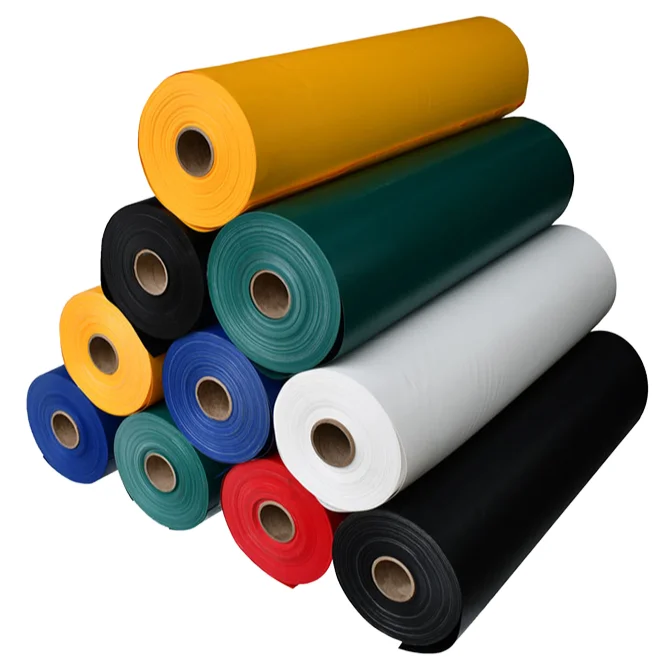
| Roll Width | 2m / 2.1m |
| Roll Length | 75m (for 2m width) / 50m (for 2.1m width) |
| Color Options | Blue / Red / Yellow / Light blue / Grey (Customized) |
| Finish Product Size | Custom as per customer needs or sold by inventory |
| Key Features | Waterproof, sunproof (test basis not stated), cold crack resistance, anti-mildew, anti-static treatment (standard not stated), outstanding tearing strength for welding |
| Flame Retardant | Not stated — confirm the grade required for your market |
| Service Life | 3–7 years under normal circumstances (source value — verify against specific grade selected) |
| Custom Printing | Accepted |
| Custom Color | Accepted |
| Certifications | ISO, CE (specific standard numbers not stated) |
Application Suitability
| Application | Exposure & Requirement |
|---|---|
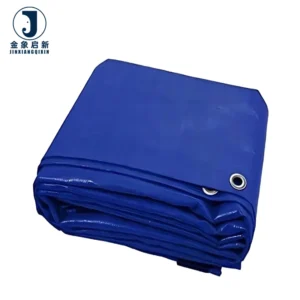
| Truck side curtain fabric | Constant flexing at load points, road debris abrasion, tie-down stress, UV and weather exposure year-round |
| Flatbed truck cover and lorry tarpaulin | Wind flap fatigue, water ingress prevention, repeated folding and unfolding at depot |
| Truck awning and canopy | Extended sun exposure, wind load tension, colour fastness across fleet panels |
| Cargo ship tarpaulin | Salt-laden air, heavy rain, deck abrasion, prolonged outdoor storage conditions |
| Tent and awning fabric | Seasonal erection and dismantling, ground contact moisture, UV degradation over deployment cycles |
Why Generic Sizing Costs More Than the Fabric Itself
A PVC tarpaulin fabric for truck cover aftermarket supplier that ships generic dimensions forces you to absorb waste, refolding labour, and seam failures where the trailer flexes hardest — the exact spot the cover must perform.
Model-fit cutting eliminates the flex-point failures that generic covers produce within the first transport season.
Every truck and trailer has distinct load deflection zones. When a cover is cut to a standard rectangle and folded to fit, the material bunches at pivot points and pulls away from tie-down anchors. The*king and cornering. Within weeks, welded seams split not because the fabric is weak, but because the cut geometry forces stress into the weld line rather than distributing it across the panel [NEED_CITE: stress concentration at fold lines in PVC-coated transport covers]. Fleet operators replacing covers on rotation schedules find themselves ordering replacements far sooner than the material rating suggests.
Truck and Trailer Curtain Fitment Without the Guesswork
Selecting the right PVC coated tarpaulin fabric for truck cover aftermarket supplier means matching the roll width to the curtain drop dimension. The 2m and 2.1m width options reduce horizontal welds on standard trailer heights, keeping the panel continuous from rail to sill. Custom cut sizing means each cover ships ready to mount, with eyelet spacing matched to the curtain track rather than forced into a generic pattern.
Hot-melt coating technology ensures that where panels must be joined, the weld seam achieves adhesion strength that survives repeated curtain retraction. The polyester mesh base provides dimensional stability so the fabric tracks straight through the roller mechanism without bias drift over the service cycle.
Batch Colour Consistency Across a Fleet Order
Fleet operators specifying colour face a specific problem: panels installed side by side on a trailer reveal even slight shade variation. When a transport company orders multiple rolls to cover an entire fleet, the PVC tarpaulin fabric for truck cover aftermarket supplier must deliver shade consistency roll to roll. Colour drift between production batches turns a professional fleet appearance into a patchwork.
Batch-to-batch colour matching is verified before rolls are packed together in a single dispatch [NEED_CITE: colour measurement tolerances for PVC-coated fabrics in fleet applications]. This is particularly critical when covers are replaced individually over time — a replacement panel must match the remaining originals still in service, not just the other new panels in the same shipment. Custom colour acceptance allows fleet branding to be maintained without resorting to over-lamination or appliqué methods that add weight and reduce flexibility.
What Weight Grades Mean for Different Transport Cycles
GSM alone does not predict field performance — the base fabric denier and weave density work together with the coating weight to determine how the material behaves under load. The 350gsm grade suits light-duty awning and temporary cover applications where the fabric is deployed and retrieved frequently. At the heavier end, 750gsm provides the tensile mass needed for flatbed covers exposed to highway wind loading and heavy tie-down tension.
Laminated and hot-melt coating methods each serve different priorities in the specification. Laminated construction bonds the PVC film to the polyester mesh under heat and pressure, producing a uniform coating thickness suited to high-volume roll production. Hot-melt coating drives the PVC compound into the mesh interstices, creating mechanical interlock that substantially improves peel strength at welded seams. For side curtain applications where the fabric flexes thousands of times per service cycle, hot-melt coated grades resist delamination at the weld boundary where flexing concentrates [NEED_CITE: ISO 1421 tensile and peel test methods for coated fabrics].
The total thickness correlates with puncture resistance during loading operations — forklift contact, shifting cargo edges, and tie-down chain abrasion all demand sufficient coating depth over the base yarns. The cold crack resistance feature means the material retains flexibility during winter loading in cold climates, preventing the brittle fractures that develop when stiffened fabric is folded or tensioned below its service temperature range.
The Hidden Cost of Specifying on Quotation GSM Alone
When a buyer accepts a quotation based on a stated weight without independent verification, the delivered material may arrive lighter than agreed — a difference invisible until the cover is installed and exposed to operational stress. A few grams per square metre less coating translates directly into reduced abrasion resistance at flex points and thinner protection over the base yarns. Over a transport season, the cover wears through at contact zones far earlier than the specification implied.
Welded seam failures compound the problem. If the coating weight is lower at the surface, heat-welding parameters set for the specified GSM overcook the thinner coating, producing brittle welds that crack under the first significant load shift [NEED_CITE: relationship between coating weight consistency and thermal weld integrity in PVC tarpaulins]. Fleet operators then face unplanned replacement costs and potential cargo exposure claims that far exceed the savings on the original material purchase. Colour inconsistency between rolls in the same order adds another dimension of failure when adjacent panels on a trailer visibly mismatch after installation.
Why Fabricators and Fleet Buyers Source Here
Three full production lines with 36 sets of professional equipment support bulk roll orders and custom cut sizes without queuing conflicts between standard stock and made-to-order items. Each PVC tarpaulin fabric for truck cover aftermarket supplier order runs on dedicated line allocation, protecting delivery schedules for both wholesale roll buyers and fleet-specific cover fabricators.
The 10-person R&D team handles material selection for specific transport duty cycles, recommending grade and coating method based on the actual exposure conditions rather than a generic specification. Sample development within days allows fabricators to test weld parameters and fitment before committing to bulk volumes.
Dedicated QA/QC inspection at every production stage catches coating weight deviation and colour drift before the roll reaches packing. The 100% pre-shipment inspection record provides documented evidence of what was checked, not just a certificate number to file away.
Documentation & Verification
- Material specification sheet stating exact GSM, base fabric construction, and coating method for the selected grade
- Pre-shipment inspection record confirming weight verification per roll against the stated GSM before dispatch
- Custom sizing confirmation matched to the specific truck or trailer model dimensions
- Test report for sunproof and flame-retardant grades where applicable to the selected specification
- Roll packing list with colour batch reference for traceability across fleet panel replacements
- Certificate of origin and customs documentation for international shipment clearance
Fabrication, Handling & Storage
- Hot-weld parameters should be set for the specific coating method — laminated and hot-melt grades require different temperature profiles at the weld bar
- Eyelet placement along hems must account for the polyester mesh weave direction to distribute tie-down loads across multiple yarn courses
- Store rolls upright on core ends to prevent permanent creasing in the PVC coating that transfers to the finished truck cover
- Unroll in ambient temperature above the cold crack threshold before tensioning onto curtain tracks or trailer frames
- Clean with mild detergent solutions only — solvent-based cleaners attack the plasticiser in the PVC coating and reduce flexibility
- Cut panels with a clean blade or hot knife to seal edge yarns and prevent base fabric fraying at the hem fold line
What We Need to Specify Your Material
Provide the truck or trailer model, curtain drop height, and cover dimensions so the correct roll width and cut size can be matched to your fitment requirements. Specify the target market and any flame-retardant or anti-static compliance your end customer or site regulations demand, as the applicable grade must be confirmed before quotation.
Indicate whether you need full roll stock for in-house fabrication or finished custom-cut covers ready to mount. Annual volume and colour requirements determine production scheduling and batch consistency allocation across your orders.
Frequently Asked Questions
Q: How do you ensure GSM on arrival matches what was quoted?
A: Every roll is weighed and measured during the 100% pre-shipment inspection. The inspection record documents actual GSM values against the specification sheet before packing, so you receive verified weight data — not just the quotation figure. This catches any coating weight deviation before the material leaves the facility.
Q: Can truck covers be cut to fit our exact trailer model rather than a generic size?
A: Yes. Provide the trailer make, model, and curtain track dimensions. Covers are cut to match the specific panel geometry, reducing waste at the edges and eliminating the flex-point stress concentrations that generic rectangular cuts produce when forced to fit a particular trailer shape.
Q: Do flame-retardant and anti-UV grades come with a test report?
A: Where these treatments are specified for your order, the applicable test report ships with the documentation package. Flame-retardant grades require confirmation of the standard your market mandates — provide this at inquiry stage so the correct grade is selected and documented before production begins.
Q: What colour consistency guarantee applies across multiple rolls in one order?
A: Rolls allocated to a single fleet order are produced within the same batch run. The pre-shipment inspection includes a visual colour comparison between rolls packed together, ensuring adjacent panels match once installed side by side on a trailer. Custom colours follow the same batch allocation protocol.
Q: How are welded seams tested before shipment?
A: Welded seam samples are produced using the specified coating method and tested for peel strength before bulk fabrication proceeds. This confirms the hot-melt or laminated coating achieves adequate adhesion at the weld line for the flexing conditions the truck side curtain will experience in service.