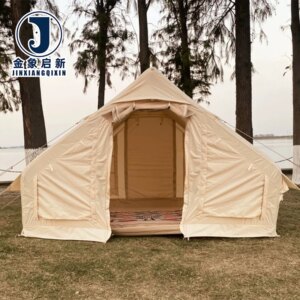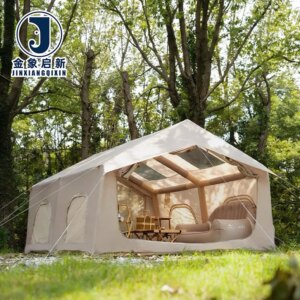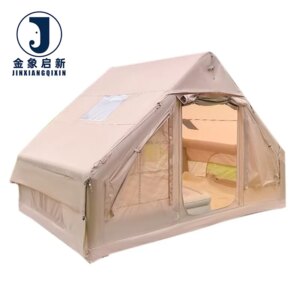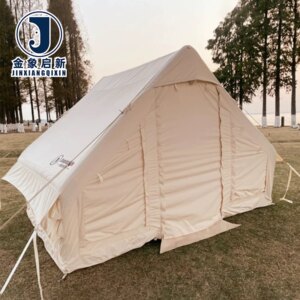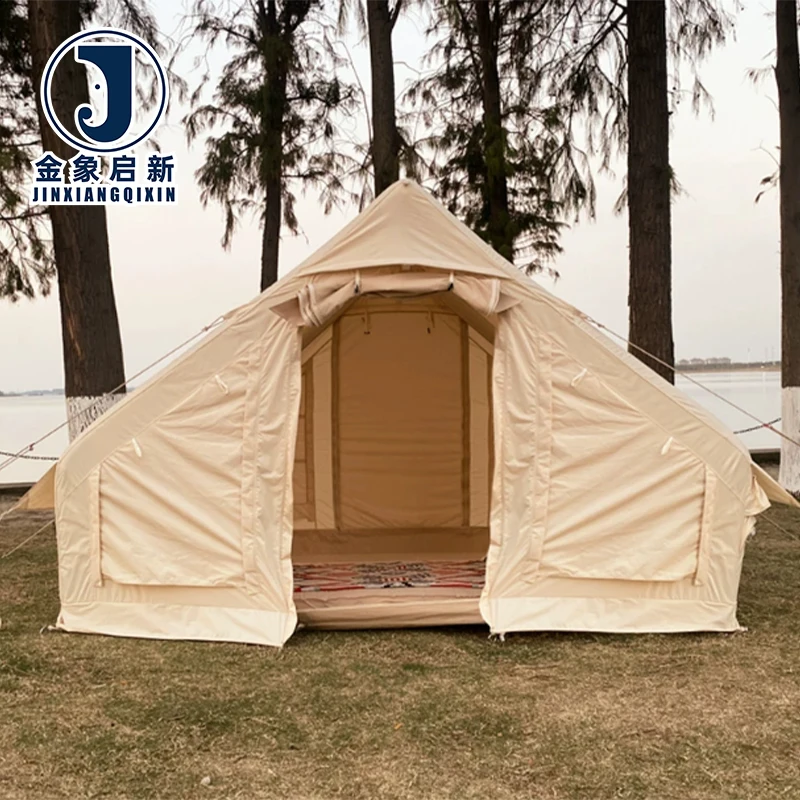
Coated Fabric Process Control — Nearly 30 years focused on PVC coating technology with 100% pre-shipment inspection ensures every inflatable tent roll meets stated weight and performance before leaving the facility.
Technical Specifications
| Parameter | Value |
|---|---|
| Product Type | Inflatable Tent |
| Core Material | PVC Waterproof Fabric |
| Construction | Single layer inflatable structure |
| Tear Resistance | 120N (test standard not stated in source) |
| Waterproof | Yes (tested to industry standards) |
| UV Treatment | UV-Resistant (test basis not stated in source) |
| Quick Automatic Opening | Yes — reduced deployment time claimed at 60% |
| Customization | OEM & ODM, sample customization, pattern printing |
| Certifications | ISO 9001, ISO 14001, ISO 45001, CE |
Application Suitability
| Application | Exposure & Requirement |
|---|---|
| Transport fleet temporary shelters at loading docks and rest stops | Repeated setup and teardown cycles, wind load, UV exposure, road dust and moisture |
| Commercial event staging and logistics operations | Weather resistance during roadside deployment, abrasion from ground contact, frequent inflation and deflation |
| Outdoor equipment rental fleets mounted on vehicles or trailers | Compact storage, rapid automatic opening for field crews, tear resistance at high-stress flex points |
| Industrial temporary accommodation near work sites | Extended outdoor exposure, waterproof integrity during rain events, UV-resistant coating for prolonged sun contact |
Why Inflatable Tent Seams Fail Before the Fabric Does
Welded seam strength must match or exceed the base PVC fabric tear resistance — otherwise the tent fails at the inflation chamber joints, not the field surface.
Inflatable structures concentrate stress at every welded joint where air chambers bend and flex during deployment. When a transport crew inflates a shelter at a remote site, the seams bear cyclic loading that plain fabric sections never experience. A seam that separates under pressure leaves the entire structure unusable in the field, with no practical repair option available on site. PVC Inflatable Tent aftermarket supplier decisions often focus on fabric weight alone, overlooking that the weld quality determines whether the tent survives its first commercial deployment cycle [NEED_CITE: tensile and tear test methods for coated fabrics per ISO 1421].
Deployment Speed That Fleet Operations Actually Need
Field crews managing transport logistics cannot afford tent setups that require multiple personnel and extended assembly time. The quick automatic opening mechanism in this PVC Inflatable Tent reduces the interval between arrival and operational shelter, which matters when a fleet needs temporary cover at an unplanned stop or a logistics company is staging equipment outdoors under approaching weather. The single layer inflatable construction keeps packed volume low enough for trailer or truck-bed storage without consuming payload space.
Flex Point Durability Under Transport Conditions
Every inflatable structure used alongside transport operations faces abrasion at ground contact zones and cyclic stress at inflation chamber bends. The PVC waterproof fabric used here addresses moisture ingress during rain events and roadside spray, while the tear resistance of 120N provides a baseline for durability at tie-down attachment areas and high-stress flex zones. Fleet operators running inflatable tent shelters across multiple sites need material that does not degrade after repeated inflation cycles and rough ground deployment [NEED_CITE: coated fabric flex endurance testing standards].
What the Specification Sheet Actually Tells You About Field Performance
The tear resistance value of 120N indicates how the PVC fabric resists propagation of a cut or nick once the surface is compromised — a common occurrence when inflatable tents contact sharp ground debris or metal fittings during transport operations. This value should be evaluated alongside waterproof integrity and UV-resistant coating claims, as these three properties together define how the tent performs across a commercial service life. The single layer construction reduces overall packed weight, which directly affects how many units a fleet vehicle can carry and how quickly a single crew member can position the tent before inflation. Available in flame retardant grades — confirm the grade required for your market and request the applicable test report before placing a production order.
The Real Cost of Overlooking Batch Consistency
When inflatable tent fabric varies in coating weight or colour between production rolls, the problem surfaces only after deployment — one shelter looks noticeably different from the next in a rental fleet, or a batch with lower coating adhesion develops delamination at welded seams under field conditions. For transport operators running multiple inflatable shelters across a fleet, inconsistent material properties mean unpredictable failure rates and no reliable basis for maintenance scheduling. Buyers specifying PVC Inflatable Tent fabric for commercial use should request pre-shipment inspection records that document GSM and coating weight per roll against the stated specification [NEED_CITE: PVC coating adhesion and batch variation in industrial fabrics].
Why Sourcing Inflatable Tent Fabric Here Makes Sense for Transport Buyers
Three full production lines and 36 sets of professional equipment provide the capacity to fulfil volume orders for fleet-scale inflatable tent deployments without extended lead time compromises. A dedicated 10-person R&D team handles OEM and ODM requirements including custom sizing and pattern printing, which matters when a transport company needs branded shelters or specific dimensions for trailer-mounted applications. Every production batch goes through 100% pre-shipment inspection with dedicated QA and QC staff covering 7 inspection points from raw material incoming through final packaging. Sample development is available within days for custom requirements, allowing buyers to validate seam integrity and inflation performance before committing to full production. The production facility operates under ISO 9001, ISO 14001, ISO 45001 and CE frameworks, providing documentation support for commercial procurement processes.
Documentation & Verification
- Material specification sheet stating PVC coating composition, base fabric type and confirmed GSM per roll
- Waterproof rating and UV resistance test results documented per production batch
- Tear resistance test data at 120N included with shipment documentation
- ISO 9001, ISO 14001, ISO 45001 and CE certificates supplied with each order
- Pre-shipment inspection record covering all 7 quality checkpoints
Fabrication, Handling & Storage
- Weld temperature and dwell time must match PVC coating thickness to achieve full seam adhesion on single layer inflatable chambers
- Reinforce all inflation valve attachment points and tie-down zones where cyclic stress concentrates on the PVC fabric
- Store rolls flat or upright on cores — avoid horizontal stacking that creates permanent creases in the waterproof coating
- Allow cold-stored PVC fabric to reach ambient temperature before inflation to prevent low-temperature coating stiffness and cracking
- Clean surfaces with mild detergent only — solvent-based cleaners degrade the UV-resistant coating layer
What to Include in Your Inquiry
Provide the intended deployment environment and expected frequency of inflation cycles so we can confirm whether the standard PVC Inflatable Tent fabric meets your durability requirements. Specify any fire safety or regulatory compliance grades required in your operating region. Indicate the dimensions, order volume, and whether you need finished inflatable units or fabric supplied in roll form for your own fabrication.
Frequently Asked Questions
Q: How is UV resistance verified and what service life can be expected under prolonged sun exposure?
A: UV-resistant treatment is applied to the PVC fabric during coating. Test basis documentation is available upon request. For transport fleet applications involving continuous outdoor deployment, we recommend requesting the UV test report specific to your batch and discussing expected exposure conditions with our technical team to confirm suitability for your operating region.
Q: What welded seam and reinforcement options are available at high-stress inflation points?
A: Seam construction uses heat welding matched to the PVC coating composition of this single layer inflatable structure. Reinforcement options at valve attachments and tie-down zones can be specified during the OEM/ODM sample development phase. Pre-production samples allow buyers to test seam integrity under actual inflation pressure before full production begins.
Q: How is batch-to-batch color and material consistency controlled across large-volume orders?
A: Our QA/QC system covers 7 inspection points from incoming raw material through final packaging. Pre-shipment inspection records document GSM, coating weight and colour per roll against the order specification. Buyers placing repeat orders can request reference samples from previous batches for side-by-side comparison before new production ships.
Q: What OEM/ODM customization options exist for sizing, pattern printing and branding?
A: Our 10-person R&D team handles custom dimensions, pattern printing and branding on PVC Inflatable Tent fabric. Sample development is available within days for approval before mass production. Provide your target dimensions, artwork files and any specific performance requirements so we can prepare a sample that reflects your exact configuration.
Q: How are inflatable tents packed and loaded for container transport to prevent damage?
A: Rolls are packed to prevent crushing and permanent creasing of the PVC waterproof coating during transit. Container loading plans account for roll count and weight distribution. Specific packing details depend on order volume and whether units ship as finished inflatable tents or roll stock — confirm requirements at the quotation stage.