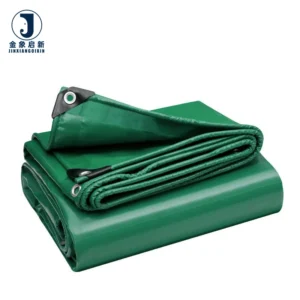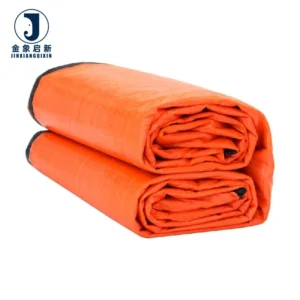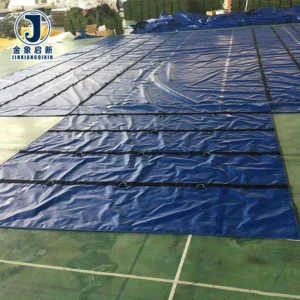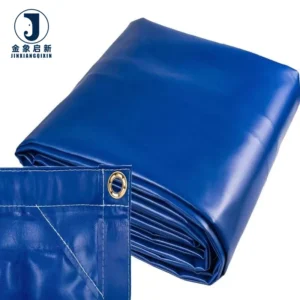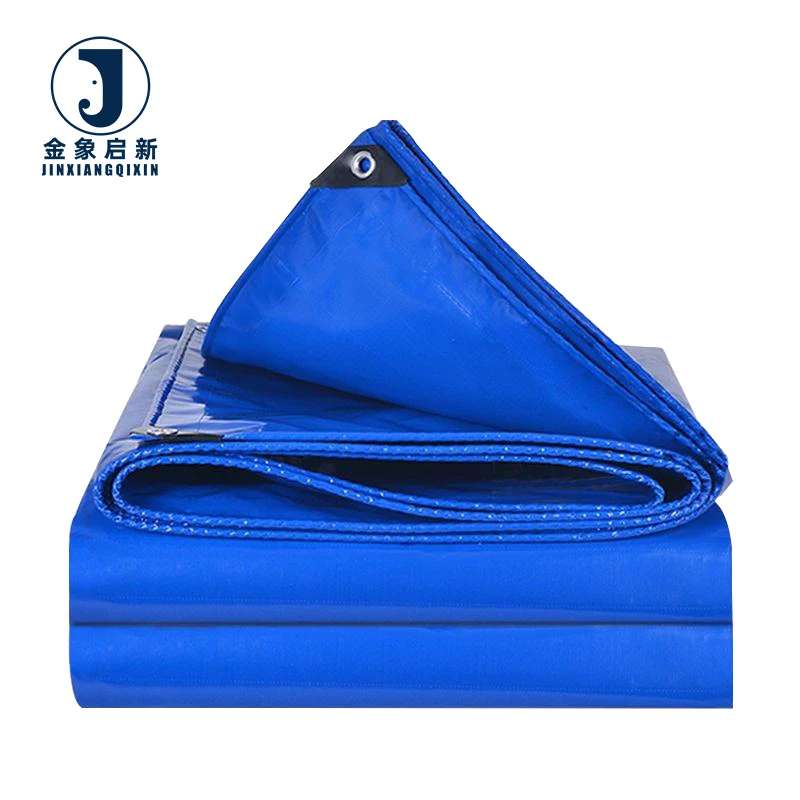
Trailer-Specific Fitment — Custom-cut cargo covers engineered from PVC-coated fabric to match exact vehicle dimensions, eliminating the slack zones that generic sizing leaves exposed to wind and rain.
Technical Specifications
| Parameter | Value |
|---|---|
| Product Type | PVC Coated Tarpaulin |
| Material | PVC Coated Fabric |
| Weight Options | 700gsm / 850gsm / 900gsm |
| Waterproof | Fully waterproof coated construction |
| Flame Retardant | Available in flame retardant grades — confirm the grade required for your market |
| Anti-Static | Available with anti-static treatment — verify test basis against your compliance requirement |
| Anti-Cold | Available with anti-cold formulation — confirm operating temperature range |
| Anti-Mildew | Available with anti-mildew treatment — grade not stated |
| Weather Resistance | Suited to extended outdoor exposure (1–3 years as stated by manufacturer) |
| Customization | Dimensions cut to specific truck and trailer models |
| Key Features | High-strength fabric, waterproof construction, multiple treatment options |
Application Suitability
| Application | Exposure & Requirement |
|---|---|
| Truck and trailer cargo covering | Highway-speed wind load, rain ingress at seams, abrasion at flex and tie-down points |
| Logistics fleet load protection | Daily installation and removal cycles, repeated tension from tie-down straps |
| Transport equipment side curtains | Constant flexing along curtain runners, UV exposure on parked vehicles |
| Outdoor cargo storage | Standing water on horizontal surfaces, prolonged sunlight, mildew in humid climates |
Why Generic Truck Covers Fail Where Road Conditions Get Harsh
A PVC tarpaulin truck cargo cover for transport fleet use only works when it actually seals the load — and that starts with fitment.
Generic covers cut to standard rectangle dimensions leave slack at the corners and rear edge of your trailer. That slack flaps at highway speed, which concentrates stress at the eyelets and accelerates wear at the welded seams. Over weeks of operation, the cover begins to fail precisely where it needs to hold [NEED_CITE: wind-induced fatigue on loose-fitting transport covers]. We cut each cover to the exact make and model of your truck or trailer, so the fabric sits under even tension across the entire load surface.
How Model-Specific Sizing Changes Cover Behaviour on the Road
When a PVC tarpaulin truck cargo cover for transport fleet deployment is dimensioned to your specific vehicle, the eyelets align with the trailer’s tie-down rails without diagonal pull. This means the load sits flat against the cargo bed instead of ballooning at speed. The reinforced hems follow the vehicle contour rather than bridging across gaps, which is where rain channels through to the load below.
What the Welded Seams Must Withstand During Transit
Every time the trailer articulates over uneven road surface, the cover flexes at predictable stress lines — typically above the wheel arches and at the rear quarter panels. Welded seams running through these zones must match or exceed the tear strength of the base fabric itself [NEED_CITE: peel strength requirements for heat-welded PVC coated fabrics per ISO 1421]. Our 10-person R&D team positions seam lines away from primary flex zones wherever the cover geometry allows, and applies double-pass welding at high-movement junctions to prevent seam separation before the fabric reaches end of life.
Reading GSM in Context With Base Fabric Construction
A stated weight of 700gsm, 850gsm, or 900gsm tells you the total mass per square metre of coating plus base fabric, but it does not directly state how that mass is distributed. Two covers at the same GSM can behave very differently on a trailer: one might use a heavier base yarn in a looser weave (higher tensile strength, lower tear propagation resistance), while another uses lighter yarn in a tighter weave (better puncture resistance, different hand feel). The coating method — whether knife-over-roll, dip, or calender — determines how deeply the PVC penetrates the weave and how well the layers bond under thermal welding. For truck cargo covers that undergo daily tensioning and release, the adhesion between coating and base fabric is as critical as the total weight, because delamination at the weld line is a common early failure mode on high-frequency use covers.
What Happens When the Wrong Grade Meets the Wrong Road
A cover specified at 700gsm for a long-haul route carrying heavy machinery will abrade at the contact points faster than one at 900gsm, but the problem compounds when the buyer cannot verify what arrived. Quoted GSM that does not match the received roll weight means the coating is thinner than engineered, which reduces the waterproof barrier and accelerates UV degradation of the base yarn underneath [NEED_CITE: relationship between coating thickness and service life in PVC coated transport fabrics]. Flame retardant treatment without a verifiable test report creates a compliance gap that only surfaces during a site audit or incident investigation. Colour variance between covers delivered in the same batch forces a fleet operator to either accept a mismatched appearance or reject an otherwise functional order — both outcomes carry cost that proper batch-level QA eliminates before dispatch.
What Production Control Looks Like at This Facility
Nearly 30 years of continuous focus on coated fabric gives the production team pattern recognition for defects that shorter-run operations miss during coating runs. Three full production lines and 36 sets of professional equipment mean a custom-width or custom-colour order for your PVC tarpaulin truck cargo cover for transport fleet does not get queued behind a stock roll run — it gets its own dedicated line allocation. The 10-person R&D team develops samples within days for custom requirements, which means your fleet standardisation project can move from inquiry to approved sample without a multi-week delay. Dedicated QA/QC at every production stage, with 100% inspection before shipment, ensures the GSM on the roll matches what was quoted and the welded seams pass pull testing before the cover is packed. ISO and CE certified production processes are maintained across the 9,180 m² facility in Jinan, Shandong.
Documentation & Verification
- Material specification sheet stating GSM, base fabric construction, and coating type for your ordered grade
- Flame retardant and anti-static test reports provided where applicable to your market compliance standard
- Pre-shipment inspection record confirming weight per square metre matches the quoted specification
- Cover dimensions verified against your stated truck or trailer model before release from factory
- Roll packing list with batch identification for traceability across multi-cover fleet orders
- Certificate of origin and customs documentation for international shipment
Fabrication, Handling & Storage
- Heat weld at temperatures matched to the 700gsm / 850gsm / 900gsm grade to ensure full coating fusion at seams
- Allow PVC coated rolls to acclimatise before unrolling in cold weather to prevent coating crack at fold lines
- Store rolls upright on cores to avoid flat spots that create permanent creases in the coated surface
- Use mild detergent only for cleaning — solvents degrade the PVC coating and strip anti-mildew treatment
- Eyelet placement should follow the hem reinforcement zone to distribute tie-down load across the base fabric
- Repair minor punctures with PVC-compatible adhesive patches matched to the coating formulation
What to Include With Your Enquiry
Provide the exact make, model, and year of each truck or trailer in your fleet so the cover dimensions can be matched to the vehicle rather than estimated from a generic size chart. State which treatment requirements apply — whether flame retardant certification is needed for a specific standard, or anti-static treatment for sensitive cargo environments. Confirm the number of covers needed per vehicle model and whether the order is for replacement units or a fleet-wide standardisation project, as this affects batch colour matching and production scheduling.
Frequently Asked Questions
Q: How is truck cover sizing matched to specific trailer models rather than generic dimensions?
A: We request the exact manufacturer, model, and body configuration of each vehicle. Covers are then cut to those dimensions rather than to a standard rectangle, which eliminates slack zones where wind and water enter. This also ensures eyelets align with the trailer’s existing tie-down points without requiring modification to the vehicle hardware.
Q: What flame retardant grade is available and does it meet my market’s transport fire safety standard?
A: Flame retardant treatment is available, but the specific grade must be confirmed against your local transport regulation. We provide test reports for the grade applied so you can verify compliance with your market requirement before the covers enter service. State your required standard at enquiry stage.
Q: How is welded seam strength verified at the flex and tie-down points of the cover?
A: Welded seams undergo pull testing as part of the 100% pre-shipment inspection process. Seams at known flex zones — typically above wheel arches and at rear quarter panels — receive double-pass welding. The QA record documents peel strength results before the cover is cleared for dispatch.
Q: What eyelet spacing and hem reinforcement options are available for tie-down systems?
A: Eyelet spacing is set according to your trailer’s tie-down rail configuration rather than a standard interval. Hems are reinforced in the zones where strap tension concentrates, and the eyelet holes are punched through the reinforced band to distribute load across the base fabric weave.
Q: How is colour consistency maintained across multiple covers ordered for the same fleet?
A: All covers within a single fleet order are produced from the same coating batch to eliminate roll-to-roll colour variation. The pre-shipment inspection includes a visual colour match check across all units before packing, so mismatched panels do not reach your depot.