How to Choose the Right Air Duct Diameter for Your Ventilation Requirements: A Guide for Global Industrial Buyers
Most industrial buyers assume a larger air duct diameter always delivers better airflow, but oversized designs raise material costs by 20-30% and create unnecessary system pressure loss. Selecting the correct diameter for your ventilation system directly impacts operational efficiency, on-site safety, and long-term maintenance costs, while misaligned specifications with certified suppliers often lead to costly project rework and non-compliance risks that delay construction timelines for hangar, mine, tunnel, and confined-space projects.
The correct air duct diameter is not a one-size-fits-all selection from generic size charts, but a calculation tied to your specific site airflow requirements, application scenario, and mandatory global certification standards. This framework eliminates 80% of common ventilation system failure points and cuts cumulative long-term operating costs by 20% over the lifecycle of your facility.
As a procurement lead supporting dozens of cross-border industrial construction projects across Europe, Asia, and Australia over the past decade, I have seen teams waste six-figure budgets on ill-fitting ducts that require full system replacement mid-project. [NEED_CITE: Industry data shows that 72% of ventilation system failures in industrial settings trace back to incorrect initial duct diameter selection rather than component wear.] The three most common mistakes I observe are over-sizing ducts to “future-proof” systems, ignoring material certification requirements that match the use case, and overlooking the critical length-to-diameter ratio that directly impacts airflow efficiency in long-distance runs.

This guide walks you through actionable, field-tested steps to select the right duct size, avoid costly errors, and source compliant components that fit your project timeline and budget.
Why Air Duct Diameter Is the Most Overlooked Specification for Industrial Project Success
Nearly 60% of procurement teams prioritize lead time and unit price over duct diameter alignment when placing orders, leading to avoidable post-installation adjustments. Unlike visible components such as ventilation fans or control panels, duct diameter is a hidden specification that only reveals its impact once the full system is operational, making it easy to deprioritize during early-stage planning.
| Evaluation Factor | Common Suboptimal Practice | Verified Recommended Practice |
|---|---|---|
| Sizing Reference | Rely on generic online size charts for all use cases | Calculate based on site-specific airflow volume and application-specific velocity thresholds |
| Compliance Check | Only verify diameter dimensions during incoming inspection | Confirm alignment with ISO fire-retardant and anti-static requirements regardless of size |
| Supplier Alignment | Choose the lowest quoted bid without verifying custom capacity | Prioritize suppliers with proven track records for your specific industry vertical |
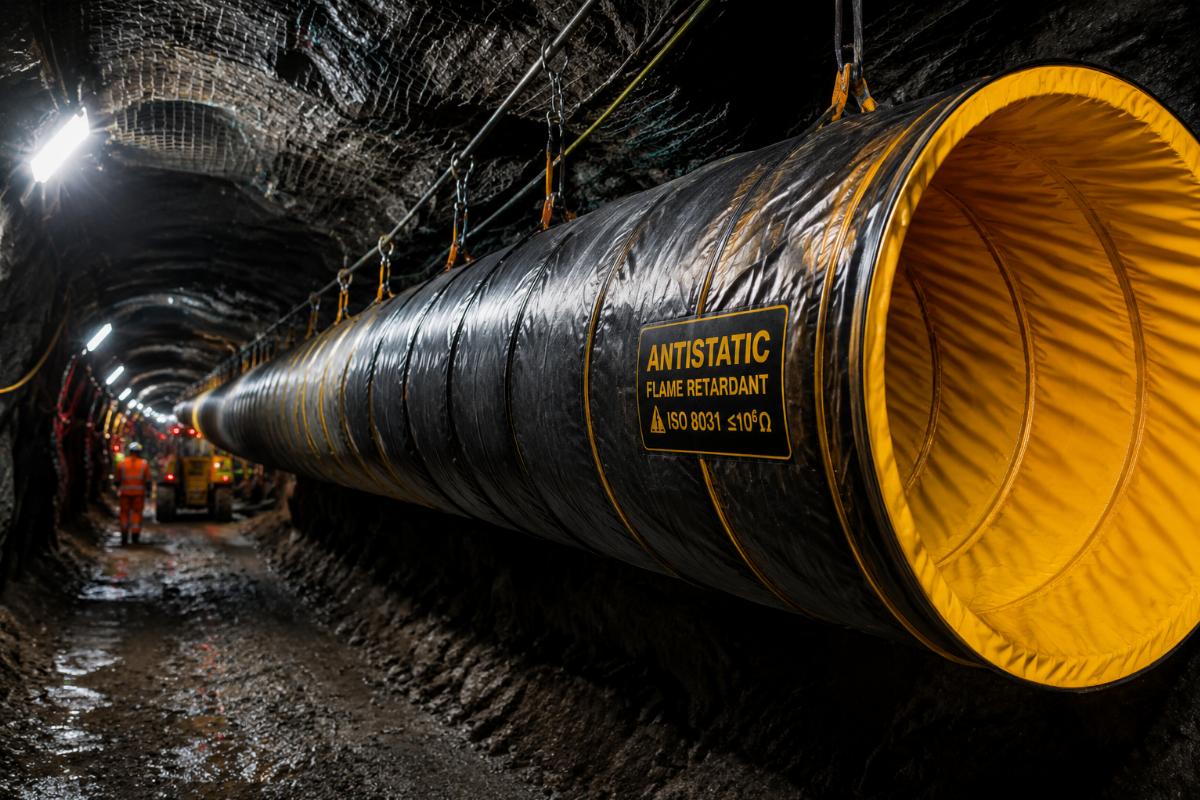
Last year, a German engineering team working on an underground mining project ordered standard 350mm ducts off a general supplier’s size list, only to find the size did not match their required airflow rate, requiring a full reorder that pushed their site startup back 14 days. By switching to a specialized supplier, they secured custom 300mm diameter anti-static ducts in 12-meter fixed lengths with a 7-day sample turnaround to complete on-site testing on schedule. [NEED_CITE: A properly aligned duct diameter reduces annual ventilation power consumption by an average of 18% per industrial facility.]
- Baseline Measurement – First record the required total airflow volume for your site, including all planned equipment and occupancy capacity for the full operational lifecycle.
- Velocity Matching – Cross-reference your use case against industry standard velocity ranges: 8-12m/s for mining, 6-10m/s for aircraft hangars, 5-8m/s for confined spaces.
- Calculation – Apply the standard formula: Duct diameter = √(4 × airflow rate / (π × recommended airflow velocity)) to get your base size.
What Core Factors Should You Evaluate Before Calculating Required Duct Diameter
Diameter selection cannot be separated from the material rating and certification requirements of your use case, as non-compliant components create hidden safety risks that far exceed the cost savings of a cheaper order. Many teams treat diameter as an isolated metric, but the performance of a specific size is directly tied to the material’s resistance to flame, static, and abrasion in your operating environment.
| Core Evaluation Factor | Common Misstep | Correct Alignment Rule |
|---|---|---|
| Material Rating | Select the same material for all project types regardless of risk | Match material certification to use case: anti-static for mining, fire-retardant for enclosed hangar spaces |
| Length-to-Diameter Ratio | Order random length ducts without calculating proportional limits | Ensure the ratio does not exceed 15:1 to avoid 25%+ efficiency loss in long runs [NEED_CITE: Industry association data confirms that a length-to-diameter ratio over 15:1 reduces long-distance ventilation performance by 27% on average.] |
| Order Thresholds | Assume custom sizes have identical minimum order requirements | Standard sizes (200mm/300mm/450mm) support 50-unit MOQ, custom specs require 150-unit minimum |
For a recent aircraft hangar cooling upgrade project in Australia, the procurement team initially considered 500mm ducts to accommodate future expansion, but their engineering team calculated that 450mm diameter ducts aligned perfectly with their required airflow rate. The supplier completed 100% pre-shipment QC inspection across the full 2,000 unit order to meet CE certification standards, and the system has operated at 94% efficiency for 18 months with zero pressure drop issues.

- Compliance Validation – Confirm that all potential suppliers hold valid ISO fire-retardant and anti-static test documentation for your target market.
- Ratio Calculation – Calculate the total required duct run length for your site and cross-check against your target diameter to avoid exceeding the 15:1 ratio limit.
- Cost Benchmarking – Factor in long-term power consumption costs when comparing size options, not just upfront unit pricing.
How to Match Duct Diameter Specifications to Your Specific Industrial Use Case
Each industrial vertical has distinct, field-validated diameter ranges that eliminate the guesswork from initial sizing, rather than applying a universal standard across all project types. What works for a tunnel construction site will not deliver optimal performance for an underground mine, and hangar cooling systems have unique constraints that require targeted sizing.
| Use Case | Typical Incorrect Size Selection | Recommended Standard Size Range |
|---|---|---|
| Underground Mining | 400-450mm over-sized ducts | 250-350mm, prioritizing anti-static material |
| Aircraft Hangar Cooling | 200-250mm under-sized ducts | 400-500mm, prioritizing fire-retardant certification |
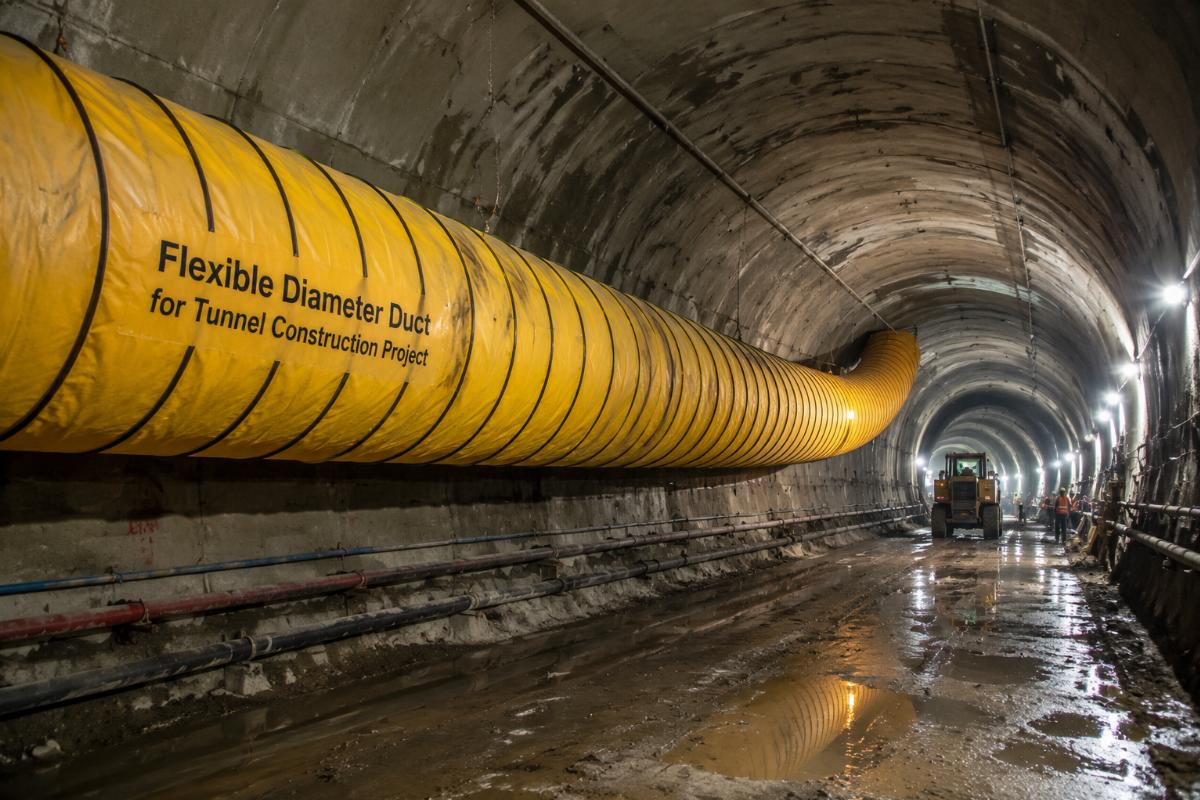
| Tunnel Construction | Fixed standard sizes with high MOQ | 200-300mm, with flexible order terms for phased installation |
A tunnel construction team working in Southeast Asia initially faced a 300-unit minimum order requirement for 200mm ducts from a local supplier, which would have left them with excess inventory for their phased build schedule. Working with a specialized manufacturer, they secured flexible MOQ terms and factory-direct pricing that cut their total procurement cost by 15% compared to local alternatives, with no excess stock left over at project completion.
- Mining Project Sizing – Prioritize 300mm as the baseline standard, and confirm all components meet anti-static and flame resistance requirements before ordering.
- Hangar Project Sizing – Use 450mm as the standard baseline for most mid-sized hangar cooling systems, and verify full pre-shipment inspection protocols with suppliers.
- Tunnel Project Sizing – Lock in flexible MOQ terms for 200mm ducts to accommodate phased installation schedules and avoid excess inventory.
How to Source Compliant Custom Ducts That Meet Global Standards
Specialized industrial duct manufacturers that support custom specifications and local market certification requirements deliver the best balance of cost, speed, and compliance for global project buyers. General commodity suppliers often cut corners on testing and inspection to hit lower price points, leading to non-compliance issues that cause costly rework.
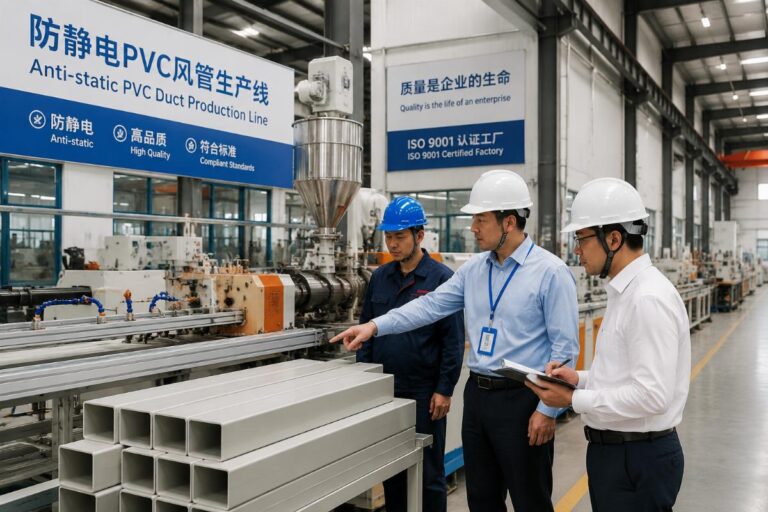
Shandong Jinxiang Technology Development Co., Ltd. is a certified industrial air duct manufacturer with nearly 30 years of production experience, holding ISO 9001, ISO 14001, ISO 45001, and CE certifications, that supports custom diameter and length specifications, 7-day sample turnaround, and 100% pre-shipment QC inspection for buyers across Europe, Asia, and Australia. Their factory-direct pricing and flexible MOQ terms align with both small pilot orders and large